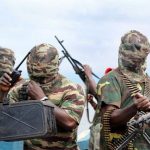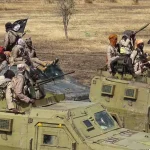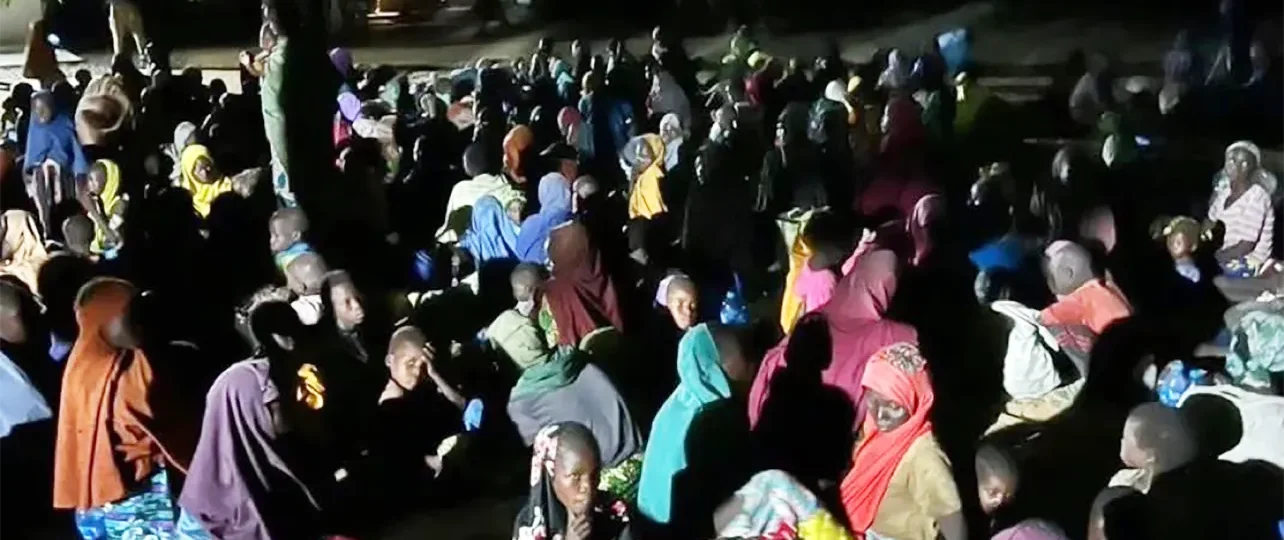

THEY came from villages scattered across the southern reaches of Borno state. Men, women and children – 360 of them – snatched from their communities, their lives suspended indefinitely in the shadow of the Mandara Mountains, captives of one of the most brutal terrorist organisations on the African continent.
On Sunday, Nigerian security forces ended their ordeal.
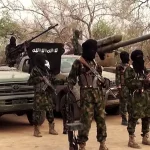
The Nigerian military announced that a joint task force, acting on intelligence, had stormed a mountain hideout and wrested the hostages free from fighters of Jama’atu Ahlis Sunna Lidda’awati wal-Jihad – JAS – the Arabic name for the main surviving faction of Boko Haram. Special forces units drove the jihadists from their positions in what the military described as an intelligence-led operation deep in terrain that has long provided cover for armed groups waging war against the Nigerian state and its citizens.
It was, by any measure, a significant operational success. But even as the rescued filed out of the mountains, two of them did not make it out alive. Two children, the military confirmed, died – killed not by bullets but by the conditions of their captivity: exhaustion, exposure, the unforgiving harshness of a mountain prison maintained by men who trade in human suffering.
“They were captured from various communities over an unspecified period.”
Nigerian Military Statement
The Enemy at the Gate
JAS is no peripheral insurgency. It is the ideological and organisational continuation of Boko Haram, the jihadist movement that declared war on Nigerian society over a decade ago and whose name – loosely translated as ‘Western education is forbidden’ – encapsulates a totalising worldview that has cost the Lake Chad Basin region well over 35,000 lives and displaced millions more.
The faction has splintered repeatedly over the years, with a rival splinter – the Islamic State West Africa Province (ISWAP) — at times controlling vast swathes of territory. But JAS has retained a lethal operational capacity, particularly in Borno state, where the Mandara Mountains along the Cameroon border have served as a sanctuary and staging ground for decades.
Mass kidnapping is among the group’s signature tactics. It is a weapon of economic survival – hostages are held for ransom – and of psychological warfare, designed to hollow out communities, undermine state authority and sustain a climate of fear that serves recruitment. The Chibok schoolgirls, abducted in 2014, remain the world’s most visible symbol of this barbarism, but for communities in the Mandara Mountains corridor, the threat has been a near-constant reality.
The Cost of the Rescue
The recovery of 360 people is a triumph of military planning and courage. The joint task force – which the military said included special forces – had to penetrate some of the most difficult terrain in northeastern Nigeria, engage fighters hardened by years of guerrilla warfare, and secure a large number of civilians simultaneously. That it achieved this without reported combat casualties among the rescued population speaks to the quality of the operation.
But the deaths of two children in captivity are a sober reminder that success in counter-insurgency operations is always measured against the suffering already endured. Those children did not survive to see their freedom. Their deaths — the result of what the military described as exhaustion and the harsh conditions of captivity — are a direct consequence of the abductions, and an indictment of the group responsible.
The hostages had been held ‘over an unspecified period,’ the military stated, a formulation that suggests some had been in captivity for months, possibly longer – long enough for children to die from the conditions of their confinement.
Nigeria’s insecurity crisis is not one enemy, one geography, or one cause — it is a compound emergency that has overwhelmed state capacity for years.
A Nation at War With Itself
The Borno rescue is one headline in a long and dispiriting chronicle. Nigeria’s insecurity crisis is not one enemy, one geography, or one cause – it is a compound emergency that has overwhelmed state capacity for years. In the northwest, kidnapping gangs known as bandits hold communities to ransom and have made travel on major highways a gamble with death. In the north-central ‘Middle Belt,’ herder-farmer conflicts over land and water have produced massacres and mass displacement that some analysts describe as ethnic cleansing by any other name. In the south, community defence militias operate in legal and moral grey zones, and oil bunkering in the Niger Delta continues to fuel localised armed economies.
Borno and the broader northeast remain the epicentre of the jihadist insurgency. Despite years of military campaigns – including multinational operations under the Multinational Joint Task Force, which brings together Nigeria, Niger, Chad, Cameroon and Benin — no theatre commander has been able to announce that JAS or ISWAP has been decisively defeated. The groups adapt, retreat, regroup and re-emerge.
The January 2027 presidential election, now less than seven months away, is expected to place Nigeria’s security failures at the centre of political debate. Incumbent President Bola Tinubu has faced mounting criticism over the persistent failure to pacify the northeast, protect farming communities from banditry, or demonstrate a credible national security strategy. Sunday’s rescue will offer his government a brief moment of positive narrative – but the structural realities of the insurgency are unchanged.
The Wider African Dimension
Nigeria’s battle against jihadism cannot be understood in isolation. It is part of a broader civilisational contest playing out across Africa’s Sahel and Lake Chad Basin, one in which the Nigerian army is a frontline institution. The success or failure of Nigerian counter-insurgency has consequences for Cameroon, Chad, Niger and Benin — states already under pressure from their own jihadist fronts and, in some cases, from military juntas that have severed Western security partnerships.
The retreat of French forces from Mali, Burkina Faso, and Niger – following a wave of military coups – has created strategic vacuums that jihadist groups, including Jamaat Nusrat al-Islam wal-Muslimin (JNIM) and ISWAP-aligned affiliates, have moved to fill. ISWAP in particular has expanded its footprint in the Lake Chad region in ways that intersect directly with Nigeria’s northeastern theatre.
Sunday’s rescue is a tactical win for Nigeria’s military. But winning a battle in the Mandara Mountains while the broader jihadist ecosystem expands across the Sahel is the defining strategic dilemma of West African security in 2026. The 360 freed hostages – traumatised, grieving, returning to communities still at risk – embody both the resilience of Nigerian civilian populations and the unfinished, urgent work of their defenders.
What Comes Next
Military sources have not indicated whether any JAS commanders were captured or killed in the operation. The absence of such information may reflect operational security considerations, or it may indicate that the group’s leadership slipped away — as it has done many times before. If JAS retains its command structure, the group’s capacity to conduct further abductions remains intact.
The rescued will require immediate humanitarian support – food, medical attention, psychological care, and in many cases, the reconstruction of lives that have been shattered by captivity. Nigeria’s humanitarian infrastructure in the northeast, already stretched by years of displacement, will face fresh demands.
And the communities from which the hostages were taken remain exposed. The Mandara Mountains will not be permanently cleared of JAS by a single operation, however successful. The group will retreat, regroup, and watch for the next opportunity. For the villages of southern Borno, Sunday’s rescue is not an ending. It is a moment of relief in a conflict that – for them – is very far from over.
Operation at a Glance
Location: Mandara Mountains, southern Borno State, Nigeria
Date announced: Sunday, 7 June 2026
Hostages freed: 360 men, women and children
Lives lost: Two children, died from exhaustion and harsh captivity conditions
Perpetrator group: JAS (Jama’atu Ahlis Sunna Lidda’awati wal-Jihad) — main Boko Haram faction
Operation type: Intelligence-led joint task force, including special forces
Broader context: Ongoing northeastern Nigeria jihadist insurgency, 2009–present
Political backdrop: Nigerian presidential election scheduled January 2027