THE ghosts of Julius Nyerere must be weeping. Tanzania, once the pride of African democracy – built on the socialist ideals and peaceful transitions championed by Mwalimu, the teacher who taught a continent about unity and dignity – has descended into a blood-soaked nightmare that would have been unthinkable just months ago.
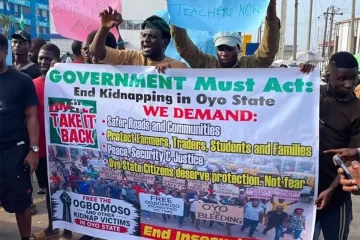
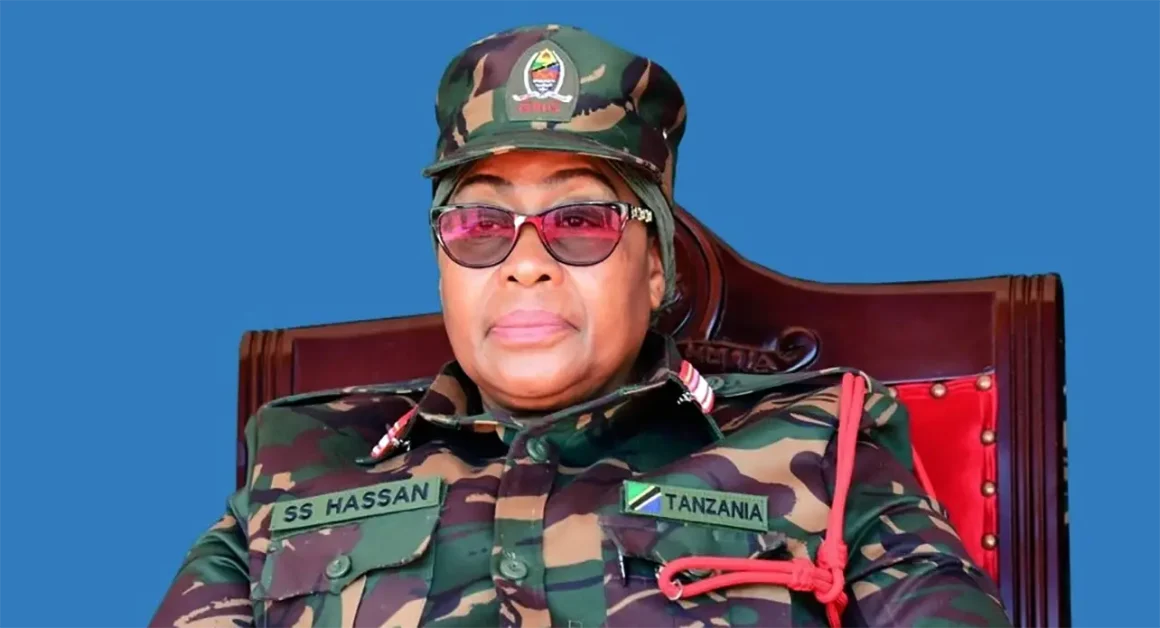
As 74 protesters shuffle into a Dar es Salaam courtroom this week, shackled and broken, charged with the Orwellian crime of “having an intention to obstruct the 2025 general election” and “causing serious damage to government properties,” the world is slowly awakening to the horrifying reality of what transpired after Tanzania’s October 29 elections, when President Samia Suluhu Hassan claimed a staggering 97.66 percent victory.
But behind those manufactured numbers lies a massacre of unimaginable proportions.
The main opposition party, Chadema, reported collecting evidence of up to 1,000 deaths across eight of Tanzania’s 31 regions, but that figure now appears to be a tragic underestimate. Development partners compiling data from individual hospitals paint a far grimmer picture: estimates now suggest between 6,000 to 10,000 Tanzanians may have been slaughtered in what can only be described as state-sanctioned mass murder.
Muhimbili National Hospital alone—just one facility in Dar es Salaam—reportedly received around 800 bodies. Eyewitness accounts speak of mass burials, with 800 to 1,000 bodies interred in what survivors call “the last batch,” following days of frantic digging since November 1. At the same hospital, a desperate relative searching for their loved one discovered a list of over 1,760 missing persons, with 641 bodies already identified and collected.
This is not protest suppression. This is genocide in slow motion.
The Tanzanian government imposed nationwide internet restrictions on October 29, with multiple internet monitoring organisations confirming that connectivity had been disrupted. Although some internet access was restored by November 3, restrictions on social media and messaging platforms persisted. This digital blackout wasn’t merely about controlling information—it was about concealing crimes against humanity.
From the evening of October 29 until November 3, the government imposed a 24-hour lockdown, ordering all residents to stay home, preventing people from leaving to buy food or access banks, and effectively stopping the media from reporting on the elections and protests. Journalists became prisoners in their own homes while soldiers roamed the streets with impunity.
In Kigoma, police moved door to door in a chilling replay of Rwanda’s darkest hours, arresting young people arbitrarily and terrorising entire communities. In Nyamongo, North Mara, security forces raided homes, detaining men and deploying lethal force against unarmed civilians.
A resident of Dar es Salaam’s Temeke district reported that on October 30, their neighbour – who wasn’t even participating in protests, was shot and killed outside his home by a man in civilian clothes. The message was clear: dissent is death, and nowhere is safe.
The Treason Trap
Now comes the second act of this tragedy: over 100 people, including prominent opposition figures and ordinary citizens, face treason charges for the “crime” of protesting electoral theft. Among them is businesswoman Niffer Jovin, whose only offence was posting a TikTok video that allegedly “incited protests.”
Treason – the charge historically reserved for those who betray their nation – is being weaponised against Tanzanians who dared to defend their democracy. The irony is savage: the real betrayal is being committed by those in power who have murdered thousands and stolen an election with brazen impunity.
Videos circulating on social media show ballot stuffing, the crude manufacture of the supposed “31 million votes” that delivered Samia’s impossible victory. Yet a Tanzanian police commander had the audacity to claim that the October 29 protests “recorded no deaths or injuries”—a statement so divorced from reality it would be laughable if it weren’t so grotesque.
President Hassan was sworn in on November 3 for a second term at a ceremony closed to the public amid continuing protests. The symbolism is inescapable: a president so unpopular, so illegitimate, that her inauguration had to be held behind military walls, shielded by the very guns that had just slaughtered her citizens.
This was not a celebration of democracy. It was a coronation of dictatorship.
The International Community’s Moral Test
Regional and international bodies, including the African Commission on Human and Peoples’ Rights, the Southern African Development Community, the United Nations Office of the High Commissioner for Human Rights, and the European Union, have raised concerns about the large number of fatalities. But concerns are not enough.
There is now growing pressure on the International Criminal Court to open investigations into what increasingly appears to be crimes against humanity. The magnitude of this tragedy demands more than statements—it demands action, accountability, and justice for the thousands whose lives were stolen in the name of maintaining power.
The Ghost of Nyerere
Julius Nyerere, the founding father who peacefully stepped down from power and became a moral compass for the continent, built Tanzania on principles of ujamaa—socialist brotherhood and collective responsibility. He envisioned a nation where the people’s voice mattered, where power served the powerless.
Today, that vision lies in ruins, buried alongside the thousands in unmarked graves.
A radio presenter murdered by the state cannot even be publicly mourned by his own station, such is the climate of fear. Master Tindwa’s death, like so many others, becomes a silent