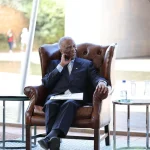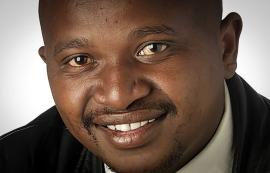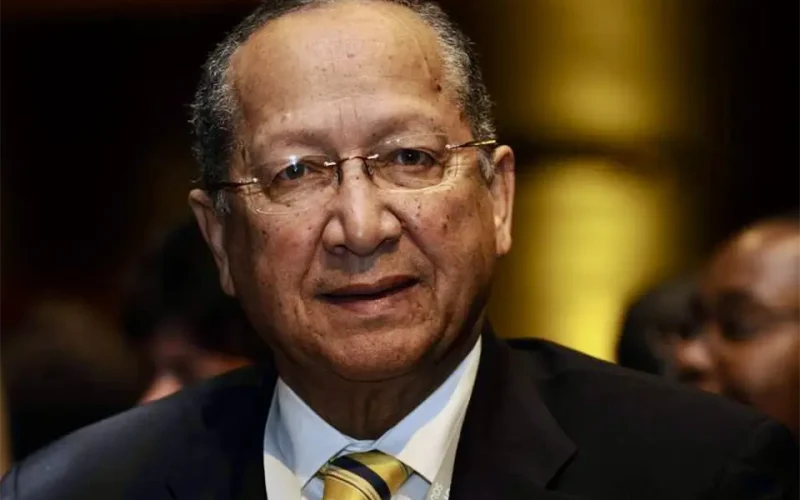
ON November 15, 2025, South Africa lost one of its most luminous stars. Dr. Franklin Abraham Sonn – educator, diplomat, visionary, and gentle warrior for justice – passed away at the age of 86, leaving behind a legacy so vast and vivid that it illuminates the path forward for generations yet unborn.
Born on October 11, 1939, into an apartheid nation that sought to dim the brilliance of people like him, Sonn refused to be contained. He became, instead, a force of nature – a man who transformed every hostile space into fertile ground, every barrier into a doorway, every injustice into an opportunity to build something better.
His journey began in the classroom, where he discovered his gift: the ability to see potential in young minds that society had written off. As a teacher, then principal of Spes Bona High School in Athlone, and eventually Rector of Peninsula Technikon from 1978 to 1994, Sonn didn’t merely educate – he liberated. Under his stewardship, Peninsula Technikon blossomed into an institution that would become Cape Peninsula University of Technology, a testament to his belief that excellence knows no color, and that education is the most powerful weapon against oppression.
When the great Nelson Mandela, the first president of a democratic South Africa, looked across the ocean to America and asked himself who could represent the country – who possessed the wisdom, the grace, the steel – he chose Sonn. From 1995 to 1999, Sonn served as South Africa’s first Ambassador to the United States, navigating the delicate dance of diplomacy with a nation that had once imposed sanctions against his homeland. He negotiated the lifting of those sanctions with skill and dignity, building bridges where walls had stood, opening channels of cooperation that would nourish the young democracy for decades to come.
But titles and positions tell only part of the story. His son Crispin painted a more intimate portrait on Facebook: a man intellectually astute and “wise by birth,” who loved philosophical debates but always sought concrete, practical outcomes. A man with a mischievous sense of humor who wielded laughter far more often than anger. A father who cared with both head and heart, who made your need his problem, who walked with you if you were willing to take that first step.
Sonn loved beauty – his garden, art, music – and carried that love like a torch into the darkest corners apartheid could devise. When relegated to hostile, isolated places, he didn’t just survive; he transformed them into spaces of growth and grace. When apartheid tried to crush his spirit, he planted flowers instead.
Yet for all his accomplishments, Sonn carried a deep wound: the gap between what South Africa could be and what it had become. He was hurt, profoundly so, by the nation’s drift toward greed, corruption, and complacency. He despised the superficial reverence shown to Madiba’s memory when divorced from understanding or action. He admired those who could “vas vat” – grab hold and drive change forward – and was frustrated by those who merely talked while the dream deferred.
This disappointment was not cynicism but love – the fierce, uncompromising love of a man who had devoted everything to building a just society and could not bear to watch it settle for less.
The honours came, as they must: the National Order of the Baobab (Silver), twelve honorary doctorates, countless civic recognitions. But Sonn’s true legacy lives in the students he mentored, the institutions he strengthened, the businesses he helped build on principles of equity and inclusion, the diplomatic relationships he forged, and the countless individuals who heard him say, “I believe in you,” and found the courage to believe it themselves.
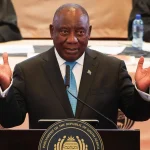
President Cyril Ramaphosa mourned him as an embodiment of South Africa’s best qualities. Cape Town Mayor Geordin Hill-Lewis called him “an extraordinary Capetonian” whose vision made the city and country more just. The ANC in the Western Cape hailed him as “a giant of our nation.” But perhaps Crispin said it best: his father’s love remains abiding, as does pride in his courage, kindness, and basic humanity.
Sonn leaves us now, but the garden he tended, watered with sweat, fertilized with wisdom, cultivated with love, continues to bloom. Every student who rises from disadvantage to achievement carries his legacy. Every leader who chooses service over status honours his memory. Every South African who refuses to accept injustice as inevitable keeps his dream alive.
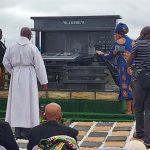
On Saturday, November 22nd, those who knew him, loved him, and were changed by him will gather to celebrate a life magnificently lived. They will tell stories of his wit, his warmth, his unwavering principles. They will remember a man who made the world bend toward justice simply by refusing to bend himself.
Rest now, Sonn. Your work on earth is complete, though its fruits will nourish us for generations. You showed us that one life, lived with courage and compassion, can indeed change a nation. You walked where others feared to tread, spoke truth when others whispered lies, and built beauty in places designed for ugliness.
South Africa is dimmer without your light, but oh, how brightly you burned. Thank you, Dr. Franklin Abraham Sonn. Thank you for everything.
Hamba kahle, Tata. The garden you planted will bloom forever.