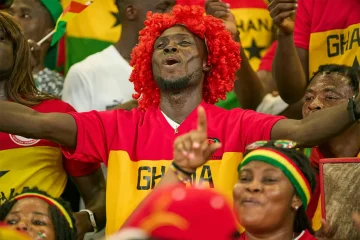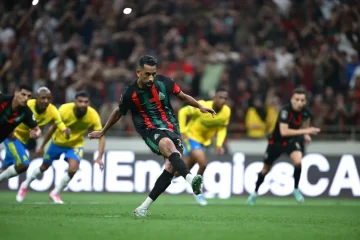
FOUR days. That’s all that stands between the football-mad continent and its most beloved sporting obsession. The TotalEnergies CAF Africa Cup of Nations – AFCON, to its friends, the tournament that makes grown men weep and entire nations grind to a halt – is about to kick off in Morocco. And if recent squad announcements are anything to go by, we’re in for another rollercoaster of drama, redemption, and the kind of chaos only African football can conjure.
From Cairo to Cape Town, Dakar to Dar es Salaam, the conversation is singular: who will add their name to a roll of honour that reads like a history of the continent itself? Seven decades of football as remembrance, rebellion, and rebirth. Egypt’s pioneering spirit. Ghana’s Pan-African swagger. Zambia’s tears. Algeria’s tactical renaissance. And now, four more nations have thrown their hats – or should we say, their occasionally injured superstars – into the ring.
Mali: The Eagles Who Refuse to Soar (But Keep Trying)
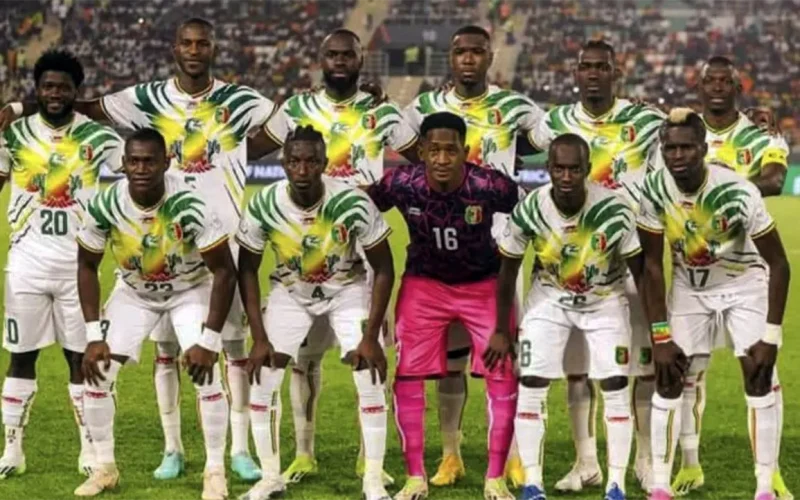
Let’s start with Mali, a team that has mastered the art of the “promising campaign that ends in heartbreak.” Coach Tom Saintfiet has rolled the dice spectacularly by recalling Yves Bissouma, a midfielder who hasn’t kicked a ball competitively since August and spent the autumn recovering from ankle surgery. Bold? Certainly. Reckless? Perhaps. Very AFCON? Absolutely.
The logic is beautifully twisted: Bissouma hasn’t played for Tottenham all season, but apparently that’s fine because his “experience and tactical intelligence” will somehow materialise the moment he steps onto Moroccan soil. It’s the kind of faith that either produces genius or disaster, with very little room in between. Still, when you’re Mali—a nation that consistently assembles one of the continent’s most physically imposing midfields only to stumble at the business end – desperate times call for gambles on one-legged playmakers.
The rest of the squad reads like a who’s who of Europa League Thursday nights: Amadou Haidara, Aliou Dieng, Lassana Coulibaly. A midfield so stacked it could probably win a bar fight, if not always a football match. Up front, the Eagles have pace, power, and Kamory Doumbia, which sounds like the beginning of a decent poem or a very confusing team talk.
Opening against Zambia, then facing hosts Morocco and Comoros in Group A? Mali’s draw is the footballing equivalent of being asked to parallel park during your driving test while the examiner eats crisps loudly. Good luck, lads.
Senegal: Defending Champions or Walking Hospital Ward?
Ah, Senegal. The reigning champions. The team that finally – finally – ended decades of heartbreak in 2022. The Teranga Lions have arrived in Morocco with a squad list that reads less like a football team and more like a physiotherapist’s nightmare.
Coach Pape Thiaw has named not one, not two, but three injured players in his 28-man squad, a decision that suggests either supreme confidence or a spectacularly optimistic understanding of human anatomy. Ismaila Sarr (ankle ligaments), Habib Diarra (groin surgery in September), and Assane Diao (thigh injury last weekend) have all been selected despite being about as match-fit as your uncle after Christmas dinner.
Thiaw’s explanation? He’s “confident the medical staff will recover them in time.” Translation: “We’re going to pump them full of strapping tape, hope for the best, and pretend we meant it all along.”
To be fair, when your squad also includes Sadio Mané, Kalidou Koulibaly, Idrissa Gana Gueye, and the electric Pape Matar Sarr, you can afford to take a few risks. Senegal’s starting XI could probably be wheeled onto the pitch in hospital beds and still give most teams a proper game. With Nicolas Jackson, Boulaye Dia, and Iliman Ndiaye up front, the Lions have firepower to spare—assuming, of course, that “firepower” doesn’t require functioning ligaments.
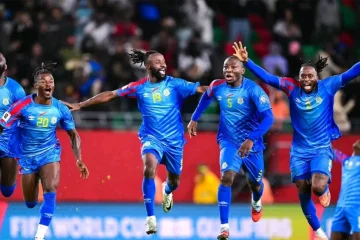
Group D awaits: Botswana, Benin, and DR Congo. On paper, it’s manageable. But this is AFCON, where “on paper” means approximately nothing and where defending champions have a habit of imploding spectacularly. Senegal will either stride through majestically or limp out in the group stage while the physios file for emotional damages.
Equatorial Guinea: The Underdogs Who Aren’t Really Underdogs Anymore
Here’s a fun fact: Equatorial Guinea have reached the quarter-finals in three of their last four AFCONs. Read that again. Three of the last four. They’ve beaten Algeria. They’ve beaten Côte d’Ivoire. They’ve turned themselves from Central African minnows into genuine tournament menaces, and they’ve done it with the kind of tactical discipline that makes Italian coaches weep with joy.
Coach Juan Michà has named a squad that could double as a geography lesson: defenders from Spain, Italy, Romania, and England; midfielders from Mallorca and Monza; forwards from Madrid and Denmark. Captain Emilio Nsue, one of the nation’s greatest-ever players, returns to lead the line at the ripe old age of – let’s just say he’s got more caps than candles on his birthday cake.
Equatorial Guinea don’t do flair. They don’t do showboating. They do defensive solidity, compact midfield triangles, and the kind of counter-attacking efficiency that leaves favourites clutching their heads in disbelief. They’re the team nobody wants to face in the knockout rounds, the side that turns tournament brackets into murder mysteries.
Drawn in Group A with Morocco, Mali, and Zambia, the Nzalang Nacional face a proper test. But if recent history has taught us anything, it’s that writing off Equatorial Guinea is done at your peril. They might not have Egypt’s history or Senegal’s star power, but they’ve got something arguably more dangerous: belief.
Algeria: The Fallen Giants Trying to Remember How to Roar
Once upon a time – specifically, 2019 – Algeria were African champions. They played breathtaking football under Riyad Mahrez’s leadership, combining North African tactical sophistication with genuine attacking verve. Then came 2022 (group stage exit) and 2024 (another group stage exit), and suddenly the Desert Foxes looked less like continental conquerors and more like a team in desperate need of a map.
Enter Vladimir Petković, the Swiss coach tasked with restoring Algeria’s status as one of Africa’s most formidable sides. His squad announcement was a masterclass in mixing the old guard with the new: Mahrez still leads the attack, Ismaël Bennacer anchors the midfield, and Baghdad Bounedjah – scorer of that goal in 2019 – returns for another tilt at glory.
But the headline? Luca Zidane, son of French legend Zinedine, is set to start in goal after an injury to Alexis Guendouz. Yes, that Zidane. The one who switched allegiance from France and made his Algerian debut in October. It’s the kind of narrative twist that AFCON specialises in: redemption arcs written in real-time, legacies reimagined, sons stepping out of their fathers’ shadows while wearing a different national jersey.
Petković has also gambled on two new strikers from Qatar, Adel Boulbina and Redouane Berkane, while handing a debut to Leverkusen’s Ibrahim Maza in midfield. It’s a rebalanced squad, one designed to avoid the painful early exits that have plagued recent campaigns.
Group E beckons: Burkina Faso, Equatorial Guinea, and Sudan. Algeria should progress. But then again, they should have progressed in 2022 and 2024. In AFCON, “should” is a word that gets you nowhere.
What the Numbers Won’t Tell You
Egypt hold seven titles. Cameroon have five. Ghana have four. These are facts, carved into the tournament’s DNA. But AFCON has never been about numbers alone. It’s about moments that transcend sport: South Africa’s rainbow triumph in 1996, Zambia’s tears in Libreville, Senegal’s breakthrough in Cameroon.
It’s about nations using football to announce themselves, to heal, to remember. From Ghana’s Pan-African swagger in the 1960s to Algeria’s tactical rebirth in 2019, every trophy carries weight beyond silverware. Victories here aren’t just celebrated – they’re felt, deep in the soul of a continent that has always understood football as something more than 22 players chasing a ball.
Morocco 2025: The Stage Is Set
Nine venues. Fifty-four matches. Twenty-four nations. And one question that will dominate conversations from Casablanca to Kinshasa: who will join the immortals?
Can Egypt, the competition’s most decorated nation, reclaim their throne with an eighth title? Will Senegal confirm their status as the continent’s new powerhouse? Might Equatorial Guinea pull off another quarter-final heist? Or will Algeria rediscover the magic of 2019?
Perhaps a first-time winner will emerge, adding a fresh chapter to a story seven decades in the making. Perhaps Morocco, playing at home, will harness the pressure and the noise and the expectation. Perhaps Mali will finally – finally – convert potential into silverware.
Or perhaps none of this will happen, because this is AFCON, where the script is written in invisible ink, and the only certainty is drama.
Six days to go. The eagles have landed. The lions are roaring. The foxes are prowling. And somewhere in Morocco, 24 nations are preparing to battle for the most coveted prize in African football.
Let the beautiful chaos begin.