LISTEN, we need to talk about the weight of history. Not the boring kind they teach in school, but the kind that sits on your chest at 2-0 down in a quarterfinal, when 40,000 people are screaming, and you remember that Samuel Eto’o once did this eight times across a decade and still came out smiling.
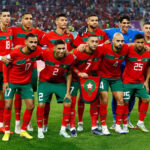
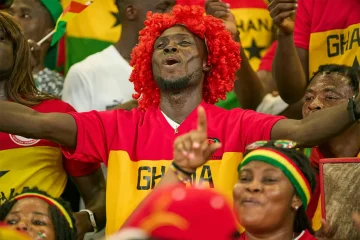
The Africa Cup of Nations doesn’t just crown champions. It creates mythology. And in three days, when Morocco and Comoros walk onto that Rabat pitch, 24 nations will begin their pilgrimage toward football immortality – or at least a decent run before going viral for the wrong reasons.
Let’s meet the titans whose shadows you’ll be playing under.
The Iron Men (Or: How to Survive Eight AFCONs Without Losing Your Mind)
Eight tournaments. EIGHT.
Rigobert Song did it. Ahmed Hassan did it. Andre Ayew and Youssef Msakni recently joined this absolutely unhinged club of footballing endurance.
Eight AFCONs means you’ve seen teammates retire, managers fired, entire tactical philosophies come and go, and somehow you’re still there, lacing up boots while kids who weren’t born during your debut are now marking you.
Song and Ayew went even further – 36 matches each at the AFCON finals. That’s not a career, that’s a geological epoch. Song did it while Cameroon dominated the late ’90s and early 2000s. Ayew did it across four different decades because, apparently, Ghana couldn’t figure out how to replace him.
And before anyone asks: Egypt as a nation has played 111 AFCON matches. That’s not a statistic, that’s a lifestyle choice.
The Dynasty Builders (Or: When Winning Once Wasn’t Enough)
Ahmed Hassan and Essam El Hadary won AFCON four times each.
Read that again. Four. Times.
These two Egyptian titans lifted the trophy in 1998, then casually did it three more times in a row from 2006 to 2010. Hassan is orchestrating from midfield, and El Hadary is guarding the goal like a particularly aggressive librarian protecting rare books.
That three-peat from 2006-2010? Nobody’s matched it since. Nobody’s even come close. It remains the most dominant spell in AFCON history, the kind of achievement that makes other nations develop nervous tics when they draw Egypt in the group stage.
The Goal Merchants (Or: When Your Job Was Simply to Obliterate Everything)
Nine goals. One tournament. 1974.
Pierre Ndaye Mulamba of Zaire (now DR Congo) didn’t just win the Golden Boot at the 1974 AFCON – he ransacked it. Nine goals, including four across a two-match final replay against Zambia. He also picked up Player of the Tournament, presumably while defenders were still having nightmares.
Fifty years later, nobody has touched this record. Not Eto’o at his peak. Not Salah. Not Mané. Nobody.
Every striker heading to Morocco knows: if you want true AFCON immortality, this is the mountain to climb.
But if you’re feeling really ambitious, there’s Laurent Pokou’s 1970 gift to posterity: five goals in one match. Against Ethiopia. In Asmara. Final score: 6-1.
They called him “L’homme d’Asmara” after that. The man of Asmara. Because when you score five goals in one AFCON match, you don’t just own the scoreboard—you own the city.
When Football Decided Defending Was Optional
The highest-scoring match in AFCON history came in 1963: Egypt 6-3 Nigeria.
Nine goals. Two Egyptian hat-tricks – Hassan El-Shazly and Reda, making sure Nigeria’s defenders would need therapy. And Nigeria’s consolation? Asuquo Ekpe scored their first-ever AFCON goal, which probably felt great right up until they conceded goal number six.
Sixty-two years later, no match has produced more chaos, more goals, or more evidence that 1960s defending was really just a polite suggestion.
The Sprint (Or: How to Make History Before Your Teammates Finish Warming Up)
Ayman Mansour scored after 23 seconds against Gabon in 1994.
Twenty. Three. Seconds.
Egypt won 4-0, but honestly, the match was a formality after Mansour struck before most fans had found their seats. As Morocco 2025 kicks off Sunday, this is the record most likely to fall—because all it takes is one counter-attack, one perfect pass, one moment where everyone forgot to mark the runner.
History doesn’t always require patience. Sometimes it just requires being very, very fast.
The GOAT
Samuel Eto’o scored 18 AFCON goals across six tournaments.
Eighteen. That’s the summit. The peak. The “good luck, kid” benchmark that every striker measures themselves against.
Two titles. Two Golden Boots. A decade of terrorizing defenses from 2000 to 2010. Eto’o didn’t just dominate AFCON – he defined an era where Cameroon meant danger, and danger meant Eto’o pointing at corners he was about to bend balls into.
His record stands as the ultimate test of sustained brilliance. You want to be remembered as AFCON’s greatest? Beat 18.
(Spoiler: nobody has.)
The Hat-Trick Specialist Nobody Talks About
Hassan El-Shazly scored two AFCON hat-tricks. Both against Nigeria, because apparently, he had very specific energy reserved for the Super Eagles.
First in 1963, then again in 1970. He finished the ’63 tournament as top scorer and secured his place in AFCON’s early mythology—the kind of player whose name only surfaces in record books and heated bar arguments about who the real pioneers were.
Two hat-tricks. One target. Legend.
So What Happens Now?
Sunday arrives. Morocco hosts Comoros. Twenty-four nations begin their chase.
Some of these records will be threatened. Most will survive. All of them will loom over every penalty area, every goalmouth scramble, every moment when a player realises they’re one goal away from joining the pantheon.
AFCON doesn’t care about your reputation. It doesn’t care about your club form or your transfer fee. It cares about one thing: what you do when the lights are brightest, and the pressure is unbearable.
Eto’o, El Hadary, Mulamba, Song, Ayew—they all figured that out.
Now it’s your turn.
Welcome to Morocco. History is waiting.
Try not to embarrass yourself.