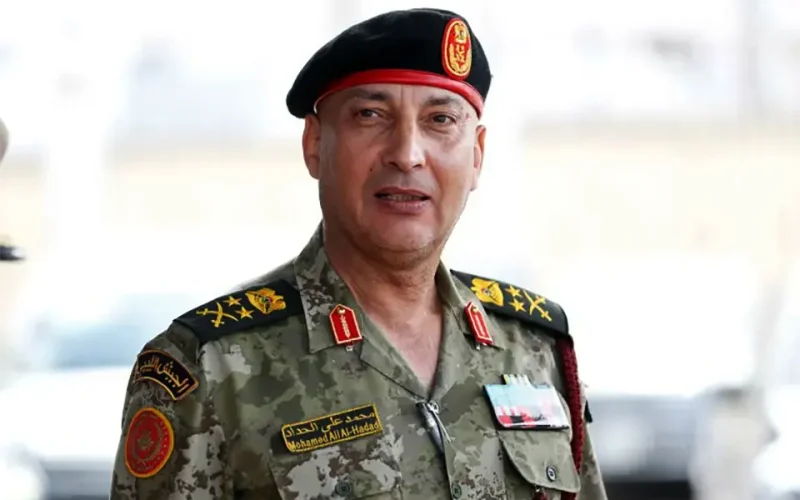
THE death of Libya’s army chief of staff and four senior military officials in a plane crash outside Ankara on Tuesday has dealt a severe blow to the North African nation’s already precarious efforts to establish unified governance after more than a decade of civil conflict.
Mohammed Ali Ahmed Al-Haddad, chief of staff for the Tripoli-based Government of National Unity (GNU), died alongside the commander of Libya’s ground forces, the director of its military manufacturing authority, a chief of staff adviser, and an official photographer when their Dassault Falcon 50 jet crashed shortly after departing Turkey’s Esenboga Airport at 5:10 p.m. local time.
The loss represents more than the death of five individuals; it eliminates a critical layer of military leadership at a moment when Libya’s internationally recognised government is attempting to consolidate authority across a country that has remained divided between rival administrations since the 2011 overthrow of Muammar Gaddafi.
Al-Haddad had been instrumental in coordinating the GNU’s military operations and maintaining relationships with international partners, particularly Turkey, which has provided crucial military support to the Tripoli government. His death creates an immediate succession crisis within Libya’s military hierarchy and removes a key interlocutor between competing Libyan factions.
“This grave loss is a great loss for the nation, for the military institution, and for all the people,” Prime Minister Abdulhamid Dbeibah said in a statement announcing the tragedy.
Turkish authorities reported that radio contact with the aircraft was lost at 5:52 p.m., approximately 42 minutes into the flight. The jet had requested an emergency landing near Haymana district before contact ceased, but no communication was established. Wreckage was discovered near Kesikkavak village.
The cause of the crash remains under investigation by Turkish and Libyan authorities. Libya’s state minister for political affairs, Walid Ellafi, revealed that the jet was a leased Maltese aircraft, adding that officials lacked sufficient information regarding its ownership or technical history, a detail that raises questions about security protocols for senior military leadership.
Turkish Interior Minister Ali Yerlikaya and Justice Minister Yilmaz Tunc have confirmed investigations are underway, though no timeline has been provided for conclusive findings.
Implications for Democratic Transition
The crash occurred just one day after Turkey’s parliament extended its military deployment mandate in Libya for two additional years, underscoring Ankara’s continued investment in the GNU’s survival. Turkey deployed military personnel to Libya in 2020 to support the Tripoli government against forces led by eastern-based military commander Khalifa Haftar, and subsequently secured controversial maritime and energy exploration agreements that have drawn opposition from Egypt and Greece.
Libya has operated under parallel governments since 2014, with the GNU controlling western regions, including Tripoli, while eastern Libya remains under separate administration. Despite international recognition of the GNU and repeated attempts at political reconciliation, the country has failed to hold planned presidential elections originally scheduled for December 2021.
The elimination of senior military leadership threatens to destabilise the delicate balance of power. Al-Haddad’s absence removes an experienced military figure who understood both the internal dynamics of Libya’s fractured security forces and the external relationships necessary to maintain GNU authority.
Regional Power Dynamics
The timing of the deaths also complicates Turkey’s recently adopted “One Libya” policy, which seeks to engage with both western and eastern Libyan factions. Ankara has increased contacts with the eastern administration in an apparent effort to position itself as a power broker capable of bridging Libya’s divide.
However, the loss of Al-Haddad and other senior officials with whom Turkey had established working relationships may force Ankara to rebuild channels of communication with the new Libyan military leadership, whose positions on key issues remain unknown.
The GNU has declared three days of official mourning and dispatched a delegation to Ankara to monitor the investigation. Yet mourning periods end, and Libya’s path toward unified democratic governance—already blocked by competing militias, foreign interference, and institutional weakness—has become measurably more difficult with the loss of five senior military figures in a single catastrophic moment.