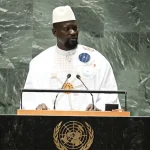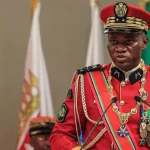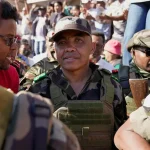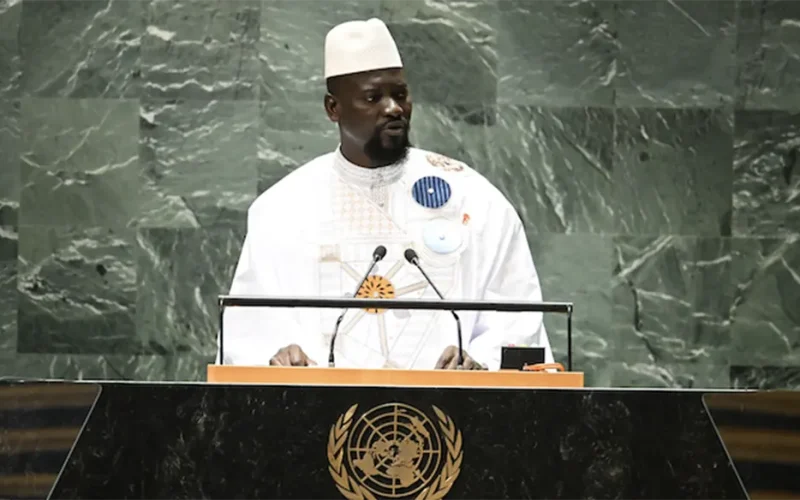
IN what political scientists are calling “a textbook case of how to keep your day job,” Guinea’s coup leader, Mamady Doumbouya, has pulled off the rather neat trick of transforming himself from military strongman to democratically elected president, with a positively North Korean 86.72% of the vote, no less.
The former special forces commander, who in 2021 decided the previous president had overstayed his welcome (after a mere 11 years), has now completed what transition experts are euphemistically calling a “return to civilian rule.” One might say he’s simply swapped his combat boots for presidential loafers, though the grip on power remains equally firm.
Democracy™: Now With Convenient Constitutional Amendments!
Here’s where it gets deliciously circular: the original post-coup charter had this terribly inconvenient clause preventing junta members from running for office. Fortunately, September brought a referendum that – quelle surprise – removed those pesky restrictions. Democracy in action, folks!
The election itself was a triumph of inevitability. With his main rivals conveniently in exile and facing only eight fragmented challengers (think political sacrificial lambs), Doumbouya secured his victory with the kind of overwhelming majority that makes statisticians nervously check their calculators.
Was It Free and Fair? Well…
Officials claim a robust 80.95% turnout, though observers in the capital, Conakry, apparently saw something closer to a sleepy Sunday afternoon. The UN’s human rights chief Volker Turk noted – with admirable diplomatic understatement – that the campaign period was “severely restricted,” featuring such democratic staples as intimidation, enforced disappearances, and constraints on media freedom.
Opposition candidate Faya Lansana Millimono complained of “systematic fraudulent practices,” but really, when you’re already polling at 86%, why bother with the fraud? (That’s a rhetorical question, Your Excellency.)
The Silver Lining?
To be fair, Doumbouya has championed resource nationalism, pushing forward the massive Simandou iron ore project and standing up to foreign mining companies. In a country where the median age is 19, his relative youth and economic assertiveness have genuinely boosted his popularity, making one wonder if he might have won a legitimate election anyway.
But why take chances when you can write your own rules, exile the competition, and enjoy a seven-year mandate crowned by an 86% landslide?
Welcome to West Africa’s latest “democratic transition” – same boss, new letterhead.