IN an unprecedented move that has sent shockwaves through African football, the government of Gabon has effectively seized control of the national team, assuming the roles of selector, coach and manager in a dramatic intervention that now threatens the nation with a FIFA ban.
Acting Sports Minister Simplice-Desire Mamboula announced on live television that the government has taken the drastic step of disbanding the entire national team following their catastrophic Total Energies Africa Cup of Nations campaign in Morocco, which ended with three consecutive defeats.
In a sweeping purge, the government has banned both current and former captains Pierre-Emerick Aubameyang and Bruno Ecuele Manga from ever representing their country again, while simultaneously dissolving the entire coaching staff and suspending all national team operations indefinitely.
“Given the Panthers’ disgraceful performance at the Africa Cup of Nations, the government has decided to dissolve the coaching staff, suspend the national team until further notice, and exclude players Bruno Ecuele Manga and Pierre-Emerick Aubameyang,” Mamboula declared.
“Furthermore, the Government calls on the Gabonese Football Federation to assume all its responsibilities.”
The stunning announcement has reverberated across the continent, stunning players, officials and fans still following the tournament in Morocco. The move represents one of the most dramatic government interventions in African football in recent years.
FIFA BAN NOW IMMINENT
The Gabonese government’s actions directly violate FIFA statutes that explicitly outlaw governmental interference in national football associations. The global governing body has consistently taken a hardline stance against such interventions, viewing them as threats to football’s independence.
FIFA is now expected to impose sanctions on Gabon, potentially including a full suspension that would bar the nation from all international competition. Such a ban would prevent Gabon from participating in World Cup qualifiers, continental tournaments, and friendly matches.
The precedent is clear and ominous for Gabon. In March 2017, FIFA suspended Mali’s Football Association after Sports Minister Housseïni Amion Guindo dissolved its executive committee and ousted president Boubacar Baba Diarra. That suspension remained in place until the government restored the federation’s independence.
Similar government interventions have triggered FIFA bans in multiple African nations over the past decade, as the organization seeks to protect football associations from political interference.
NATIONAL HUMILIATION TRIGGERS CRISIS
The government’s extraordinary intervention follows Gabon’s humiliating AFCON campaign, which concluded with a devastating 3-2 defeat to Ivory Coast on Wednesday. The Panthers had led 2-0 at halftime before a catastrophic second-half collapse saw them concede three goals and crash out of the tournament with a perfect record of failure.
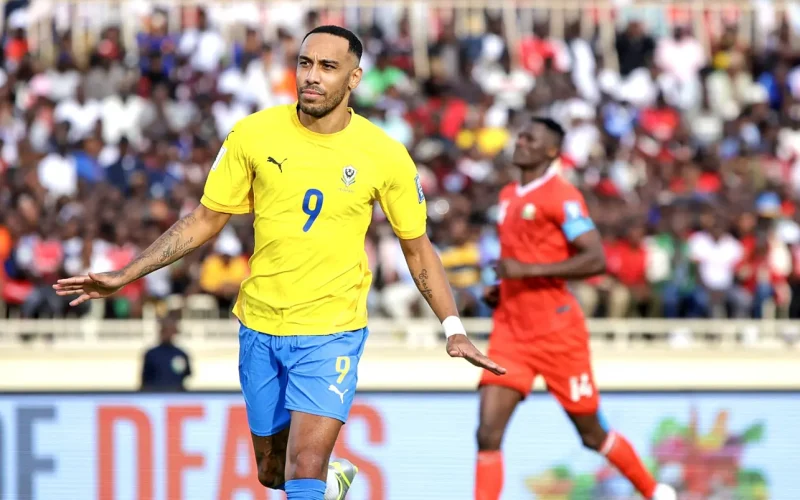
Former Cardiff City defender Ecuele Manga, 37, was dropped for the Ivory Coast match by head coach Thierry Mayouma, who has now been removed from his position by government decree. Aubameyang, 36, had returned to his club Marseille with a thigh injury before the match but played in Gabon’s other two defeats.
The former Arsenal and Chelsea striker, his nation’s all-time leading scorer, appeared to have played his final match for Les Panthères when he came off the bench during their 1-0 loss to Cameroon. He also scored in their 3-2 opening defeat to Mozambique.
The tournament debacle came on the heels of Gabon’s failed World Cup qualification campaign, where they lost to Nigeria in a playoff semi-final after narrowly missing automatic qualification by a single point.
CONTINENTAL OUTCRY
The government’s seizure of control over team selection, coaching decisions and squad management has drawn widespread condemnation from football officials across Africa. Critics argue that the move not only violates FIFA regulations but sets a dangerous precedent for political interference in sport.
While government disbanding of national teams was once common practice across African nations, FIFA has worked to eliminate such interventions through strict enforcement of its independence requirements. The Gabon case now represents a direct challenge to those efforts and will likely trigger swift action from Zurich.
For Aubameyang and Ecuele Manga, both in the twilight of their careers, the lifetime bans imposed by their own government represent an ignominious end to their international service. The pair are now caught in the crossfire of a political crisis that threatens to isolate Gabonese football on the world stage.
As the AFCON tournament continues in Morocco, the Gabon crisis has overshadowed action on the pitch, serving as a stark reminder of the volatile intersection between politics and football in African sport.