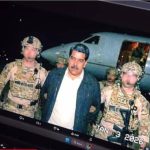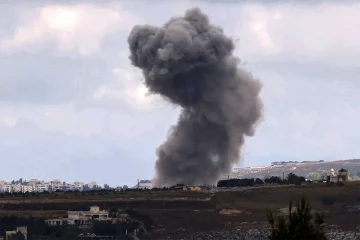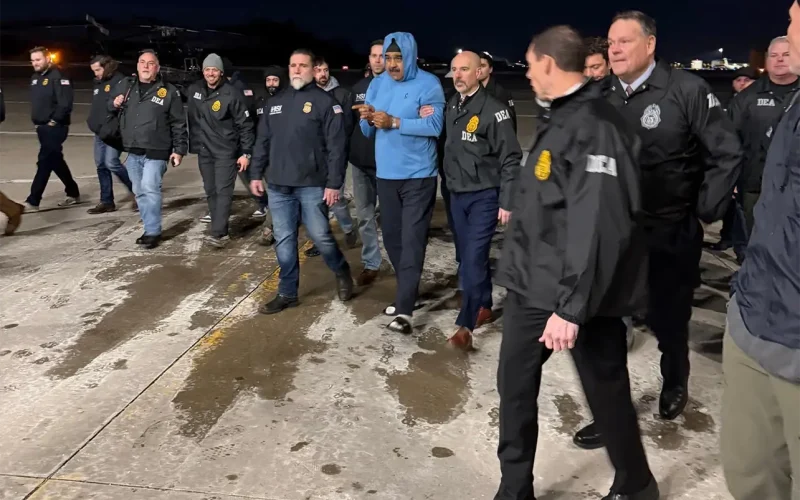
THE world is witnessing what may be the most audacious assertion of American power in a generation, as deposed Venezuelan President Nicolás Maduro sits in a Brooklyn detention cell awaiting trial on drug trafficking charges following an extraordinary weekend military raid that has sent shockwaves through international diplomacy.
The operation, U.S. Special Forces descending on Caracas by helicopter to extract a sitting head of state, represents the most dramatic American intervention in Latin America since the 1989 Panama invasion. But unlike that Cold War-era action, this raid comes at a moment when the post-World War II international order appears increasingly fragile, making its implications far more uncertain and potentially destabilising.
As Maduro made his initial court appearance Monday in Manhattan, the United Nations Security Council prepared to debate whether the United States had just shattered fundamental principles of international law. The anxiety in diplomatic circles is palpable: If Washington can unilaterally seize a foreign leader it considers illegitimate, what constraints remain on great power behaviour?
The High-Stakes Poker Game
President Donald Trump has framed the operation in characteristically transactional terms: Venezuela has the world’s largest oil reserves — 303 billion barrels — and Trump wants American companies to have access. The drug trafficking charges against Maduro, while serious, appear secondary to Trump’s repeated declarations that the U.S. is “taking back what they stole” and that American oil interests will return.
Yet the path forward remains deeply unclear. Venezuela’s interim president, Delcy Rodríguez, initially condemned the raid as colonial kidnapping before pivoting Sunday to invite cooperation with Washington. This dramatic reversal suggests Caracas understands its precarious position: Trump has threatened another strike if Venezuela doesn’t open its oil sector and curb drug trafficking.
The question now consuming diplomatic and political observers worldwide is whether this gambit will succeed or backfire catastrophically.
A Dangerous Precedent
Russia, China, and Venezuela’s leftist allies have condemned the operation in the strongest terms. Cuba reported that 32 of its military and intelligence personnel died during the raid — a detail that underscores both the violence of the operation and Havana’s deep involvement in Maduro’s security apparatus.
More tellingly, America’s traditional allies have responded with studied ambiguity. While most Western governments never recognised Maduro’s presidency due to electoral fraud allegations, they have stressed the need for dialogue and respect for international law — diplomatic language that barely conceals their discomfort with Trump’s methods.
“Judging by the reactions from European leaders to date, I suspect that U.S. allies will equivocate exquisitely in the Security Council,” noted International Crisis Group analyst Richard Gowan, capturing the delicate position of nations that oppose Maduro but fear the precedent Trump has set.
Venezuela’s Uncertain Future
Inside Venezuela, an eerie calm has settled over the country as 30 million people wait anxiously to see what comes next. Maduro opponents are not celebrating — his allies remain in control of the government and military, creating a dangerous power vacuum with no clear resolution.
Trump has complicated matters further by dismissing opposition leader María Corina Machado, a Nobel Peace Prize laureate whom many Venezuelans see as their rightful president. This decision has baffled the Venezuelan opposition and diaspora, who assumed this would be their moment to reclaim power.
Instead, Trump appears willing to work with elements of the current Chavista government, provided they cooperate on oil and drug interdiction. How the United States plans to partner with officials who are sworn ideological enemies of capitalism remains one of the operation’s many unanswered questions.
Domestic Political Fallout
The raid has ignited fierce debate in Washington, where opposition Democrats claim they were misled about the administration’s intentions. Secretary of State Marco Rubio is scheduled to brief congressional leaders on Monday, likely facing pointed questions about the legal and strategic basis for the operation.
While most Trump supporters have praised the raid as a decisive victory, a handful of conservative voices have criticised it as contradicting his “America First” doctrine of avoiding foreign entanglements. The tension between nationalist rhetoric and interventionist action may become more pronounced if the situation in Venezuela deteriorates.
The World Watches and Waits
Financial markets have responded with a mixture of opportunism and anxiety. Venezuelan government bonds surged on hopes of regime change, while defence stocks climbed on expectations of continued instability. Oil prices edged upward, though the market appears to be waiting for clarity on whether Venezuela’s battered industry can actually increase production.
Venezuelans themselves are stockpiling food and medicine, preparing for potential instability even as their streets remain unusually quiet. The country’s oil sector, decimated by years of mismanagement and sanctions, currently produces just 1.1 million barrels per day — a third of its 1970s peak. Rebuilding that capacity would require massive investment and technical expertise that may take years to materialise.
As Maduro spends 23 hours per day in a cell at the notorious Metropolitan Detention Centre — the same facility that held Ghislaine Maxwell and Sean “Diddy” Combs — the world confronts a series of profound questions that will shape international relations for years to come.
Has Trump demonstrated that decisive action can reshape geopolitics in America’s favour? Or has he undermined the rules-based order that has prevented great power conflicts for eight decades? Can Venezuela transition to a functioning democracy and productive oil producer? Or will it descend into chaos that sends another wave of refugees northward?
The answers remain uncertain. What is clear is that the audacious gambit in Caracas has created a moment of maximum anxiety and possibility — and the entire world is watching to see what unfolds next.