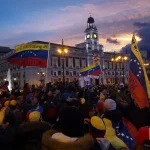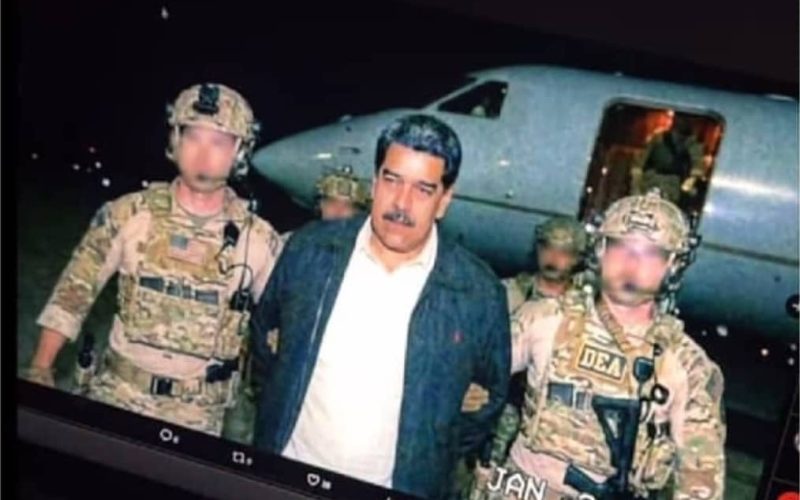
THE missiles have fallen on Caracas. The president of Venezuela has been seized. The condemnations have been issued. The emergency UN Security Council meeting has been called. And now comes the question that should terrify anyone who values a world governed by law rather than force: What then?
When the United States can bomb a sovereign capital, kill civilians, and kidnap a head of state – regardless of that leader’s legitimacy or crimes – without facing meaningful consequences, what remains of the international order painstakingly constructed after two world wars cost tens of millions of lives?
The answer, increasingly, appears to be: nothing that cannot be swept aside by superior firepower.
Brazil’s President Lula warned that the U.S. operation represents a world where “the law of the strongest prevails over multilateralism.” But perhaps the more disturbing truth is that this world has already arrived. The bombing of Caracas and the extraction of Nicolás Maduro is not a deviation from international norms – it is the violent acknowledgment that such norms exist only insofar as powerful nations choose to respect them.
UN Secretary-General António Guterres called the events “a dangerous precedent.” But precedents only matter in systems where past actions constrain future behavior. What enforcement mechanism exists to prevent this precedent from being invoked again and again?
The UN Security Council can meet. It can debate. It can even pass resolutions – assuming the United States doesn’t veto them. But the fundamental impotence of the institution has been laid bare. When a permanent Security Council member violates the UN Charter through armed aggression, the “government of the world” reveals itself as little more than a debating society, its authority extending only as far as the powerful permit.
The Domino logic of military adventurism
If a sitting U.S. administration can designate a foreign leader as the head of a terrorist organisation and deploy military force to seize him, what prevents Russia from declaring Ukrainian President Volodymyr Zelensky a “Nazi” leader of a terrorist regime and acting accordingly? Moscow has already used precisely this language to justify its invasion. The U.S. operation in Venezuela offers a template, complete with humanitarian justifications and legal pretexts.
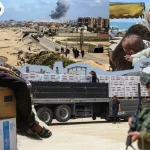
What stops Israel from expanding operations beyond Gaza’s borders, citing the presence of Hamas leadership in other nations? What prevents Rwanda from escalating its involvement in the Democratic Republic of Congo, citing security threats and criminal networks?
Most ominously, what restrains China regarding Taiwan? Beijing has long maintained that Taiwan is a breakaway province harboring separatist elements. If the international community cannot muster an effective response when Washington bombs Caracas to capture a “narco-terrorist,” why would Beijing believe the world would respond more forcefully if it uses military force to reunify what it considers its own territory?
The Trump administration’s stated justification – that Maduro leads a narco-terror organization rather than a legitimate government – actually makes the precedent more dangerous, not less. It suggests that any nation with sufficient military power can simply reclassify another country’s leadership as something other than a government, and thereby exempt itself from the legal protections that sovereignty is supposed to provide.
Venezuelan Vice President Delcy Rodríguez demanded “immediate proof of life” for the detained leaders. The request itself is extraordinary: a nation’s vice president must plead for information about her president’s whereabouts and condition from a foreign power. This is not the language of international relations between sovereign equals. It is the language of subjugation.
The question facing every smaller nation without nuclear weapons or powerful allies is stark: If sovereignty can be violated this brazenly against Venezuela, a country with significant oil reserves and regional influence, what protection exists for nations with fewer strategic assets?
Trinidad and Tobago’s prime minister felt compelled to publicly declare that her country was “NOT a participant” in the military operations and maintains peaceful relations with Venezuela. The very fact that such a statement was deemed necessary reveals the anxiety rippling through the region. Neutrality itself may no longer be a viable position when great powers decide to act.
The Hypocrisy that erodes all credibility
For decades, the United States has positioned itself as the defender of international law and the rules-based order. American officials have condemned Russia’s invasion of Ukraine, China’s aggression toward Taiwan, and countless other violations of sovereignty and territorial integrity.
How does that moral authority survive Saturday’s bombing of Caracas?
When Secretary of State Marco Rubio insists that Maduro is “NOT the President of Venezuela” but rather a cartel leader, he makes the same category error that authoritarians have always made: conflating what one wishes were true with what actually is true. Maduro may be illegitimate in the eyes of many Venezuelans and much of the international community. He may well be guilty of narco-trafficking and numerous other crimes. But he is, as a matter of observable fact, the person exercising presidential authority in Venezuela, commanding that nation’s military and government apparatus.
The U.S. operation was not a law enforcement action. It was an act of war dressed in the language of criminal justice. And this rhetorical sleight of hand makes future violations of sovereignty easier, not harder. Every nation can now claim that the leaders they oppose are not really leaders at all, but criminals, terrorists, or threats that justify military intervention.
Ukraine, Gaza, and the death of consistency
The United States has provided tens of billions of dollars in military aid to Ukraine to help it resist Russian aggression and restore its territorial integrity. The Biden and Trump administrations have both maintained that Russia’s invasion represents an intolerable violation of the international order that must be opposed.
How does this position survive the bombing of Caracas? Will Ukrainian officials now wonder whether American support for sovereignty is conditional – applying fully only when opposing U.S. adversaries, but negotiable when American interests dictate otherwise?
Israel’s military operations in Gaza have drawn international criticism precisely because they have killed thousands of civilians and violated the sovereignty of neighboring nations in pursuit of Hamas leaders. The United States has often defended Israel’s right to act against terrorist threats while calling for proportionality and protection of civilians. The Venezuela operation – which killed Venezuelan civilians on Venezuelan soil to capture Venezuelan leaders – obliterates any remaining distinction between counterterrorism and armed aggression.
In the Democratic Republic of Congo, Rwanda has long cited security threats and criminal networks to justify its involvement in eastern Congo. The international community, including the United States, has consistently called on Rwanda to respect DRC sovereignty. That position becomes exponentially harder to maintain after Washington’s operation in Venezuela.
The United Nations: A hollow shell and the reform that never comes
Secretary-General Guterres expressed being “deeply alarmed.” His spokesman emphasized the importance of respecting international law. The Security Council will convene an emergency session at Venezuela’s request.
And then what?
The fundamental crisis of the United Nations is that it was designed to prevent exactly this kind of great power aggression, but it has no enforcement mechanism when the aggressor is one of the five permanent Security Council members. The U.S. can and will veto any resolution condemning its actions. Russia and China will certainly support such a resolution, but their support is motivated by their own interests in preserving the principle of sovereignty—a principle they themselves violate when convenient.
The UN’s impotence at this moment is not a bug but a feature. The organization was designed to give great powers a forum for managing their conflicts, not to constrain their freedom of action when they decide their vital interests are at stake. The Venezuela operation makes plain what has always been true but is usually politely obscured: the UN can only function when powerful nations choose to let it function.
The reform movement’s bitter vindication
For decades, nations from the Global South – particularly African countries – have led increasingly urgent calls to reform and reconstitute the UN Security Council. South Africa, Kenya, Nigeria, and others have consistently argued that a body established in 1945 to reflect the power realities of post-World War II cannot legitimately govern a 21st-century multipolar world.
Their argument has been straightforward: How can a Security Council claim to represent global security interests when an entire continent of 1.4 billion people has no permanent seat? How can it maintain legitimacy when the permanent five – the United States, Russia, China, France, and the United Kingdom – hold veto power that essentially places them above the very international law the UN was created to uphold?
The bombing of Caracas is not an argument against these reform efforts. It is their complete vindication.
South Africa has been particularly vocal in pushing for Security Council reform, arguing that the current structure is a “historical injustice” that perpetuates colonialism in a new form. At the UN General Assembly, South African representatives have repeatedly pointed out the absurdity of a system where five nations can commit or enable atrocities while wielding veto power to prevent any accountability.
Kenya, currently serving as a non-permanent Security Council member, has championed the Ezulwini Consensus – the African Union’s common position demanding at least two permanent seats for Africa with full veto powers. Kenyan diplomats have argued that without structural reform, the Security Council will continue to be a tool of great power interests rather than a guardian of collective security.
The Venezuela operation proves them right in the most devastating way possible. When the United States can bomb a sovereign nation, kill civilians, and extract its head of state—and then veto any Security Council resolution condemning these actions—the case for reform transcends diplomatic nicety and becomes an existential question about whether global governance means anything at all.
The cruel irony of permanent impunity
The bitter irony is that the very nations calling for Security Council reform will now watch as that unreformed Council fails, once again, to hold a permanent member accountable. The emergency session will convene. African nations, Latin American countries, and others will condemn the U.S. operation in the strongest terms. They will cite the UN Charter, invoke international law, and demand accountability.
And then one of the five permanent members will exercise its veto, and the matter will be closed.
This is not a theoretical failure. It is the pattern that has played out repeatedly: when Russia annexes Crimea, Russia vetoes accountability. When the United States invades Iraq without Security Council authorization, American power prevents meaningful consequences. When China crushes dissent or threatens neighbors, Chinese veto power shields it from UN action. When France intervenes in its former colonies, French diplomatic weight ensures silence.
The permanent members have created a system that makes them, quite literally, above international law. They are the prosecutors, judges, and jury of international order – except when they themselves are the accused, at which point they simply dismiss the case.
African nations have been warning about this crisis of legitimacy for years. Nigeria’s former President Olusegun Obasanjo called the current Security Council structure “unjust, undemocratic, and incapable of meeting the challenges of the 21st century.” Ghana, Sierra Leone, and other African nations have joined the chorus, pointing out that the continent most affected by Security Council decisions about peacekeeping and intervention has the least say in those decisions.
Why reform never happens – and why that matters now
The reason Security Council reform has never materialized is simple: it requires the consent of the very permanent members whose power it would dilute. The United States, Russia, China, France, and the United Kingdom must all agree to reforms that would constrain their own authority. They will not do so.
This creates a trap. The Security Council cannot function legitimately without reform. But it cannot be reformed without the consent of those who benefit from its current dysfunction. And so it persists as a zombie institution – maintaining the appearance of global governance while providing cover for great power impunity.
The Venezuela operation brings this dysfunction into sharp relief. As the Security Council convenes to discuss American aggression, the American representative will sit at the table with veto power over any resolution. It is a judicial proceeding where the accused serves as judge. It is governance as theater.
For African nations and other Global South countries that have long pushed for reform, this moment must feel like watching a disaster they predicted unfold in slow motion. They warned that an unreformed Security Council would fail to constrain great power aggression. They argued that without structural change, the Council would become increasingly irrelevant as nations with military power realised they could act with impunity. They insisted that the legitimacy crisis would eventually threaten the entire international order.
They were dismissed as unrealistic, as seeking changes that disrupted the “stability” provided by the permanent members. Now, as missiles fall on Caracas and the Security Council proves powerless to respond, their warnings echo with terrible prescience.
The question that reform cannot answer
But here is the uncomfortable truth that even Security Council reform advocates must confront: Would a reformed Council have prevented the bombing of Caracas?
If Africa had permanent seats with veto power, would that constrain American military action? Or would it simply mean that six or seven or eight nations could act with impunity instead of five? If India and Brazil joined as permanent members with vetoes, would they use that power to defend international law – or to protect their own freedom of action when they decide their interests require it?
The rot may go deeper than the Security Council’s structure. The problem may not be which nations sit at the table, but the very concept of a global security order that relies on the most powerful nations to police themselves.
Perhaps the calls for Security Council reform, as necessary and just as they are, represent a tragic hope: the belief that the right institutional design can constrain power, that the right rules can tame the strong, that international law can be made to matter through better governance structures.
The Venezuela operation suggests a darker possibility: that no institutional reform can solve the fundamental problem of a world system where some nations possess overwhelming military power and others do not. That sovereignty and international law are not rights secured by institutions but privileges granted by the powerful and revocable at will.
If this is true, then Security Council reform – however necessary for justice and legitimacy – may be rearranging deck chairs on a sinking ship. The problem is not that the wrong nations have veto power. The problem is that veto power exists at all. The problem is not that Africa lacks representation. The problem is that any system requiring great powers to consent to their own restraint will inevitably fail when those powers decide restraint is no longer convenient.
South Africa, Kenya, and other nations calling for reform deserve to be heard and taken seriously. Their diagnosis of the Security Council’s illegitimacy is accurate. Their prescription for reform is just. But the bombing of Caracas raises a question that even reform cannot answer: What institution can govern a world where power, not principle, remains the ultimate arbiter?
Quo Vadis: Where do we go from here?
The Latin phrase “Quo vadis?” – “Where are you going?” – was supposedly asked of Saint Peter as he fled persecution in Rome. The question now faces the entire international community.
If there are no meaningful consequences for the bombing of Caracas and the kidnapping of Maduro, then the message to every nation with the military capacity to impose its will is clear: the constraints are off. Act according to your power, dress your aggression in whatever legal or humanitarian language proves convenient, and the international community will issue statements, hold meetings, and ultimately adapt to the new reality you have created by force.
China has been watching. Beijing has long maintained that eventual reunification with Taiwan is inevitable and that it reserves the right to use force if necessary. The primary deterrent has been the expectation of massive international opposition and potential military intervention by the United States. But if America can bomb a Latin American capital to seize a leader it deems illegitimate, how strong is the international prohibition against Beijing doing the same across the Taiwan Strait?
Russia has been watching. Moscow has already justified its Ukraine invasion with claims about protecting Russian speakers and eliminating a neo-Nazi regime. The U.S. operation in Venezuela provides a fresh template: designate the target government as something other than a legitimate government, claim a security imperative, and act. The hypocrisy charges will fly, but hypocrisy has never started a war or prevented one.
Smaller nations have been watching. Every country without nuclear weapons or a powerful patron must now calculate: sovereignty is not a right but a privilege extended by the forbearance of those with greater military power. That forbearance, as Venezuela discovered, can be revoked at any time for reasons that have little to do with international law and everything to do with power politics.
The uncomfortable truth
Perhaps the most disturbing aspect of the Venezuela operation is that it may not represent a break with the international order at all. Perhaps it simply makes explicit what has always been true: that international law applies differently to the powerful than to the weak, that sovereignty is respected when convenient and violated when inconvenient, and that the “rules-based international order” is more accurately described as “rules for some, order imposed by the strong.”
Senator Andy Kim warned that the strike “sends a horrible and disturbing signal to other powerful leaders across the globe that targeting a head of state is an acceptable policy.” But that signal has now been sent. It cannot be unsent. The precedent has been set. It cannot be unset.
What then? The answer is that we find out whether the international system can survive the open acknowledgment of what many have long suspected: that it never really existed in the first place, at least not in any form that could constrain great powers determined to act.
The coming months and years will reveal whether the bombing of Caracas was an isolated spasm of unilateral American power or the opening act in a broader return to the law of the jungle in international affairs. Early indicators are not encouraging. When the world’s self-proclaimed guardian of the international order decides that order no longer serves its interests, every other nation with the capacity to do likewise will draw its own conclusions.
The outrage will fade. The condemnations will be forgotten. The UN meetings will end without meaningful action. And the question that will remain, hanging over every regional dispute and power competition, is the same one that has haunted international relations since the Peace of Westphalia: Might makes right. What then?
The answer, it appears, is whatever the mighty decide.