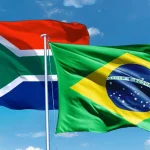
THE street on which the South African Embassy in Brasilia stands is called the ‘Avenue of Nations’ – (Avenida das Naçôes). When Brasilia was built in the early 1960, the aim was to situate most embassies in the same location. A short secluded segment of this avenue is home to the embassies of the United Kingdom, Australia, South Africa, Netherlands, France and the United States of America – in that order of sequence. Interestingly, the Netherlands, South Africa’s former colonial master, is adjacent to the embassy of its former colony.
I have often pondered the historical forces that conspired to bring these six embassies together. Whilst I cannot claim to have the incontestable answer, it has occurred to me that throughout the periods of military dictatorship in Brazil, the United States, Britain, Australia, Netherlands and France were all strategic partners of the apartheid regime in South Africa. The brutal military dictatorship that came to power in Brazil in 1964 cemented the strategic alliance between Brazil and South Africa. The congregation of these big power embassies, alongside a small global player like South Africa, might be informed by the history of that friendship and alliance.
From the very beginning, Brazil’s relationship with the African continent was predicated on slavery and colonialism. The transfer of the Portuguese Court (authority of the monarchy) from Lisbon to Brazil at the time of Napoleonic invasion of Portugal, ensured that the relationship of slave-giver and slave-recipient was a direct one between Africa and Brazil, and it undermined the triangular relationship between Portugal, Africa and Brazil. Lisbon’s power over its colonies in Africa was weakened at the time.
The end of the slave trade, however, was accompanied by the isolation of Africa from Brazil, as it became more difficult and less economically viable to import slave labour from the African continent. Brazil’s policy of ‘whitening the population’ also reinforced and consolidated the isolation of Africa and re-established its strong racial kinship with Europe.
At the time of the African national liberation struggles after World War 2, ties between Brazil and Africa were mainly through colonial powers. However, Brazil had a particularly direct link with apartheid South Africa.
By the late 1970s and early 1980s, South Africa and Brazil were collaborating in developing nuclear capability and campaigning against the Nuclear Non-Proliferation Treaty. By 1966, the General Assembly of the United Nations had already condemned apartheid as a crime against humanity, heightening the aversion other African countries already felt towards Brazil’s political, economic and military ties with apartheid South Africa.
It was also at this time that Brazil resisted condemning Portugal in the United Nations for its colonial atrocities in Africa.
Jânio Quadros, the Brazilian president who served for a short time in 1961, was the first Brazilian leader to institute cooperative relations with Africa. One of his first gestures was to send his Foreign Minister, Afonso Arinos, to Leopold Senghor’s Senegal to celebrate that country’s independence. Unbelievable as it may sound today, Arinos was the first Brazilian foreign minister to visit Africa. Quadros went on to open new embassies in Senegal, Ivory Coast, Nigeria and Ethiopia. A scholarship programme was also launched for African students in Brazil. Raimundo de Souza Dantas, a black writer and journalist, was the first Afro-Brazilian ambassador, and was appointed to Ghana.
The appointment of the black journalist as the first Brazilian ambassador was itself a demonstration of the absence of black diplomats at Itamaraty (Brazil’s Foreign Ministry). It was also a demonstration of how Brazil and Itamaraty had neglected relations with Africa. President Kwame Nkrumah understood Dantas had been especially sought as a black person from outside Itamaraty for the purpose of sending him as the first Brazilian ambassador to an African country. That is why on receiving Dantas, he commented that the real demonstration of Brazil’s ‘racial democracy’ would be seen the day Brazil appoints a black ambassador to a white nation.
Despite these positive developments in Brazil’s policy towards Africa, the country still found itself hamstrung by its strategic relationship with the West, especially with America. Having displayed positive signals of an independent foreign policy, Quadros’s Brazil received a letter of invitation from Gamal Nasser of Egypt, Josip Tito of Yugoslavia and Achmed Sukarno of Indonesia to attend the preparatory conference of the Non-Aligned Movement (NAM) in Cairo in 1961. The conference was to adopt three principles: non-participation in military alliances with major blocs; not to grant military bases to foreign powers in member states of NAM; and active support for national liberation movements. However, because of Brazil’s strategic geopolitical and economic relations with America, Quadros could not participate in the NAM conference because Brazil at the time could not endorse the three above-mentioned principles of NAM. That would have offended America, the ally to Brazil.
Apart from its affinity with Europe, Brazil’s foreign policy had for many years been influenced by the American-led concept of ‘Pan-Americanism’.
In the mid-1930s, President Franklin D Roosevelt proposed the American-led Conference of Union of the American Peoples which Brazil endorsed.
Despite Brazil’s deep connections to the economic, cultural and social history of Africa, the two had struggled to find each other politically until recent decades.
Today we are pleased that we find ourselves in a different Brazil and a different era that sees closer cooperation with the African continent. This new posture gives fresh hope of a capacity and a will in Brazil to reinvoke its African relevance and its belonging that was suppressed by slavery, the Portuguese monarch and colonialism over five centuries.
The African diaspora in Brazil is the important foundational aspect on which Brazilian foreign policy towards Africa is built. Foreign relations studies often make the point that the foreign policy position of a country reflects, and is in turn reflected, by its domestic policy. The two feed into each other and Brazil is no exception. This constituency serves as an important platform which encourages positive foreign policy towards Africa. The people of Africa and Afro-Brazilians are two sides of the same coin – their ultimate emancipation rests on their coming closer together in collaborative action.
Recognising the benefits of collaboration between the African Diaspora and the people of Africa, Article 3(q) of the Protocol on Amendments to the Constitutive Act of the African Union of 2003 expressly invites the African Diaspora to participate as an important part of building the union. The Diaspora Division of the AU is meant to serve as a catalyst for building the global African family. The objective is to create a broad front of partnership that is political, economic, social and cultural, designed to serve both the people of Africa and those in the Diaspora.
The interaction between the African Diaspora and the people of the African continent has largely been driven by non-state actors like NGOs, black cultural institutions, black think-tanks and academic institutions, with governments being on the periphery. This is partly understandable, given that the African Diaspora does not run governments in many countries where it is found and that, except for some islands in the Caribbean where they control the state, blacks are generally excluded and marginalised.
On 15 March 2023 the Minister of Foreign Affairs in Brazil, Mr Mauro Vieira, hosted a luncheon for African ambassadors accredited to the country and in his address said the following words,
“Resuming the primacy given to Africa is part of projecting an important component of our identity as a country. It is always important to remember that Brazil has the largest black population outside Africa; 54% of the Brazilian population are of African descent, something around 112 million people, which would be enough to place us as the third most populous country in Africa”.
What Minister Vieira was referring to is that there are only two countries in the world that can claim to have more black people than Brazil, and those countries are Nigeria and Ethiopia. This is not just an interesting and often ignored statistics, it also signifies the role that the African Diaspora in Brazil can play in leading integration with Africa.
This fact ties neatly with what President Lula said on 10 February 2023 when he visited Washington,
“You know that Brazil owes much of its culture to Africa. It is a debt that cannot be paid in cash. It is Brazil’s historic and humanitarian obligation to maintain a beautiful relationship with the African continent”.
The statement poses a major challenge to Afro-Brazilians, as it shows that under Lula, the Afro-Brazilian community has more latitude to play a larger and more meaningful role in Brazil-Africa relations. Given that the Brazilian African Diaspora is the largest in the world, it has a particular responsibility in this regard. The African American community is smaller but has a more impactful experience of collaboration with the people of Africa.
Globally, the African Diaspora is crying out for leadership. Support by the current Brazilian political leadership needs to be constantly encouraged by Afro-Brazilian activists, and not taken for granted.
The moral and political agency of the African people and that of the African Diaspora rest, in part, on their ability to integrate into a common human heritage that contributes meaningfully to the evolution of a rich, equitable and a shared human civilisation.
*This is an edited version of an Africa Day Lecture by Vusi Mavimbela, South Africa’s Ambassador to Brazil at The Federal University of Bahia – Salvador, Brazil