TO many of my interlocutors, it comes as a big surprise when I tell them of the many parallels and similarities between South Africa and Brazil. South Africa shares more historical parallels and present-day characteristics with Brazil than any other country in Sub-Saharan Africa. In this short paper, I will make no attempt to sketch out all of them, but only a significant few. I will also try to track the historical relationship between the two countries, culminating in bilateral relations within the current global conjuncture.
In 1488, Bartolomeu Dias, a Portuguese voyager, landed in South Africa and called the area the Cape of Good Hope. Vasco da Gama, another Portuguese voyager, arrived in the Cape region of South Africa in 1497. By the time they left, they had been in touch with the indigenous Khoikhoi people.
Twelve years after Dias landed in the Cape of Good Hope, another Portuguese, Pedro Alvares Cabral, docked his fleet in Porto Seguro, in the northeast of Brazil, in 1500. Therefore, the first European sea voyagers to set foot in our two countries were the Portuguese.
The eventual colonisation of the two countries followed similar patterns and left strikingly similar features in the two societies. What are some of these cardinal features that the two countries share, but which South Africa does not share with Sub-Saharan Africa?
During slavery and colonialism in Brazil, large population groups, mainly the Portuguese, transferred from Europe and settled in the colony. They were responsible for the large-scale importation of African slaves at rates greater than any other country in the Americas, including African slaves that were imported to the United States of America. Subsequently, large immigrant populations came into Brazil in pursuit of economic opportunities that the growing Brazilian economy promised. That included the Spanish, Italians, Russians, Germans, Polish, etc., but also Japanese, Lebanese, Syrians, and so forth.
In South Africa, the colonising population groups were mainly the Dutch and the British. Similarly, as in Brazil, the South African colonial economy needed more labour for its sustainability and its growth. Although South Africa did not experience the classical slave trade into the country, in 1860, indentured Indian labourers were the first group to be imported from Madras, India, on the promise of a slave wage and free voyage to work in the sugar cane plantations of Port Natal, the present-day city of Durban. In 1904, the first recruited Chinese labourers arrived in Witwatersrand near Johannesburg to supplement the indigenous African workforce in the gold mines.
What is significant about colonial-era migration into Brazil and South Africa is that a significant number of the immigrants settled permanently in the two countries and multiplied their populations over time. In most of Sub-Saharan Africa, at the time of decolonisation in the 1950s, 1960s, and 1970s, most colonising immigrants left and went back to their countries of origin. In Brazil and South Africa, immigrant communities that settled permanently account for the present-day greater racial, ethnic, and cultural diversity in the two countries, something that is absent in the rest of Sub-Saharan Africa.
The other common feature of our two countries was the massive land dispossession of the colonised and indigenous populations, which is still a defining feature of the two societies even today. The same cannot be said about the rest of Sub-Saharan Africa, where the land was returned to the indigenous populations when immigrant populations left at the time of decolonisation.
Linked to the question of massive land dispossession is the extent to which, in both countries, indigenous populations were exterminated, and the few that remained have been confined to remote existence on the periphery of our societies.
In South Africa, we use the concept of ‘Colonialism of a Special Type’ (CST) to describe the case where the coloniser and the colonised permanently settle in the same colonised territory. This is different from classical colonialism, where the colonising country or population is located away from the colonised country. If we use this definition, we can say that CST happened in Brazil when Dom Pedro announced Brazil’s unilateral declaration of independence from Portugal on September 7, 1822. He declared himself a monarch of the Brazilian Empire.
In South Africa, the CST was cemented on May 31, 1910, when the Union of South Africa was established by the British and the Afrikaners (Dutch descendants) by putting together into one bigger territory the fragmented colonies of the Cape, Natal, Transvaal, and Orange River.
In both countries, the onset of CST left enduring special societal characteristics, evidenced by racial disparities and inequalities in the ownership of land and access to other national resources.
It is therefore no surprise that independent surveys and research institutions today are consistent in pointing out that societies in both countries are among the most unequal in the world.
In the decade of the 1970s, as the world campaigned against nuclear weapons and proliferation, South Africa and Brazil were collaborating in trying to develop nuclear capability, and both countries actively opposed the Nuclear Non-Proliferation Treaty that was being negotiated by world leaders at the time.
Political and diplomatic relations between South Africa and Brazil go back to 1918 when Brazil opened a trade Consulate in Cape Town, under the then Union of South Africa. In 1948, Brazil opened a diplomatic legation in Pretoria, and South Africa did the same in Rio de Janeiro, the then capital of Brazil.
In 1971, South Africa upgraded its diplomatic office to a full embassy, and Brazil followed suit in 1974.
The 1970s were also characterised by heightened repression under the military dictatorship in Brazil; at the same time, there was the intensification of Apartheid repression in South Africa. In the 1960s, Nelson Mandela and his comrades had already been sentenced to life imprisonment on Robben Island. Even under that extreme repression of the 1970s, academics, activists, and intellectuals in both countries cross-pollinated their experiences and reinforced one another morally, politically, culturally, organisationally, and pedagogically. Perhaps the two exemplary individuals in this regard are the Brazilian Paulo Reglus Neves Freire and the South African Steven Bantu Biko.
Paulo Freire’s influential book ‘Pedagogy of the Oppressed’ became the Bible of the anti-Apartheid student movement, trade unions, and Black Consciousness organisations in South Africa in the decades of the 1970s and the 1980s. It continues to influence a lot of progressive pedagogy in South Africa today. On the other hand, Steve Biko’s activism, his arrest and death in Apartheid custody, as well as the collection of his writings entitled ‘I Write What I Like’, continue to galvanise Brazilian progressive activism up to this day.
Paulo Freire argued that students should not be treated as if they were a tabula rasa (a blank slate or empty receptacle) on which the teacher must scribble or deposit his ideas. Rather, he saw education as a regulation of interactive social consciousness where both the teacher and the student reconstruct themselves into new beings.
This approach in Freire’s pedagogy became an important weapon in South Africa to combat and revolt against the oppressive system of Bantu Education. Bantu Education was an inferior education system and curriculum that was especially designed for black people as a way of limiting their access to knowledge and perpetuating their inferior status in society.
Progressive trade union movements in South Africa employed ‘Pedagogy of the Oppressed’ in adult education classes to teach illiterate workers, student movements, and community organisations used it to counter the damage that came with Bantu Education. It contributed greatly to opening the eyes of the student movement that led to nationwide student uprisings against the system of Bantu Education in the black townships of Soweto in 1976.
My own alma mater, the University of Kwa-Zulu Natal- Pietermaritzburg, continues to host a Paulo Freire Project.
In November 2021, I visited the Steve Biko Cultural Institute in Salvador, Bahia. It was founded in 1992 by a group of Afro-Brazilian student and teacher activists. These activists were younger in the 1970s when Steve Biko’s ideas began to spread and when he was killed in police custody on September 12, 1977, but they were influenced by his teachings. The Biko Institute draws its inspiration and its raison d’etat from Biko’s dictum that “The most powerful weapon in the hands of the oppressor is the mind of the oppressed”. This assertion by Biko also echoes the foundations of Freire’s ‘pedagogy of the oppressed’; they both call for an education that liberates the mind.
Paulo Freire’s own life under the military dictatorship in Brazil mirrored what happened to Steve Biko in the 1970s in South Africa. Freire was subjected to rigorous interrogation by the military police and accused of being a communist. He was thrown into jail, his writings were confiscated, and he was eventually exiled. In South Africa, Steve Biko was also harassed by the Apartheid police and the courts, detained and banned, his writings declared subversive, and eventually killed in police custody.
This is a tale of two outstanding individuals who have exerted groundbreaking progressive influence in our two countries. These are some of the intangibles, but highly impactful human sacrifices and great contributions in ideas and activism that today continue to bind Brazil and South Africa together in pursuit of the emancipation of the marginalised and the poor in both societies.
The volume of trade between the two countries is not reflective of the size of the two economies and the fact that both countries are the leading economies in their respective regions, South Africa in the African continent and Brazil in Latin America. One of the major factors that militates against expanding trade volumes is that the two countries produce almost similar commodities, both in terms of natural resources and food production. This is largely the consequence of the two countries lying along the same geological and climatic zone
Consequently, in terms of natural resources and much of agricultural products, the two countries are big exporters, largely self-sufficient, and mainly do not need each other. The two countries are essentially competitors for markets. The only difference is that Brazil is a much bigger economy and produces on a much bigger scale and at cheaper rates given more advanced research and economies of scale. That allows for cheaper Brazilian agricultural products like poultry that tend to flood much of the African market, including in South Africa.
Another obstacle to greater trade cooperation between the two countries is that Brazil is largely a closed economy to African countries, something that Africa hopes Brazil’s willingness to open up to Africa under President Lula’s inspired foreign policy might help to ameliorate. To many South African companies, Brazil has a reputation for high barriers to trade. The World Bank’s 2022 index on the ease of doing business ranked Brazil at 124 out of 190 countries, while South Africa was placed at 98. We hope Brazil will find a way of matching its desire for closer cooperation and economic integration with African economies by negotiating a more open trade regime with Africa.
The same barrier to trade applies to wine imports from South Africa. South African wines have an excellent reputation all over the world, but it is very difficult to find high-quality South African wines in Brazil because of high import tariffs, compounded by Mercosur tariff regulations that protect wines produced in Latin America.
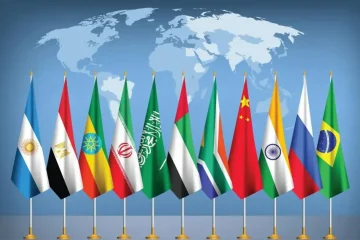
We are also pleased with Brazil’s partnership with Africa in the quest for reformed and democratised multilateral institutions, including the United Nations and its institutions. It is significant that South Africa and Brazil are together members and are influential in organisations like BRICS, IBSA, G20, etc. The struggle of the South for a democratic, just world order will be enhanced if we all function within democratised multilateral institutions where those that have been marginalised for far too long can earnestly find an equal voice among the league of nations.
In conclusion, I want to underline that one of the most fundamental parallels and similarities between, not only Brazil and South Africa, but indeed between Brazil and the African continent, is the large African Diaspora in Brazil. On 15 March 2023, the Minister of Foreign Affairs in Brazil, Mr Mauro Vieira, hosted a luncheon for African ambassadors accredited to the country and in his address said the following words,
“Resuming the primacy given to Africa is part of projecting an important component of our identity as a country. It is always important to remember that Brazil has the largest black population outside Africa; 54% of the Brazilian population are of African descent, something around 112 million people, which would be enough to place us as the third most populous country in Africa”.
What Minister Vieira was referring to is that there are only two countries in the world that can claim to have more black people than Brazil, and those countries are Nigeria and Ethiopia. This is not just an interesting and often ignored statistic; it also signifies historical and cultural bonds that bind Brazil and Africa.
In the year 2000, the African Union (AU) adopted the African Union Constitutive Act, formally recognising the African Diaspora all over the world as the ‘Sixth Region’, in addition to its already existing five regions in the African continent. The Act specifically invites and encourages the full participation of the African Diaspora in building collaborative programmes with the countries in the African continent. Brazil, being the country with the largest African Diaspora in the world, has the special responsibility to lead the African Diaspora in collaboration for mutual development with Africa.
In that regard, it is important to remind ourselves of what President Lula said on 10 February 2023 when he visited Washington,
“You know that Brazil owes much of its culture to Africa. It is a debt that cannot be paid in cash. It is Brazil’s historic and humanitarian obligation to maintain a beautiful relationship with the African continent”.
- This is an edited version of a special address by Vusi Mavimbela, South Africa’s Ambassador to Brazil, at the Federal University of Goiás