FIFTEEN months after formally joining BRICS as a full member on 1 January 2024, Ethiopia is making an unambiguous statement: membership in the Global South’s most consequential multilateral grouping is not symbolic – it is structural.
The Office of the Prime Minister of Ethiopia, presenting a 100-day review alongside a nine-month government performance report, has claimed “tangible progress” in building what it describes as a more competitive, inclusive and resilient economy, underpinned by structural reforms, sectoral transformation and enhanced global engagement.
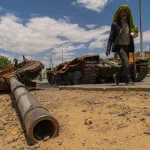
The timing of the report is deliberate. For a government navigating the complex aftermath of the Tigray conflict and the economic pressures of post-pandemic reconstruction, the BRICS narrative offers both credibility and direction.
FROM DIPLOMATIC PRIZE TO ECONOMIC ARCHITECTURE
On the international stage, Addis Ababa says a more active, citizen-focused diplomacy has strengthened regional integration and improved Ethiopia’s global standing. Key achievements cited include accession to BRICS+, expanded trade and investment partnerships, leadership in climate diplomacy, and Ethiopia’s selection as host of the United Nations climate conference in 2027 – COP32.
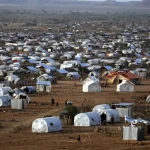
This is a significant aggregation of global capital – political, financial and reputational – for a country that only a decade ago was battling famine narratives and donor dependency. The question that the report raises, but does not fully answer, is the causal relationship: how much of this acceleration is directly attributable to BRICS membership, and how much was already in train under the Abiy Ahmed administration’s reform agenda?
The honest answer is: both. But BRICS provides the institutional scaffolding that makes the ambition legible to the world.
THE NUMBERS BEHIND THE NARRATIVE
Ethiopia’s current GDP growth rate stands at 9.2 percent, with projections reaching 10.2 percent. The average growth rate over the past eight years has been 7.5 percent. In an era when many emerging economies are contracting under the weight of dollar-denominated debt and volatile commodity prices, these figures – if they hold – place Ethiopia among the fastest-growing large economies on the continent.
The investment climate has improved, with more than 2,000 business licences issued, 65 percent of them in the manufacturing sector. Over eight years, 96,000 jobs have been created.
The share of manufacturing in the market has increased from 25 to 46 percent. Agricultural mechanisation has expanded, gold exports have risen significantly, and tourism investment has grown alongside destination diversification.
For BRICS economies with active investment arms – China’s Belt and Road Industrial Parks, India’s development finance lines, the New Development Bank – these figures signal a maturing destination rather than a frontier risk. Ethiopia is not asking to be rescued; it is presenting itself as a productive partner.
THE STRATEGIC PROGRAMMES: SUBSTANCE OR OPTICS?
The government is implementing an economic liberalisation strategy that includes the development of innovative financing mechanisms such as capital markets, and the expansion of public-private and public-social partnerships. This is the language of a state that has absorbed the lessons of dependency and is engineering exit ramps from aid architecture.
Three flagship programmes deserve particular attention from BRICS investors and policymakers:
The Green Legacy initiative has brought forest coverage to 23.6 percent, and efforts continue to promote climate-resilient agriculture and reduce emissions. With COP32 on the horizon, Ethiopia is positioning itself as the continent’s credible interlocutor on environmental multilateralism – a role that carries disproportionate diplomatic weight.
The Digital Ethiopia 2030 strategy is expanding internet access and digital public services, with a stated aim to improve digital literacy, while the rollout of 4G and 5G networks is under way. In a BRICS context, this creates direct convergence with China’s tech infrastructure capabilities and India’s digital public goods frameworks – both areas where South-South technology transfer is already a proven instrument.
The Made in Ethiopia programme is boosting industrial capacity and creating jobs, building a manufacturing identity that positions the country not merely as a raw material exporter – Africa’s historical trap – but as a value-adding economy.
THE BIGGER PICTURE: WHAT ETHIOPIA’S TRAJECTORY MEANS FOR BRICS AFRICA
Ethiopia is now one of four African nations in the BRICS constellation, alongside South Africa, Egypt and the United Arab Emirates. Its presence matters disproportionately: with a population exceeding 130 million and a geopolitical footprint spanning the Horn of Africa and the Red Sea corridor, Ethiopia brings weight that its GDP alone does not capture.
Addis Ababa’s continued efforts to secure sea access – a source of regional tension with neighbouring Eritrea and Somalia – will be watched carefully by BRICS partners, particularly those with commercial stakes in Red Sea and Indian Ocean trade routes. If Ethiopia’s sea access diplomacy succeeds, it unlocks both an economic lifeline and a strategic foothold that strengthens the entire BRICS African tier.
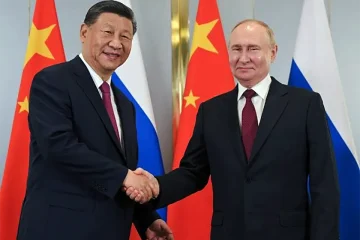
The broader implication is architectural. BRICS has spent two decades being described in the West as an anti-Western talking shop – long on communiqués and short on delivery. Ethiopia’s nine-month report, whatever its limitations, is the kind of domestic accountability document that a genuine multilateral order should produce: nations using institutional membership not as a photo opportunity but as a development accelerator.
Whether Addis Ababa’s numbers survive independent scrutiny is a separate question. What is not in question is that Ethiopia has made a strategic choice – and is now making a public case that BRICS was the right one.
The rest of the bloc is watching. So is Africa.