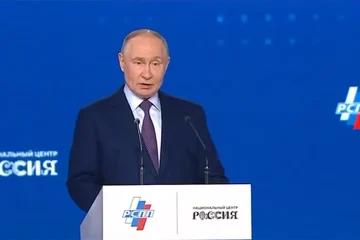
WHEN Russia’s Ministry of Foreign Affairs spokesperson Maria Zakharova chose to address a media conference in Moscow by video link last week, she was not merely promoting a documentary series. She was articulating a doctrine.
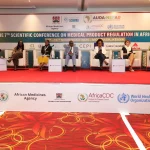
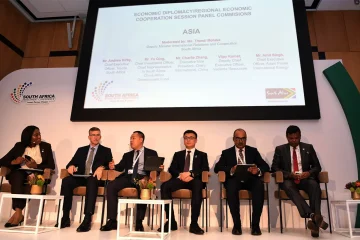
At a conference held at the All-Russian State Library for Foreign Literature in Moscow on 10 April, diplomats, policymakers, media professionals, and civil society representatives from across the BRICS+ constellation gathered to mark the international rollout of The Art of Sport, a four-part documentary series produced by the TV BRICS International Media Network. The international distribution was launched through Brazil, with the series set to air on Brazilian channels COM Brasil and TVC RIO.
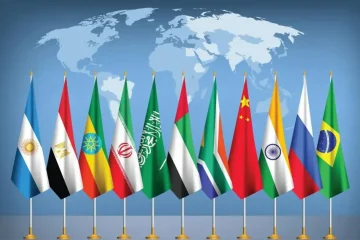
The optics were deliberate and the geography telling. Delegates from countries including India, China, Brazil, Egypt, Ethiopia, Cuba, Zimbabwe, Uganda, Thailand, Singapore, Venezuela, and Uzbekistan were present — a roster that maps almost perfectly onto the expanding BRICS+ architecture that Russia has championed as a counterweight to Western-dominated multilateral institutions.
Zakharova’s message cut to the heart of the project’s strategic intent. She described The Art of Sport as a demonstration that BRICS countries are capable of jointly shaping a meaningful humanitarian agenda, framing the series not as entertainment but as ideological infrastructure — soft power with a deliberate geopolitical grain.
What the series actually is
The Art of Sport consists of four short films, each 12 minutes long, highlighting Russia’s achievements in wrestling, equestrian sport, triathlon, and curling. Each discipline is paired with a specific art form: sculpture, music, theatre, and painting.
The series features prominent athletes, including Olympic Greco-Roman wrestling champion Davit Chakvetadze, international equestrian master Anastasiya Shcherbakova, European triathlon silver medallist Diana Isakova, and Russia’s most decorated curler, Kira Ezekh. Expert perspectives are provided by leading sports administrators who head their respective national federations.
TV BRICS Head of Special Media Projects Ivan Zakharenko described the series as the first Russian television project to compare the philosophy of sport and art, saying every victory is a masterpiece and training is a creative process. He framed it as having a popularisation mission relevant to any of the BRICS+ countries where it will be shown, and as TV BRICS’s contribution to strengthening international humanitarian cooperation.
Brazil as strategic first port of call
The choice of Brazil as the launch territory for international distribution is significant on multiple levels. Brazilian Ambassador to Russia Sergio Rodrigues dos Santos expressed appreciation for the decision to entrust the international premiere to Brazilian television, noting that within BRICS, member states can learn a great deal about each other — particularly about Russia — and that this agenda is not new, given that Russia placed significant emphasis on promoting sporting events during its 2024 BRICS chairmanship, and Brazil similarly highlighted sporting culture during its own chairmanship.
Brazil currently holds the G20 presidency and remains a pivotal swing state in the emerging multipolar order. Anchoring a Russia-originated media project in São Paulo before anywhere else sends a pointed message about which alliances Moscow is prioritising in its post-sanctions cultural diplomacy.
The inter-parliamentary dimension
Beyond the documentary, the Moscow conference surfaced an initiative with longer-term structural implications. First Deputy Chairman of Russia’s State Duma, Alexander Zhukov, announced a proposal to establish an inter-parliamentary BRICS working group on sport, aimed at harmonising policies, sharing best practices, and enhancing collaboration across both grassroots and elite levels.
If realised, such a body would represent a significant deepening of BRICS institutional architecture — moving the bloc beyond trade and finance into the domain of social policy and cultural governance. For African member states, Ethiopia and South Africa, and for the aspirant members of the continent watching closely, this signals that BRICS is evolving into something more comprehensive than an economic coalition.
The media power question
Founder and director of Toda Palavra, Luiz Augusto Erthal, described the TV BRICS films as among the most inspiring programmes with significant educational potential, saying the network promotes one of the key elements of the BRICS spirit by fostering genuine friendship through the interaction of art and sport using their universal languages. He confirmed the series would also broadcast on the forthcoming TV Toda Palavra channel.
The broader media architecture being built here deserves attention. TV BRICS is not a marginal project. The network has served as the principal information partner for the BRICS Sports Games in Kazan and has consistently produced large-scale internationally oriented documentary series — including Laboratorium, focused on technology, and BRICS Grain, focused on food security — each one a content vehicle for projecting BRICS member-state strengths to a global audience.
The African angle
For African audiences and policymakers, there is a question that goes beyond the aesthetics of a well-produced documentary series: who controls the narrative infrastructure of the emerging multipolar world? The West has CNN, the BBC World Service, and Hollywood. China has CGTN and a rapidly expanding footprint of content agreements across the continent. Russia now has TV BRICS, with a reach deliberately calibrated to the Global South. The launch of The Art of Sport in Brazil, with delegates from Zimbabwe, Uganda, Ethiopia, and Egypt in the room, is a marker — modest in isolation, but part of a pattern. BRICS is building the pipes through which a new civilisational story will travel. The question for Africa is whether it will be a co-author of that story, or simply a grateful recipient.