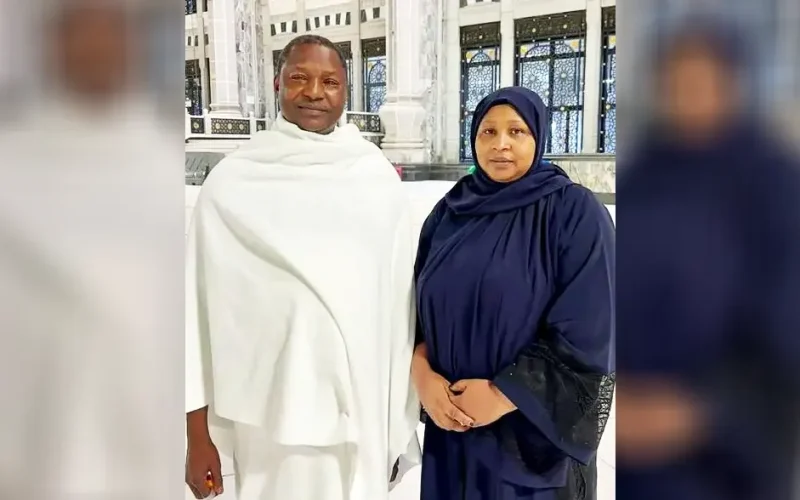
THERE is a particular species of political downfall that carries with it the weight of tragic irony – when those who once wielded the machinery of justice find themselves crushed beneath its wheels. The case of Abubakar Malami, Nigeria’s former Attorney-General and Minister of Justice, represents precisely such a moment: a powerful legal architect spending Christmas and New Year behind bars, now fighting desperately for the very freedom he once held in his hands to grant or deny to others.
For a man who served as Nigeria’s chief law officer, the dispenser of prosecutorial discretion, and the guardian of legal process under former President Muhammadu Buhari’s administration, the journey from the corridors of power to a prison cell – and now to the defendant’s dock— represents more than personal misfortune. It symbolises a rare instance where Nigeria’s notoriously selective criminal justice system has turned its attention upward rather than downward.
The charges are substantial: 16 counts of money laundering, allegations of siphoning public funds between 2015 and 2023, and accusations of funnelling stolen money through family members, including his son and wife, Hajia Asabe Bashir. The prosecution alleges a systematic corruption of office, using associates and property deals as vehicles for laundering what should have been public wealth. All three defendants have entered not guilty pleas, setting the stage for what promises to be one of Nigeria’s most closely watched corruption trials in years.
Judge Emeka Nwite’s bail conditions – 500 million Naira (approximately $351,835) with stringent requirements including property sureties in Abuja’s most exclusive neighbourhoods and surrender of travel documents – reflect both the severity of the allegations and the flight risk assessment for someone of Malami’s former stature and connections.
The Architecture of His Own Prison
The profound irony of Malami’s situation cannot be overstated. As Attorney-General, he was the ultimate authority on criminal prosecutions in Nigeria. Every major case, every significant legal decision about who would face justice and who would escape it, passed through his office. He advised on anti-corruption strategies, oversaw the Economic and Financial Crimes Commission (EFCC) – the very agency that arrested him – and shaped the legal framework within which he now finds himself ensnared.
During his tenure, thousands of Nigerians were sent to prison under his watch. Some were undoubtedly guilty; others, critics would argue, were politically inconvenient. The prosecutorial machinery that Malami once controlled with such authority has now consumed him, and if convicted, he will join the masses he helped incarcerate, though his cell will be informed by the bitter knowledge that he once sat on the other side of the courtroom drama.
Malami’s prosecution represents something more significant than individual accountability; it serves as a litmus test for Nigeria’s perpetually embattled justice system. For decades, ordinary Nigerians have watched as political elites operate with apparent impunity, their wealth and connections forming an invisible shield against prosecution. The phrase “Nigerian justice” has become synonymous with a two-tiered system: harsh and swift for the powerless, slow and forgiving for the powerful.
That Malami spent a month in detention, including the emotionally resonant holidays of Christmas and New Year, sends a message. Whether that message represents genuine reform or selective prosecution remains an open question, one that will be partly answered by how rigorously this trial proceeds and whether others of similar stature face similar accountability.
The trial, scheduled to begin February 17, will be the biggest fight of Malami’s life – a battle not for political power or ministerial influence, but for something more fundamental: his liberty. The legal skills he once deployed on behalf of the state will now be turned inward, marshalled for his own defence. The courtroom strategies he once orchestrated will now be employed against the very system he helped build.
For a man who spent years as the face of government legal authority, who signed off on prosecutions and advised on the most sensitive legal matters of state, the reversal is complete. The hunter has become the hunted. The prosecutor now stands accused. The man who sent thousands to prison now fights to avoid joining them.
Questions of Justice, Questions of Power
As Nigeria watches this legal drama unfold, broader questions emerge. Is this accountability or a political vendetta? Is the system finally working, or is it simply recalibrating which elites to target? Can a country with such endemic corruption begin to heal itself by prosecuting yesterday’s power brokers, or does real reform require something more systematic?
These questions have no easy answers, but Malami’s case forces Nigeria to confront them. His month in prison, his appearance before the court, his influence from positions of power, his surrender of passports and posting of bail – these are not merely the procedural steps of a criminal case. They are symbolic moments in a nation’s ongoing struggle with the meaning of justice itself.
The trial that begins in February will determine Malami’s fate. But it will also reveal something about Nigeria’s: whether its justice system can transcend politics and patronage to become something approaching fair and consistent, or whether Malami’s prosecution is simply another turn in the endless cycle of score-settling that passes for accountability in African politics.
For now, the former minister is free on bail, but his freedom is conditional, temporary, and under constant threat. He has tasted prison, experienced the humbling weight of detention, and felt the anxiety of powerlessness. Whatever the trial’s outcome, that month behind bars – including Christmas and New Year – will mark him forever. The dispenser of justice has drunk deeply from his own cup, and it has proven as bitter as his critics always claimed it would be.