
THE thunder has gone silent. The rainbow warrior has laid down his banner. Reverend Jesse Louis Jackson Sr., who crossed into the ancestors on Tuesday at age 84, was not merely an American civil rights leader – he was a son of Africa who never forgot where his people came from, a freedom fighter who made the struggles of this continent his own.
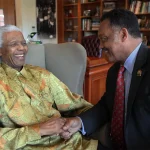
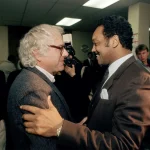
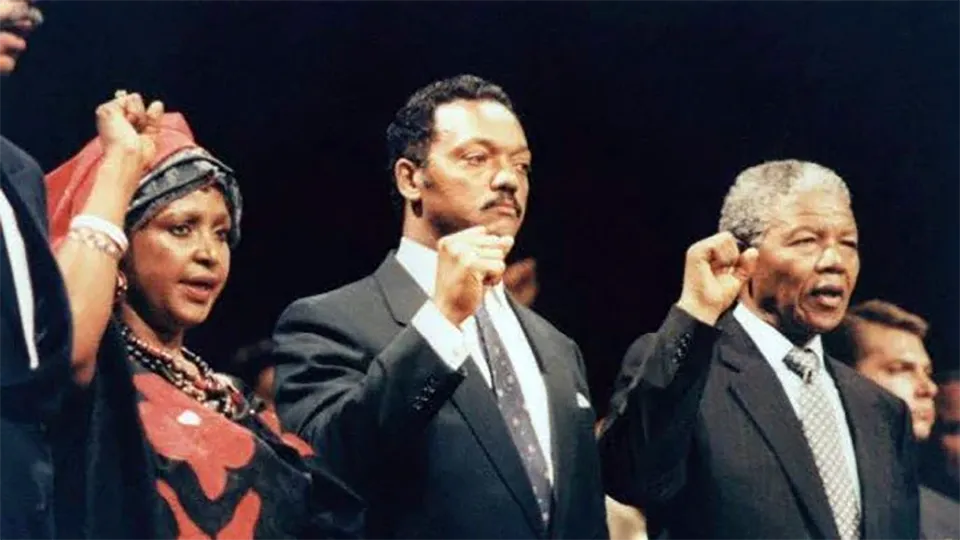
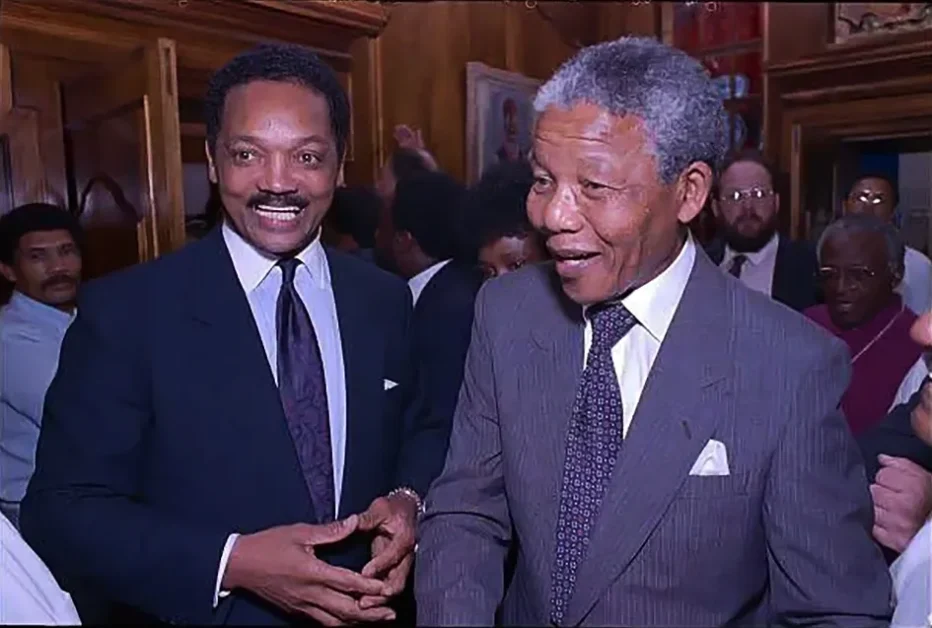
When Nelson Mandela walked out of Victor Verster Prison on that glorious February day in 1990, among the first faces he saw waiting in Cape Town was Jesse Jackson’s. The two men embraced as brothers reunited after a long and bitter separation. It was a moment thick with history – the protégé of Martin Luther King Jr. welcoming the father of South Africa’s democracy into the sunlight of freedom. But this was no first meeting between strangers. This was the culmination of a bond forged in the furnaces of struggle, tested in the dark years of apartheid’s fury.
Jackson first set foot on South African soil in 1979, when the rainbow nation was still a nightmare of racial oppression. He came after the murder of Steve Biko, when many Western leaders were still making their peace with Pretoria’s terrorist regime. But Jackson, wrapped in a multi-coloured blanket gifted by the people of Crossroads Squatter Camp in Cape Town, stood before thousands in Soweto and declared with prophetic certainty: “This land is changing hands!”
While Madiba languished on Robben Island, silenced by his jailers, Jackson met with Winnie Madikizela-Mandela, then living under a banning order. He would later call her “the Mandela heart,” the woman who kept the flame of resistance burning “in the belly of the beast” when darkness seemed absolute. Jackson understood what many could not – that the anti-apartheid struggle was not Africa’s alone, but humanity’s. The same knee that pressed on the neck of Black Americans pressed on the neck of Black South Africans.
When Jackson launched his groundbreaking 1984 presidential campaign, the freedom of Nelson Mandela stood at the centre of his foreign policy platform. He transformed the apartheid issue from a marginal concern into a central moral crisis for America. Mandela himself would later thank Jackson for that campaign, recognising how it shifted American consciousness and policy. At Harvard, at rallies across America, Jackson thundered the truth: apartheid in South Africa was the reincarnation of the Nazi Reich, and America’s “constructive engagement” was a coward’s compromise with evil.
In 1985, Jackson joined 120,000 protesters in London’s Trafalgar Square, standing shoulder to shoulder with Oliver Tambo, demanding Mandela’s freedom. In 1986, he led a historic eight-nation African tour, meeting with presidents, embracing liberation movements that Washington branded as terrorists, carrying messages of solidarity to Angola, Zambia, Tanzania, and Zimbabwe. He met with Kenneth Kaunda, and they wept together over the iniquities of racism. He sat with Julius Nyerere, Africa’s most respected elder statesman, in a remote Tanzanian village. He persuaded Robert Mugabe to brief Americans on African perspectives.
Jackson was no tourist diplomat dabbling in African affairs. President Bill Clinton recognised this, appointing him in 1997 as Special Envoy for the Promotion of Democracy in Africa. Jackson travelled the continent meeting with Mandela, Daniel arap Moi, Frederick Chiluba, and countless others. He secured the release of political prisoners from The Gambia, brokered peace between rival Kenyan politicians after contested elections, carried the gospel of nonviolent resistance to conflict zones across the motherland.
In 2013, when South Africa laid its greatest son to rest, Jackson was there again, standing with then-Deputy President Cyril Ramaphosa at Mandela’s funeral, completing a circle that had begun in struggle and ended in triumph. That same year, President Jacob Zuma awarded Jackson the Companions of O.R. Tambo – the highest honour a non-citizen can receive – citing his “excellent contribution to the fight against apartheid.”
For the man who, for decades, led young Black children and disenfranchised people everywhere – in America and across Africa – in a call-and-response that began with the words: “I Am Somebody,” history would grant one shining validation. On Election Night 2008, in Chicago’s Grant Park, Jesse Jackson stood in the crowd holding a small American flag. Tears streamed down his cheeks as Barack Obama became America’s first Black president. Those who knew him for more than 50 years – as a civil rights leader, a political force, a neighbour – say they will never forget that image. The enormity of that moment, and his role in setting the stage for it, was deeply felt. He had laid the foundation for that victory and for the multi-racial, economically based progressive movement that continues today.
That moment in Grant Park echoed across the Atlantic to every corner of Africa. For if Jesse Jackson wept that night, it was not only for America’s redemption but for the vindication of a lifetime spent building bridges between the Black American struggle and Africa’s liberation movements. Obama’s father was Kenyan. Mandela had walked free. And the boy from segregated Greenville, South Carolina, who had stood with King and marched with Mandela’s comrades, had lived to see the impossible become real. Jackson’s rainbow vision – that beautiful, audacious dream of a coalition uniting red, yellow, brown, black and white – was born from the same soil as Mandela’s non-racial democracy. Both men understood that liberation is not complete until it is universal, that justice cannot be for some and not for all, that the arc of the moral universe bends toward justice only when brave souls grasp it and pull.
But let the record show clearly: Jackson was no saint, and he would have laughed at any attempt to canonise him. He was complicated, controversial, and sometimes wrong. His African engagements included missteps, and African critics rightly held him accountable when he seemed too close to authoritarian leaders. Yet in the balance, his commitment to Africa’s liberation was authentic and enduring.
From a segregated South Carolina to the heights of American political life, Jesse Jackson never forgot that his ancestors came from this continent in chains. He spent his life working to transform that legacy of theft and bondage into a legacy of solidarity and freedom. When African leaders spoke of the American anti-apartheid movement, they spoke of Jesse Jackson. When they needed a channel to the American people, they called Jesse Jackson. When they needed someone who understood that their fight was not foreign but familial, they turned to Jesse Jackson.
The continent has lost a champion, a translator of struggle, a man who believed that Memphis and Soweto, Selma and Sharpeville, spoke the same language of resistance. His voice – that magnificent instrument that could make “Keep Hope Alive” sound like a prayer, a battle cry, and a prophecy all at once – has fallen silent. But the bridges he built between African Americans and Africans, between King’s dream and Mandela’s vision, between the Civil Rights Movement and the anti-apartheid struggle, remain standing.
Today, as Jesse Jackson joins the ancestors, Africa remembers a son who returned, who never stopped returning, who made our struggles his own. We remember him wrapped in that Crossroads blanket, declaring the truth before it was visible. We remember him waiting in Cape Town to embrace Madiba. We remember him speaking truth to American power on our behalf.
Rest now, Reverend. Your work is done. The land did change hands, just as you prophesied. And though the struggle continues, as struggles always do, you fought faithfully. Africa says: Hamba kahle, mkhonto. Walk well, warrior. Your place in freedom’s pantheon is secure.
Go in peace. Keep hope alive-forever.
You were much more than somebody!