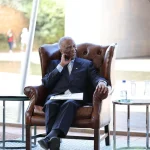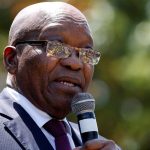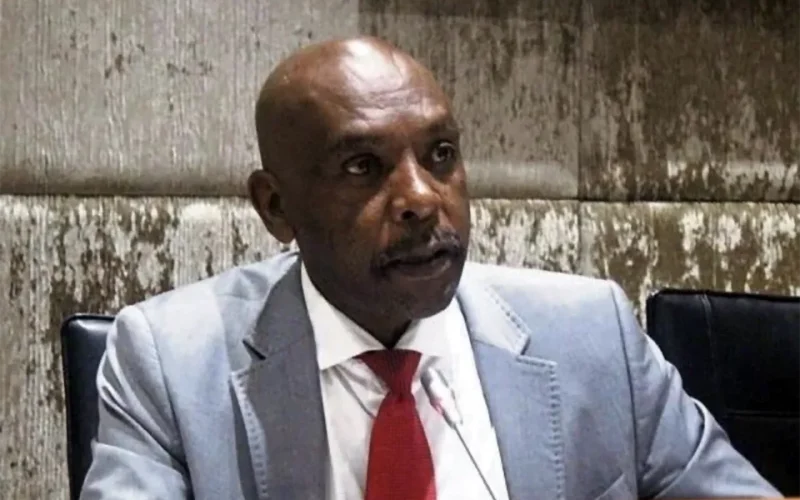
HE once sat at the apex of parliamentary power, chairing the Portfolio Committee on Correctional Services – the very committee that was supposed to oversee the integrity of the country’s prisons. On 5 March 2026, Vincent Smith became a prisoner himself. The former ANC Member of Parliament was sentenced to seven years’ direct imprisonment by Judge Mohamed Ismail in the Gauteng Division of the High Court, after entering into a plea and sentence agreement with the State on charges of corruption, fraud, money laundering, and contravention of the Tax Act.
It is a moment South Africans have waited years for. And it carries a weight that goes beyond one man’s downfall.
Slow, But Not Still
The criticism most frequently levelled at the Commission of Inquiry into State Capture – chaired by now retired Chief Justice Raymond Zondo – was one of pace. It ran from 2018 to 2022, cost the state billions of rands, and produced thousands of pages of testimony and recommendations. Critics, and many ordinary South Africans exhausted by the theatre of exposure without consequence, questioned whether it would ever translate into actual accountability. The answer, it turns out, is yes. Just not quickly.
Almost six years elapsed between Angelo Agrizzi’s explosive testimony before the Zondo Commission – in which he alleged that Bosasa, the sprawling facilities management company that had embedded itself into the architecture of South African government contracting, had paid more than R800,000 in gratifications to Smith – and the day Smith pleaded guilty. Six years is a long time. It is long enough for public fury to cool, for political memories to fade, and for implicated individuals to rebuild narratives. But it was not long enough for justice to die.
National Director of Public Prosecutions Advocate Andy Mothibi said it plainly upon Smith’s conviction: “Inasmuch as the trial took longer than anticipated to be finalised, the wheels of justice finally got in motion, and the rule of law was upheld.” That is a measured, lawyerly statement. The broader public would put it more bluntly: the tortoise got there.
What makes Smith’s conviction particularly resonant is not merely the money – although R800,000 in gratifications, funnelled partly through his company Euroblitz 48 while he actively concealed his directorship from Parliament’s Register of Members’ Interests, is not trivial. What stings is the position he occupied while doing it.
Smith did not receive Bosasa’s favours as a faceless bureaucrat. He received them as the chairperson of the very Parliamentary committee responsible for overseeing the Department of Correctional Services – the department that was Bosasa’s most significant client. He was, in effect, simultaneously supposed to be the watchdog and was being fed by the entity he was watching. That is not a lapse in judgment. That is a structural betrayal of the democratic mandate his constituents entrusted him with.
Judge Ismail, in accepting the plea agreement, noted that Smith was a legislator entrusted to uphold South Africa’s laws, which he had failed to do. He further observed that corruption had reached alarming levels and must be dealt with firmly. Seven years – twelve on paper, five suspended – is the price Smith will pay for seven years of thinking about why he betrayed both the struggle he claimed to serve and the millions of South Africans he represented.
Smith chaired the committee that was supposed to watch Bosasa. Instead, Bosasa was watching — and rewarding — him.
The Incomplete Register of Accountability
Smith’s conviction would be more satisfying if it stood in a larger gallery of convictions. It does not – at least not yet. And that is where the genuine tension lies.
Former Deputy Minister of Defence and Military Veterans Thabang Makwetla faces charges arising from his own Bosasa entanglements. Former Finance Minister Pravin Gordhan’s successor, Malusi Gigba also has his trial pending. These cases proceed, albeit at the characteristic pace that frustrates South Africans who want accountability at the speed of news cycles rather than the tempo of due process.
But the case that demands the most urgent and transparent explanation is that of Gwede Mantashe. The Minister of Mineral and Petroleum Resources and Chairperson of the African National Congress – one of the most powerful figures in contemporary South African politics – was directly implicated by the Zondo Commission in a manner that is substantively similar to the offences for which Smith now wears orange overalls. The commission heard that Bosasa associates funded extensive security upgrades – CCTV systems, fencing, and related installations – at three of Mantashe’s private properties in Boksburg and the Eastern Cape. When he appeared before the Commission in 2021, Mantashe denied that the installations amounted to corruption. He said it had not occurred to him that they could be construed as bribes because he was, in his own words, “not amenable to bribes.”
That is a remarkable statement to have made under oath. The Commission subsequently recommended that law enforcement agencies investigate whether a prima facie case of corruption could be made against Mantashe. As of today, Mantashe remains a serving cabinet minister and the ruling party’s chairperson. No prosecution has followed. No credible public explanation for that gap has been offered by law enforcement. That silence is not merely uncomfortable – it is a reputational risk for South Africa’s entire anti-corruption architecture, and it feeds precisely the cynicism that accountability must fight.
The principle at stake is elementary: the law cannot be seen to run at one speed for the politically peripheral and another for the politically indispensable. If the offences are materially similar, the prosecutorial attention must be too.
Dividends from a Long-Term Investment
There is a temptation, when examining the Zondo Commission’s legacy, to focus exclusively on what has not happened: prosecutions delayed, implicated figures still in office, recommendations gathering institutional dust. That temptation, while understandable, is ultimately unfair to the record.
The commission did what commissions of inquiry are designed to do: it created a comprehensive, judicially credible evidentiary record. Agrizzi’s testimony – his little black book of payments, his recollections of grey bags packed with cash, his accounts of trips to ministers’ residences – was not merely political theatre. It became the foundation on which a plea agreement was constructed and accepted by a High Court judge. Smith did not go to prison because of journalism or political pressure. He went because of evidence – evidence surfaced, tested, and recorded under oath during proceedings that were, yes, painfully slow, but ultimately rigorous.
South Africa is now beginning to collect the dividends on that investment. Cosatu’s parliamentary coordinator Mathew Parks, observed after the conviction that it set an important precedent, particularly given Smith’s powerful position. Acting government spokesperson Nomonde Mnukwa welcomed it as proof that no one is above the law. These statements are not merely performative. They reflect a democratic ecosystem slowly relearning that accountability is not a political choice – it is a constitutional obligation.
The Pace Must Increase
None of this, however, is a reason for complacency. The National Prosecuting Authority, the Hawks, and the Special Investigating Unit need resources, resolve, and – crucially – the political independence to prosecute without fear or favour, regardless of how senior the accused, how powerful their faction, or how proximate their relationship to those who hold the authority to appoint prosecutors.
The Smith sentence took nearly six years from Agrizzi’s testimony to the courtroom. In the same period, South Africa lost hundreds of billions of rands in further corruption, watched implicated individuals contest and win elections, and endured the spectacle of parliamentary ethics committees exonerating ANC MPs implicated in state capture on procedural technicalities. Justice cannot continue at this pace if it is to serve its deterrent function. A seven-year sentence handed down six years after the evidence emerged sends a message, but it is a message that arrives distorted by delay.
The NPA itself acknowledged as much. Mothibi’s statement that the trial took longer than anticipated is an admission that the system must do better – not an excuse for why it did not. Parks was right to note that the NPA needs the resources to win the war. Those resources are not discretionary. They are a political and constitutional priority.
What Smith’s Orange Overalls Mean
There is symbolism in Smith’s sentence that should not be lost in the procedural detail. South Africa now has its first high-profile ANC politician in prison for corruption directly linked to state capture. That is not a small thing. It is, in fact, the thing that millions of South Africans – who watched Jacob Zuma’s tenure bleed the state dry, who saw Bosasa’s contracts worth R2.37-billion crowd out legitimate service delivery, who grew weary of accountability being promised and deferred — were told might never arrive.
It has arrived. It arrived late. It arrived incomplete. It arrived in the shadow of others who remain free despite similar conduct. But it arrived. And in a country that spent years wondering whether its institutions had the spine to act against political power, that matters enormously.
The Zondo Commission was an investment. South Africa is beginning to see the return. The task now is to reinvest – in prosecutorial capacity, in political independence, and in the uncomfortable, unglamorous work of ensuring that accountability does not stop with the politically convenient targets and politely forget those who remain useful to power.
Vincent Smith has seven years to reflect on his choices. South Africa has far less time to ensure that those choices are never again made without consequence.