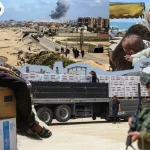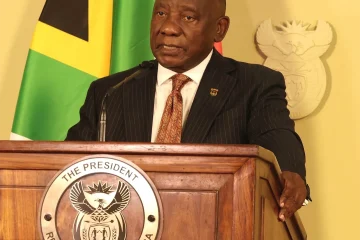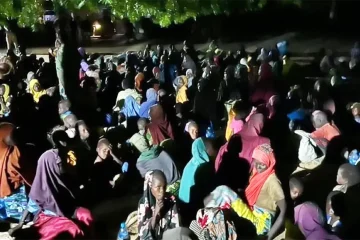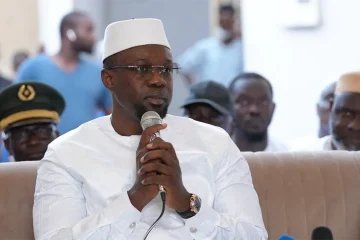

WHEN two Ghanaian soldiers were critically injured, and a third left traumatised after missile strikes tore through their UN peacekeeping headquarters in southern Lebanon on Friday, 6 March, it crystallised a deepening and uncomfortable truth: Ghana, for all its studied neutrality, is no longer merely watching the US-Israel war on Iran from a safe distance. It is already in it.
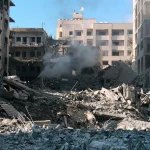
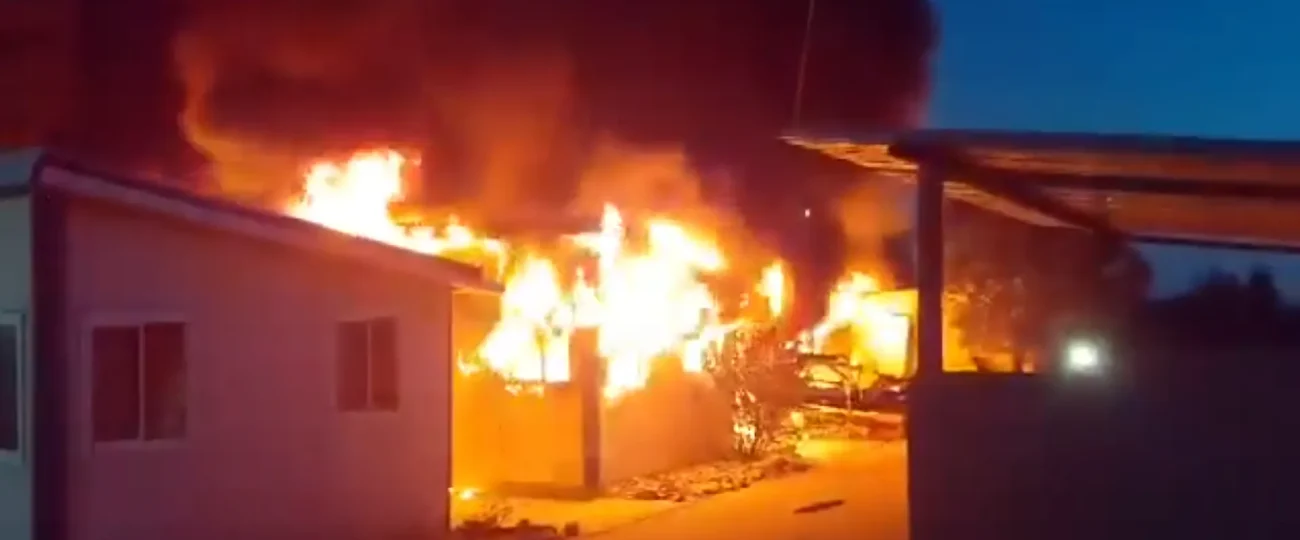
The Ghanaian Battalion Headquarters serving under the United Nations Interim Force in Lebanon (UNIFIL) was struck twice by missiles during ongoing clashes between the Israeli Defence Forces and Hezbollah — the Iran-backed militia that Israel has been simultaneously hammering as part of the wider war that began on 28 February 2026. The Officers’ Mess was completely destroyed by fire. Within 24 hours, Accra had lodged a formal protest at the United Nations, summoned the ambassadors of Israel, Iran and the United States to the Ministry of Foreign Affairs, and demanded the world’s attention.
Ghana’s Foreign Minister Samuel Okudzeto Ablakwa described the attack as a grave violation of international law and a war crime — language of uncommon severity from a government that has otherwise tread carefully since Operation Epic Fury, Washington’s campaign of regime change in Tehran, set the Middle East ablaze nine days ago.
“The attack constitutes a grave violation of international law, amounts to a war crime and affronts the protections afforded to United Nations peacekeeping personnel.” — Ghana Ministry of Foreign Affairs, 7 March 2026
A War That Came Looking for Ghana
Ghana did not ask to be part of this conflict. When US and Israeli warplanes unleashed the largest US military assault in the Middle East since the 2003 invasion of Iraq on the night of 27-28 February, killing Supreme Leader Ayatollah Ali Khamenei and striking more than 1,000 targets across Iran on the first day alone, Accra’s instinct was characteristic: condemn the violence, urge restraint, protect its citizens abroad, and stay out.
It was not to be so simple. The war came looking for Ghana through at least two distinct corridors — one at home, one in Lebanon — and has placed the Mahama government in what analysts describe as among the most delicate diplomatic positions Accra has faced in the post-Cold War era.
First, there is the airport question. Under a 2018 Status of Forces Agreement (SOFA) — ratified by Ghana’s parliament that year and never revoked — the United States established a military logistics presence at what is now Accra International Airport, operating under the West Africa Logistics Network (WALN). That agreement, negotiated under former President Nana Akufo-Addo, granted American military personnel and equipment access to and transit through Ghanaian soil, including the airport’s facilities, which it shares with the Ghana Air Force Base Accra.
In the days following the launch of Operation Epic Fury, flight tracking data and aviation security analysts noted the transit of US military aircraft — including tanker and reconnaissance assets essential to long-range strike operations — through West African routing corridors. Whether American planes connected to the Iran campaign used Accra’s facilities directly remains a matter of official ambiguity: the Mahama administration has not confirmed or denied such use, and the US has not disclosed detailed logistics specifics. However, the existence of the WALN infrastructure and the active SOFA agreement means Ghana, whether it chose the role or not, was already bound within the architecture of American power projection.
Critically, just five days before the strikes on Iran commenced, US Africa Command’s (AFRICOM) Commanding General, Air Force Gen. Dagvin Anderson, sat down with President John Dramani Mahama at the Jubilee House in Accra, alongside US Charge d’Affaires Rolf Olson. That meeting — described officially as a reaffirmation of the decades-long partnership between Washington and Accra — has since attracted scrutiny from Ghanaian parliamentarians and civil society who want answers about what was discussed, and what, if anything, Ghana agreed to in the days before the world’s most consequential military operation in a generation was launched.
“Ghana has not offered a military base… but has deemed it prudent to continue the Co-operation Agreement with the United States.” — Former President Akufo-Addo, 2018. That agreement remains in force today.
Iran Has Noticed
Tehran has noticed Ghana’s position. Iran’s Ambassador to Ghana, H.E. Ali Ghomshi, was among the envoys summoned by Minister Ablakwa to the Ministry of Foreign Affairs on Saturday following the UNIFIL attack. In diplomatic exchanges this past week, Iranian officials have signalled awareness of the WALN presence at Accra International Airport.
The stakes of such awareness are not theoretical. Iran has stated explicitly that any nation whose territory, airports or infrastructure assists US military operations against it qualifies as a legitimate target. In practice, Iran’s IRGC has already attacked airports in Dubai, Kuwait, Abu Dhabi and Nakhchivan in Azerbaijan. Iran’s Foreign Minister Abbas Araghchi articulated the rationale with cold clarity: ‘We started by attacking their military bases, and they evacuated their military bases and moved them to hotels. We try to target military personnel, infrastructure and facilities helping the US and its army in launching operations against Iran.’
Under that doctrine, an airport with a US logistics footprint, in a country with an active SOFA, is potentially in the crosshairs — particularly if evidence were to emerge of direct use in Operation Epic Fury. Ghana’s government is acutely aware of this. It is the central reason Accra’s diplomatic tone, which began as neutral and cautionary, has steadily sharpened into something closer to a formal legal protest.
The Soldiers in Lebanon
Ghana has been deploying troops to UNIFIL since 1978, making it one of the mission’s most enduring and committed contributors. The Ghanaian battalion operates in the volatile south of Lebanon, formally tasked with monitoring a ceasefire that has never fully held and has now completely collapsed.
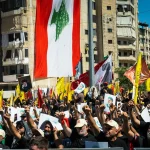
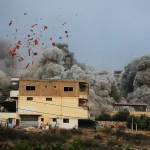
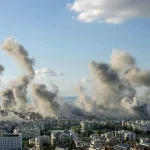
Lebanon was drawn into the wider conflict last Monday when Hezbollah, Iran’s most significant regional proxy and a key pillar of its forward defence strategy, launched rockets at Israel — directly expanding the US-Israel war front northward into Lebanese territory. Since then, Israel has been conducting what it calls broad-scale strikes on Hezbollah infrastructure throughout southern Lebanon and Beirut’s southern suburbs, killing more than 217 people in Lebanon, wounding nearly 800, and displacing close to half a million, according to the Norwegian Refugee Council and the Lebanese Ministry of Health.
UNIFIL’s bases have found themselves caught literally in the middle. The Ghanaian battalion headquarters was struck twice by missiles — Accra has not specified by which party — with the second strike igniting a fire that consumed the Officers’ Mess entirely. Two soldiers were critically hospitalised. A third was left in a state of acute psychological trauma.
Ghana has demanded not merely an investigation but accountability. The Foreign Affairs Ministry’s statement was unequivocal: ‘The Government of Ghana has further demanded that those responsible be identified and held accountable.’ UN Secretary-General Antonio Guterres joined Ghana’s condemnation, warning that the ‘situation could spiral beyond anyone’s control.’ French President Emmanuel Macron described the targeting of UN personnel as ‘unacceptable.’ The language of international consensus was there. What remained absent was any mechanism to enforce it.
The Diplomatic Tightrope
Ghana’s response to the broader war has been managed with visible deliberateness. Accra closed its embassy in Tehran and evacuated all diplomatic staff. Ghana’s diplomatic missions in Qatar, the UAE, Bahrain, Kuwait and Israel simultaneously activated emergency protocols for the estimated tens of thousands of Ghanaian nationals living and working across the Gulf — the most extensive simultaneous deployment of Ghana’s consular emergency machinery in the country’s diplomatic history.
President Mahama himself has remained carefully measured. At a bilateral summit with Tanzanian President Samia Suluhu Hassan in Arusha on 2 March, he expressed concern about the economic fallout for Africa from the destabilisation of the ‘epicentre of global oil supplies,’ and called for restraint — but did not align with either belligerent. Ghana’s National Petroleum Authority has since moved to reassure the public that the country holds more than five weeks of fuel stock despite Middle East tensions, though energy analysts have warned that a sustained conflict will inevitably translate to pump price pressures.
Yet even as Mahama walked this careful line, Israel was pressing Ghana openly to abandon it. On Wednesday, 5 March, Israeli Ambassador Roey Gilad held a press conference in Accra, explicitly calling on the Ghanaian government to join its voice in support of what he called an international campaign seeking a strategic change in the administration in Iran. Ambassador Gilad cited Ghana’s membership of the International Atomic Energy Agency and its influence within ECOWAS and the African Union as reasons Accra’s position mattered. It was an unusual public appeal — indicative of how hard Israel has been working to convert fence-sitters into supporters across the Global South.
Ghana declined to endorse the campaign. The same Foreign Minister who subsequently summoned the Israeli ambassador over the UNIFIL attack had already received him in a separate capacity just days before. The relationship is now layered with competing demands, legal obligations and raw national grievance.
Ghana’s diplomatic position is coherent — but it is under extraordinary structural strain. Accra is simultaneously hosting a US logistics agreement, keeping troops in a war zone, and demanding accountability from the very parties it refuses to publicly condemn or support.
What Monday Brings
As this article goes to press on Monday morning, Operation Epic Fury is entering its tenth day with no end in sight. US Secretary of State Marco Rubio announced on 4 March that the attacks on Iran would intensify. The IDF has dropped more than 1,200 munitions across Iran. The US has struck more than 2,000 targets. Iran’s retaliatory capacity — hundreds of ballistic missiles and over 1,000 drones fired at Gulf states and Israeli territory — is believed by Western analysts to have been significantly degraded, but Tehran’s IRGC has vowed the operation will continue relentlessly until the enemy is decisively defeated.
For Ghana, several things are now in motion simultaneously. The UN investigation into the UNIFIL attack will proceed, but experience suggests its conclusions will emerge long after the political moment has passed. Ghana’s formal protest is on record in New York; whether it translates into any binding outcome depends on a Security Council where the US holds veto power.
Parliament in Accra faces mounting pressure to demand a full accounting of the WALN agreement and the terms under which US military assets transit through Ghanaian territory. Minority parliamentarians and civil society groups have indicated they will raise questions about what the Mahama government communicated to Washington regarding Ghana’s non-alignment before Operation Epic Fury was launched — and, crucially, whether Ghana’s airport infrastructure was used in support of the campaign.
The government’s position — cautious neutrality, protection of citizens, insistence on international law — is coherent and consistent with Ghana’s long diplomatic tradition. But it is now being tested by facts on the ground that the government did not choose: Ghanaian blood has been spilled in a war Ghana did not declare, and Ghanaian soil may have served a war Ghana publicly opposes.
That is the bind. And on Monday morning, as the missiles keep flying, it remains unresolved.
—
KEY FACTS
Operation Epic Fury began on 28 February 2026 with joint US-Israeli strikes on Iran. Supreme Leader Ali Khamenei was killed on the first day. The US has used more than 20 weapons systems to strike over 2,000 targets. Iran has retaliated with over 400 ballistic missiles and 1,000+ drones against Gulf states, Israel, and US assets across the region. At least six US service members have been killed.
Ghana’s Ghanaian UNIFIL battalion has been deployed in southern Lebanon since 1978. The missile attacks on Friday, 6 March, left two soldiers critically injured, one traumatised, and the Officers’ Mess destroyed by fire. Ghana has lodged a formal protest with the UN Secretary-General and demanded a full investigation.
Ghana’s 2018 SOFA agreement with the United States established a US military logistics presence at Accra International Airport (formerly Kotoka International Airport) under the West Africa Logistics Network. US AFRICOM Commander Gen. Dagvin Anderson met President Mahama in Accra on 23 February — five days before the Iran strikes commenced.
Lebanon: Since Hezbollah opened a front last Monday, over 217 people have been killed, nearly 800 wounded and close to 500,000 displaced. UNIFIL bases face an increasing risk. Israel has launched broad-scale strikes across southern Lebanon and Beirut.