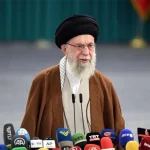
AFTER launching the US-Israeli war on Iran that killed Supreme Leader Ali Khamenei, President Donald Trump explicitly said he would turn to Cuba next, sparking anxiety over what the future holds for millions of Cubans living on the island.
Since the US attack on Venezuela (Cuba’s key regional ally) and its abduction of President Nicolás Maduro on 3 January, Trump has ramped up the pressure, imposing a strict blockade on oil shipments that is depriving Cuba’s socialist government of the fuel it needs to keep the country functioning. The US has also increasingly pressured foreign countries to stop hiring Cuban medical missions – a critical source of income.
Cubans who talked to The New Humanitarian said that although they have faced a humanitarian crisis for decades due to government mismanagement and a state-planned economy hit hard by the collapse of the Soviet Union, the impact of the latest US measures has been brutal, and fear of what might come next is growing.
“Many people think that Trump could invade, and there is a lot of fear of an annexation and the loss of civilian lives,” said Rita García, director of the Christian Centre for Reflection and Dialogue-Cuba (CCRD-Cuba), an aid organisation supported by sister organisations in Europe and Canada.
This crisis is now coming to a head, but it has been a long time building. Ever since the COVID-19 pandemic erupted in March 2020, Cubans have been confronted with a worsening economic crisis and increased state repression, prompting the world’s fastest exodus, from well above 10 million to below eight million in just four years.
Since the loss of its main crude oil supplier (Venezuela), and Trump’s 29 January executive order – declaring a national emergency due to the supposed threat posed by Cuba to US national security – paving the way for a broader blockade, the situation on the island has become more and more desperate.
“The oil blockade had immediate consequences. The day after the [US executive] order was issued, fuel prices rose,” Mayra Espina, a sociologist living in Havana, told The New Humanitarian over the phone. “The effects are numerous and noticeable, and every day you notice a worsening.”
In this in-depth briefing, The New Humanitarian reports on the impact of recent US policies, explores what future actions Trump could take, and asks what Cubans think of a possible US intervention.
What is daily life now like in Cuba?
Fuel, food, and medicine shortages, rolling blackouts, currency depreciation, and rising inflation: These have all been routine for several years in Cuba. Since 2018, the country’s GDP has fallen by more than 15% cumulatively, and its GDP per capita was the lowest in Latin America in 2025.
But Cubans, long used to finding ways to cope, say this is different now.
Odalis (her name was changed at her request out of fear of government reprisals), who works as a doctor in a paediatric hospital in Matanzas, a city east of Havana, said that since the blockade, “the crisis is much more intense than usual”.
“Everything is accentuated, and the gap between what one earns and what one has to pay is huge. It’s difficult for public health, access to medications, but also for food, for everything,” the 47-year-old told The New Humanitarian. “We really are approaching a limit.”
Odalis’ monthly wage of 9,200 pesos (about $19) as a doctor isn’t enough for her family of four to live off; nor is her husband’s income. So, they rely on her brother’s help – an engineer who works as a cab driver because it pays better – to make ends meet.
Since oil stopped arriving, Odalis must walk several kilometres to go to work because public transport has stopped functioning. Many of her patients can’t reach the hospital on foot. “Many live in rural areas or even in Matanzas, but due to the lack of fuel, they can’t come,” she explained.
In the past few weeks, Odalis went from tending to 25 patients a day to about eight. To avoid leaving their patients without medical attention, she and some of her colleagues informally give consultations via WhatsApp – that is, when there is power and internet connection.
Fuel shortages affect education, too. Her children’s school recently started sending materials to kids who can no longer reach the classroom so they can study at home.
Blackouts, which now last up to several days, are deeply disruptive: Even when hospitals have generators or solar panels allowing them to keep functioning, patients using medications that require refrigeration at home have often had to curtail their treatment, said Odalis.
Marta (her name was also changed out of fear of government retaliation) is a 40-year-old single mother. Her child, an 11-year-old girl, is diabetic, and Marta said she has no way to refrigerate the insulin she needs when the power goes off.
“I always have to invent something: buy ice cubes or ask for people who still have some kind of electricity to store it,” she said, adding that her daughter also needs to stick to a diet rich in fruit and proteins that is now unaffordable. She is only managing thanks to the help she receives from friends and family members who migrated to different countries, including the US, Spain, Mexico, Costa Rica, and Norway.
“It is as if our government washed its hands of it, as if we were a forgotten people and no one was interested in us,” Marta said.
The lack of electricity also paralyses countless activities that require the internet and computers, including banking.
Roberto (his name was changed out of fear of reprisals), a musician and founder of a community-based organisation that helps vulnerable people in Matanzas, told The New Humanitarian that blackouts place a high burden on those responsible for the household – especially on the many women left as the lone caretakers because their partners migrated.
“We are preparing for the consequences of the blockade and to respond to the most important needs. But if we continue to lack the fuel to implement the response, it will be unmanageable.”
“Often, electricity comes on when consumption drops, which is at 2 am. That means you have to wake up at that time and use about four hours of power to wash some clothes and cook something to prevent it from getting spoiled,” he said. “That means going to bed at 4 or 5 am and then having to be at work at 8 am. It’s exhausting, and it is what 80% of the people are going through now”.
Although humanitarian assistance is limited in Cuba, UNICEF, the World Food Programme (WFP), and Caritas do have permanent operations on the island. Caritas is coordinating the delivery of the $9 million in humanitarian aid that the US committed to send. Others, such as Oxfam and MediCuba-Europe – a network of groups from Europe providing medical assistance – and the Red Cross have also developed projects in Cuba, mostly in response to hurricane disasters and health crises such as the pandemic. Cubans largely rely on Church groups and grassroots initiatives for assistance.
As living conditions deteriorate, some aid workers worry the situation will get out of hand.
“We are preparing for the consequences [of the blockade] and to respond to the most important needs. But if we continue to lack the fuel to implement the response, it will be unmanageable,” one humanitarian worker, who asked not to be identified, told The New Humanitarian.
Cuban President Miguel Díaz-Canel has prioritised the use of available fuel for essential services, electricity generation, healthcare, water supplies, defence activities, and to sustain economic sectors that generate income in dollars.
But those restrictions are further straining the lives of the most vulnerable. Cuba is rapidly losing its young people and women of reproductive age to migration. Coupled with low birth rates, this leaves a growing number of elderly with little to no support.
“People in rural areas, with no family, and the elderly are in a state of impoverishment. They depend on a state that doesn’t respond or provide,” María José Espinosa, executive director of the US-based Centre for Engagement and Advocacy in the Americas (CEDA) and a Cuban herself, told The New Humanitarian. “We will see people going hungrier and getting sicker because of the lack of medicines. People will die.”
Why does the US want regime change? Will it intervene further?
Unlike Venezuela, Cuba has no natural resources of interest to the US, but the pursuit of regime change fits into Trump’s broader policies of prioritising the western hemisphere and actively curbing historical US enemies – be it in Latin America, the Middle East, or elsewhere.
Cuba’s geographical proximity to the United States and political ties with two of America’s main rivals and competitors – Russia and China – also seem to be good enough motivations for Trump to intervene.
“It wouldn’t be difficult for the US [administration] to justify to any domestic audience or to the establishment that it cannot allow Russia and China to establish security and military cooperation with Cuba, which is 90 miles from the United States – especially within this new world that it is currently shaping,” said Ricardo Torres, a Cuban economist who moved to the US five years ago and now works at the American University, a private federally chartered research institution in Washington DC.
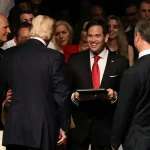
The electoral relevance of the Cuban diaspora and US Secretary of State Marco Rubio’s own personal history, as the son of Cuban immigrants, also comes into play.
In late February, after Axios reported that Rubio was in conversation with the grandson of former president Raúl Castro – Fidel Castro’s brother and the real decision-maker in Cuba – to explore options for the future, Trump hinted at the possibility of “a friendly takeover”, without providing further details. Since then, he has said on several occasions that the Cuban government is ready to make a deal. On 7 March, as Trump launched the Shields of the Americas initiative – a coalition of Latin American leaders aimed at taking on the drug cartels and asserting his leadership in the western hemisphere – he stated that Cuba was “in its last moments of life as it was”.
Díaz-Canel, on the other hand, has called for the implementation of “urgent transformations” to “the economic and social model”, emphasising the need to allow more “business autonomy” and “the resizing of the state apparatus”.
Whether a deal between the Trump administration and the Cuban leadership can be achieved, and whether this might usher in a peaceful transition to democracy, remains to be seen.
Sebastián Arcos, interim director of the Cuban Research Institute at Florida International University, said he wouldn’t be surprised if negotiations failed, given how “entrenched in power” the regime is.
If both countries can’t agree on a solution in the next couple of weeks, there could be some kind of US intervention in Cuba, Arcos speculated. “We are not necessarily talking about a military invasion, but rather kinetic action… a reminder to the Cuban regime that it is the United States that currently has the strategic situation under control,” he said.
What do Cubans living in Cuba want?
The Cubans The New Humanitarian talked to said that the deepening of the humanitarian crisis in the past few years had opened the path to a widespread desire for change across generations.
There used to be a divide between those who benefited from some of the social rights established after the 1959 revolution – access to great healthcare and quality education, especially – and those born since the 90s who have always experienced hardship. But they now appear to be on the same page.
“The generational gap disappeared. Everyone is tired and downcast, and people are less fearful of repression,” said Roberto, the musician and community leader, who is 56. “For those of us who went to university dreaming of a better tomorrow and thinking we could achieve something historical in Latin America, it has been a huge deception.”
GenZ has been particularly active, using digital tools to denounce Cubans’ daily struggles and the authoritarian nature of the regime.
“The youth doesn’t want to be quiet anymore. They’ve decided to talk without fear, and I think that is really important because there was a lost generation in Cuba,” said García, referring to the high numbers who have chosen to migrate. “The problem is that they continue to get arrested for dissenting.”
While everyone seems to have more or less united around the need for change, stark divisions persist over what that change should look like. While some only want an economic opening, others want a full transformation of the political model that includes the liberation of political prisoners and the ousting of the current regime.
“There has been a shift towards such extreme polarisation that it is difficult to find a balanced solution, in the sense that the two sides are very entrenched.”
There are also differences when it comes to blame. Some attribute the desperate situation Cuba finds itself in mainly to the US blockade, while others feel the government and the broken socialist model are most responsible.
“There has been a shift towards such extreme polarisation that it is difficult to find a balanced solution, in the sense that the two sides are very entrenched,” said Espina.
Yuneidis Oña Barrenechea, a 36-year-old social worker living in central Villa Clara province, struggles to take care of her two children. She works for the state for a low wage and in an ice-cream shop to earn extra money. In the past, she has also worked cleaning houses and selling clothes to get by. Now she is worried that a US intervention could spark internal violence and bring “more hunger, more misery, and more deaths”.
“There will be a civil war, mainly among young people,” she told The New Humanitarian. “There are many young people who agree with [a political change], but there are others who don’t.”
Even the possibility of a deal is a source of anxiety for Cubans, especially having watched recent events in Venezuela unfold.
The Trump administration formally recognised the government of Venezuela’s acting President Delcy Rodríguez – a member of Maduro’s inner circle – and both countries reestablished diplomatic relations, disappointing many who wanted to see a more radical break from a Maduro era seen as corrupt and increasingly authoritarian.
“We are a bit concerned that we might end up with the same situation,” said García, from CCRD-Cuba. “It’s true that some things may change, but to have the same people remain is not really what we would like to see.”
García is not keen to see a US intervention. She is calling on the government to release detained dissidents and create channels of dialogue with civil society, churches, NGOs, and artists to find out “what changes Cubans want”, and open up the economy.
The threat of neo-colonialism is ever-present.
“I would not want interference in Cuba for even a minute,” said Marta, the single mother of Matanzas. “I do not want us Cubans to lose our identity, and I am very scared of the possibility of a US military attack.”
“For people here, Cuba belongs to Cuba,” Roberto added. “We know the socialist model doesn’t work for us anymore and that the lack of alternative leadership is noticeable. But what people in the streets say they want is economic opening, not the United States dictating what Cuba needs.”
Edited by Andrew Gully.
–––––
The New Humanitarian puts quality, independent journalism at the service of the millions of people affected by humanitarian crises around the world. Find out more at www.thenewhumanitarian.org.