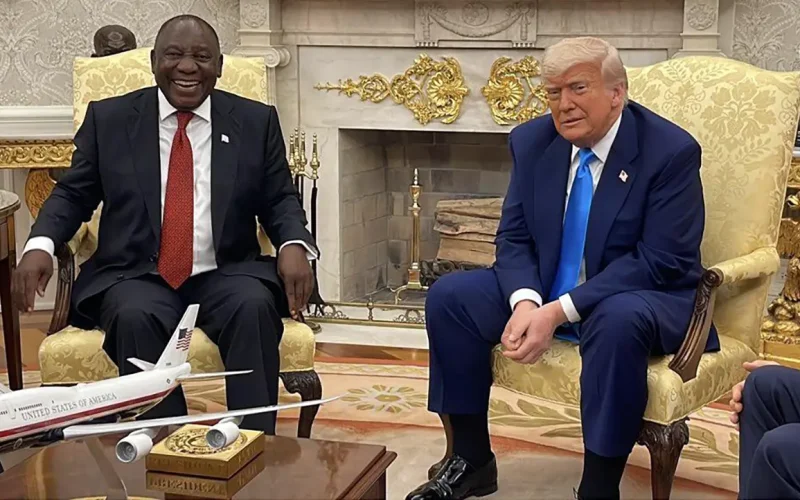
ON a tense spring afternoon in the hallowed halls of the White House, a political theatre unfolded that was as explosive as it was unprecedented. President Donald Trump, determined to validate his incendiary claims about South Africa, orchestrated a dramatic spectacle aimed at publicly humiliating South African President Cyril Ramaphosa. The stage was set for a showdown that would expose how a meticulously crafted right-wing Afrikaner PR campaign had successfully manipulated the American leader – and how Ramaphosa’s delegation arrived armed with facts and unshakable dignity to counter the false narrative.
After the perfunctory diplomatic pleasantries, Trump seized the moment with a chilling power play: the lights dimmed dramatically, and a haunting slogan thundered through the White House speakers – “Kill the Boer, the farmer…” The anti-apartheid chant, once a rallying cry of resistance, now reverberated inside the very epicentre of American power, a move that left observers worldwide stunned and aghast. This was no diplomatic mishap. It was a calculated political ambush designed to paint Ramaphosa’s government as complicit in what Trump had repeatedly termed a “white genocide.”
Trump followed with devastating visual theatre – a video clip purportedly showing “thousands of crosses on graves of white farmers who were killed.” The imagery was deliberately shocking, but the truth behind it was far less dramatic: these crosses were not actual grave markers but symbolic roadside installations, carefully arranged as part of a sophisticated PR campaign by groups such as AfriForum to manufacture evidence of victimhood. This visual propaganda was meticulously crafted to convince the world – and Trump – that white farmers were under systematic siege, their land being stolen, their lives hanging in the balance.
By playing this provocative video in the Oval Office, Trump unwittingly revealed how thoroughly he had been hoodwinked by the right-wing Afrikaner lobby. The ultra-right-wing Afrikaner PR machine had achieved what seemed impossible: planting their fringe narrative at the heart of American policy discussion.
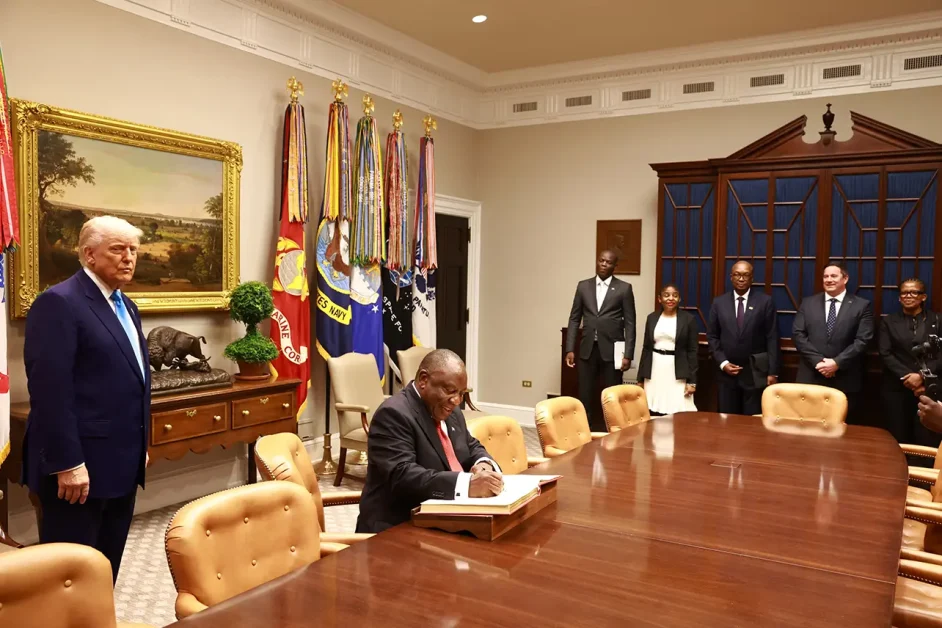
But Ramaphosa and his delegation came prepared for battle. One by one, they systematically dismantled the myth of a white farmer genocide. They acknowledged forthrightly that crime in South Africa remained a serious problem but emphasised with statistical precision that it was tragically indiscriminate, affecting all races with equal brutality. The Agriculture Minister John Steenhuisen, business magnate Johan Rupert, golfing legends Ernie Els and Retief Goosen, and other officials stood as living proof that no targeted extermination campaign was underway.
When pressed relentlessly by journalists in the Oval Office press briefing, Trump spectacularly failed to provide any concrete evidence of genocide. When asked directly if he would reconsider his inflammatory wording, he deflected awkwardly, repeating vague concerns about South Africa’s situation and the “people who are being persecuted” whom the U.S. had welcomed. Ramaphosa, in stark contrast, was unequivocal and commanding:
“It will take President Trump listening to the voices of South Africans. I’m not going to be repeating what I’m saying. If there was an Afrikaner genocide, these three men would not be here, including my Agriculture Minister.”
This extraordinary meeting marked a historic low point in South Africa-U.S. relations. The Oval Office, a space traditionally reserved for diplomacy and deal-making, became an arena of public scorn – joining recent moments of tension involving other world leaders. Trump’s unprecedented public airing of the “Kill the Boer” chant and militant clips from Julius Malema, firebrand leader of the Economic Freedom Fighters, was a brazen attempt to embarrass Ramaphosa and lend credence to a thoroughly debunked narrative.
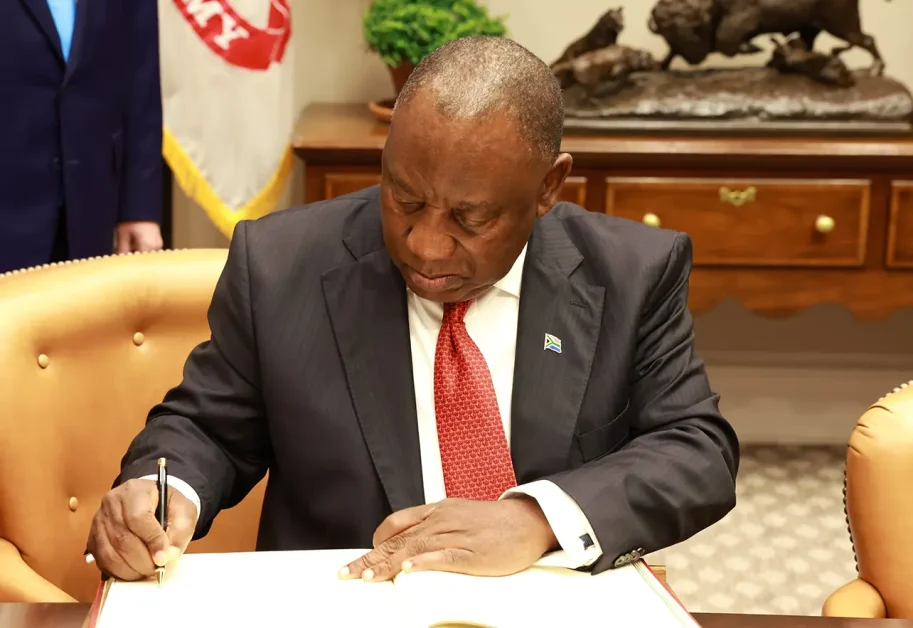
Yet, the South African delegation’s calm, fact-based responses underscored the ultimate resilience of truth against even the most sophisticated propaganda. They highlighted with unassailable clarity that while South Africa undeniably faces real challenges, the narrative of a “white genocide” was nothing more than a politically motivated fiction, amplified by extremist groups and opportunistic media campaigns.
This dramatic diplomatic confrontation was far more than just a clash of personalities; it was a stark reminder of how misinformation and political theatre can profoundly distort international relations. Trump’s willingness to embrace a thoroughly debunked narrative fueled by fringe groups severely strained ties with South Africa, a crucial African partner.
For Ramaphosa, the meeting represented a supreme test of leadership and composure under extraordinary pressure. For the world, it served as a vivid example of how powerful PR campaigns can manipulate even the highest offices of government – and how truth, armed with facts and unshakable dignity, can still push back against the relentless tide of misinformation.
As the global community looks ahead to critical forums like the G20, where South Africa plays a vital role, the echoes of this White House drama serve as a powerful cautionary tale about the perils of allowing propaganda to dictate policy and diplomacy.
Behind the Scenes: Preparation for Confrontation
The SA delegation prepared meticulously for the high-stakes meeting with President Donald Trump at the White House. Understanding the potentially explosive nature of the encounter, they assembled an exceptionally strong team comprising key Cabinet ministers and influential business and labour leaders to provide strategic support and authoritative rebuttals.
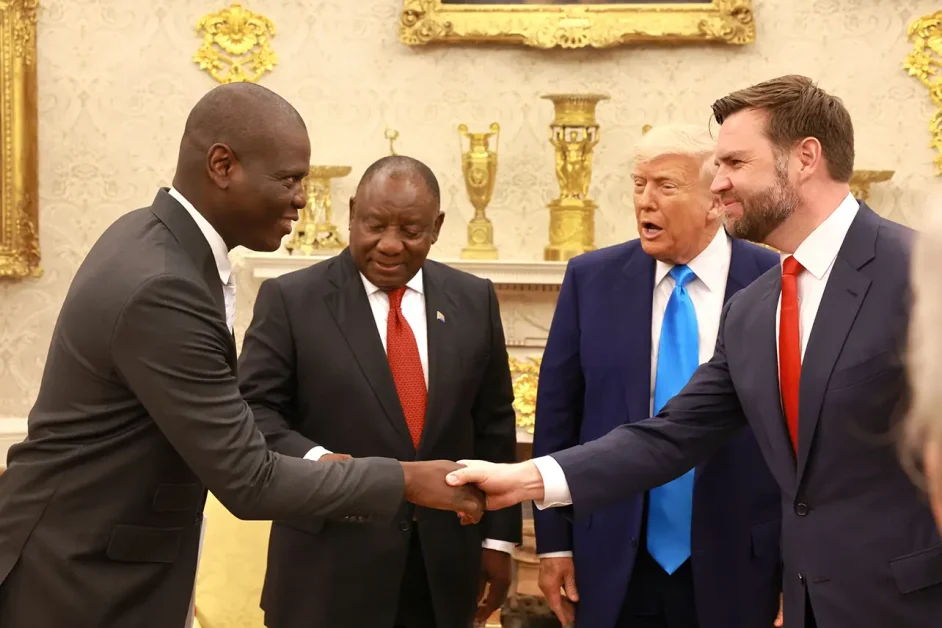
Key elements of their preparation included:
Comprehensive delegation: The team included Minister of International Relations and Cooperation Ronald Lamola, Minister in the Presidency Khumbudzo Ntshavheni, Minister of Trade, Industry and Competition Parks Tau, and Minister of Agriculture John Steenhuisen. Alongside them were prominent business figures like Johann Rupert, founder of Richemont, and representatives from labour, such as COSATU President Zingiswa Losi. This broad representation, which also included golf legends Trump has admired over the years, was strategically designed to address economic, political, and social dimensions of the discussions.
Focus on trade and economic partnership: Ramaphosa’s team prepared a detailed trade proposal aimed at deftly shifting the agenda toward economic cooperation rather than political confrontation. The delegation intended to highlight South Africa’s compelling investment opportunities and seek to redefine bilateral commercial relations, emphasising the critical importance of the U.S. as a key trading partner.
Strategic messaging on the “white genocide” narrative: Anticipating Trump’s accusations fueled by right-wing Afrikaner groups, the delegation was thoroughly prepared to firmly reject claims of a targeted genocide against white farmers. They planned to emphasise with irrefutable evidence that crime in South Africa affects all racial groups and that the government does not pursue policies discriminating against Afrikaners. The presence of the Agriculture Minister and other officials was a calculated part of this message, symbolising the government’s inclusivity and categorical rejection of the genocide narrative.
Backroom preparation: Special envoy Mcebisi Jonas played a crucial behind-the-scenes role in preparing the delegation, ensuring that the team was meticulously briefed and coordinated, even though he did not accompany Ramaphosa to the White House.
Anticipation of difficult questions: The delegation was extensively prepared for a challenging Q&A session, ready to counter misinformation with facts and calm, authoritative rebuttals. They understood the paramount importance of maintaining composure and providing clear, evidence-based responses to Trump’s claims and the media’s probing questions.
Overall, the South African delegation’s preparation combined a robust political, economic, and diplomatic strategy designed to confront misinformation head-on, promote constructive dialogue despite the hostile environment, and protect South Africa’s international standing during what promised to be – and indeed proved to be – a fraught and volatile encounter of historic proportions.