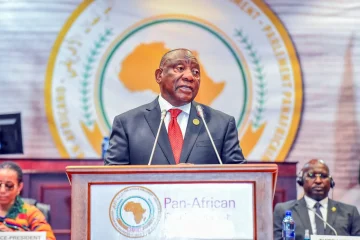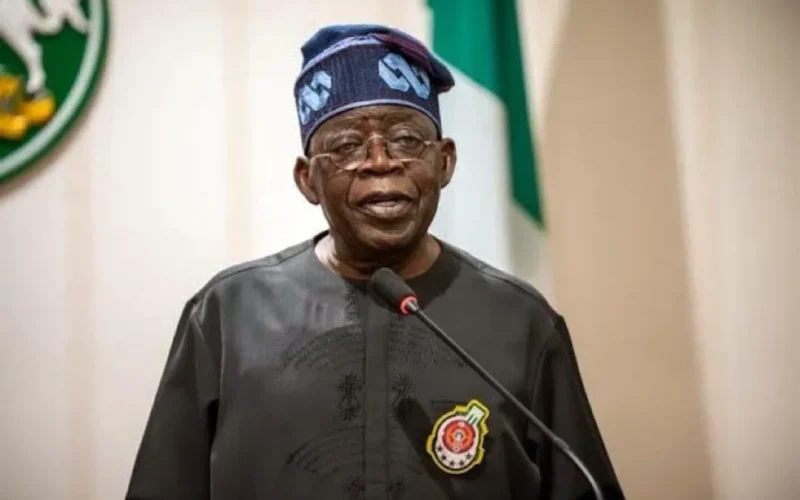
PRESIDENT Bola Ahmed Tinubu summoned the language of a man who has known exile and prison, not the polished cadences of a ceremonial address, when he gathered Nigeria’s political party leadership at the Presidential Villa on Wednesday and declared that democracy and the rule of law would survive his tenure — whatever the odds.
The setting was an inter-faith Ramadan fast-breaking with the National Working Committee of the ruling All Progressives Congress and the leadership of the Inter-Party Advisory Council. The occasion was convivial. The subtext was not. Nigeria is a country where democracy is being asked to perform under extraordinary duress.
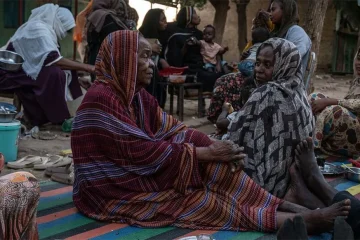
For more than a decade, the Lake Chad basin insurgency — prosecuted with accelerating brutality by Boko Haram and its Islamic State West Africa Province (ISWAP) splinter — has consumed the northeast of the country in a grinding cycle of massacre, mass displacement, and abduction. Thousands of civilians have been killed. Tens of thousands more have been driven from their homes in Borno, Yobe, and Adamawa states. The Nigerian government has committed billions of naira — and hundreds of millions of dollars in foreign assistance — to military operations, base infrastructure, humanitarian response, and community security architecture. The insurgents remain operationally potent.
It is against that backdrop, and amid mounting concerns about institutional integrity and electoral manipulation, that Tinubu’s words carry weight beyond diplomatic pleasantry.
“The rule of law must prevail in any democracy. The majority will have their way, and the minority will have their say and their way. I must not stand in their way.”
President Bola Ahmed Tinubu
“Some of us had been bruised struggling for it,” the President said, his voice animated by the vernacular of the pro-democracy movement that opposed military rule in the 1990s. “We were detained, we protested, we had street demonstrations, we went into exile.” He invoked his own role in the National Democratic Coalition — NADECO — which sustained civilian resistance against the Abacha junta, and framed his current presidency as the fulfilment of that long, dangerous arc.
The declaration is significant precisely because it is contested. Critics, civil society groups, and opposition voices have in recent months raised alarms about what they describe as patterns of judicial interference, selective prosecution, and the use of state instruments to disadvantage political rivals. The Tinubu administration rejects those characterisations. Wednesday’s gathering was, in part, an attempt to project democratic good faith — to hold the line rhetorically at a moment when the institutional ground beneath Nigerian democracy feels, to many observers, unstable.
A SECURITY BILL OF STAGGERING PROPORTIONS
The security burden framing Tinubu’s democratic proclamations is immense. Nigeria’s defence and security budget has expanded dramatically under successive administrations attempting to contain the northeast insurgency. The fiscal outlay encompasses combat operations by the Multi-National Joint Task Force, intelligence infrastructure, the Civilian Joint Task Force, victim resettlement programmes, and the reconstruction of civilian infrastructure reduced to rubble across Borno State alone.
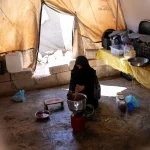
The human ledger is no less severe. ISWAP attacks in 2025 and into 2026 have targeted rural farming communities, aid convoys, and military outposts with a frequency that has strained the confidence of frontline communities in the state’s ability to protect them. Kidnappings — of schoolchildren, of farmers, of local officials — have continued to devastate the social fabric of affected regions. The insurgency’s longevity has itself become a governance crisis: it tests not only military capacity but the legitimacy of the democratic state in the eyes of its most beleaguered citizens.
ELECTORAL LAW AND THE TENSION AT THE TABLE
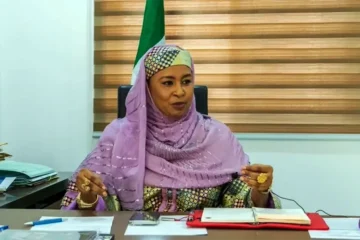
The Inter-Party Advisory Council chairman, Yusuf Dantalle, used the occasion to press concrete grievances. He appealed for the reversal of a National Identity Number requirement for voter registration, warning that it threatened to disenfranchise large segments of the eligible electorate. He also raised concerns about the newly signed 2026 Electoral Act’s elimination of indirect primaries — a provision that, critics argue, concentrates candidate selection power in the hands of party hierarchies rather than grassroots members.
Tinubu, in his address, argued for direct primaries as the more democratic mechanism, positioning the provision as a democratising move. The Independent National Electoral Commission’s financial support for political parties — suspended under austerity pressures — was a further grievance Dantalle pressed for restoration.
The APC chairman, Prof. Nentawe Yilwatda, offered fulsome support, praising the President’s management of Nigeria’s multi-ethnic complexity and pledging the party’s loyalty. His remarks underscored both the unity the ruling party seeks to project and the degree to which the event was as much political theatre as policy dialogue.
THE WEIGHT OF A PROMISE
Tinubu’s personal narrative as a democracy activist is not fabricated — it is documented, and the scars are real. But the distance between a president’s stated principles and the institutional realities of the state he commands is always the operative measure. Nigeria in 2026 faces that test acutely: a northeast where Jihadist violence continues to kill and abduct civilians with near impunity; an economic environment that has stripped millions of purchasing power; and a political class whose commitment to fair play is regarded by a weary public with deep scepticism.
The President appeared alert to the gap. “When it was against me years ago, I toed the line,” he told the assembled party leaders. “I was in opposition without a threat to any human being except the military junta.” It was a reminder — to his audience, and perhaps to himself — that the principles he now invokes once came at personal cost. Whether his administration can translate that biography into durable institutional practice is the question Nigeria’s 200 million citizens will spend the coming years answering for themselves.