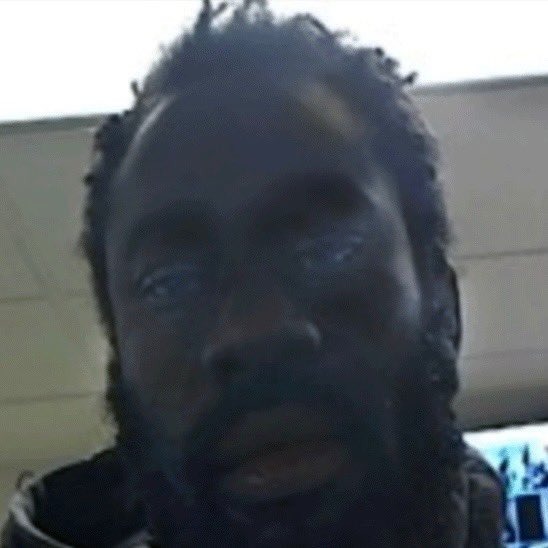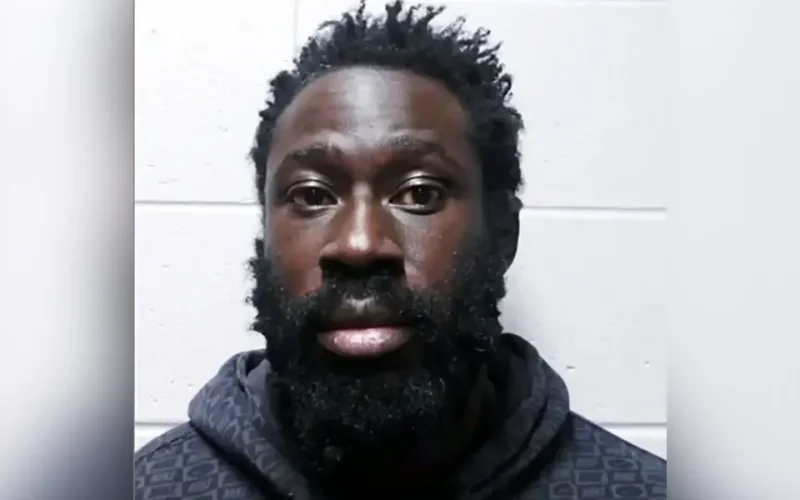
DANIEL Ogama Adongo, the Kenyan-born former Indianapolis Colts linebacker who once made history as the first Kenyan to play in America’s National Football League, has been deported from the United States, U.S. Immigration and Customs Enforcement (ICE) confirmed this week, closing out a decade-long saga of visa overstay, repeated brushes with the law and, ultimately, removal under one of the Trump administration’s signature immigration statutes.
ICE said the 37-year-old was removed from Chicago on 20 June, three months after a Department of Justice immigration judge ordered his deportation on 23 March. According to the agency, Adongo had been living in the country unlawfully since 2016, a year after his brief NFL career ended, having overstayed the visa that first brought him to the United States as a rugby recruit.
A recruit with no football pedigree
Adongo’s American story began not on a gridiron but a rugby pitch. Spotted while playing professional rugby, he was signed by the Colts in 2013 despite having no prior experience in American football – a leap that made him a curiosity in Indianapolis and a source of pride in Nairobi, where he was celebrated as a pioneer opening a new frontier for Kenyan sport. He spent two seasons with the franchise, appearing mostly on special teams, before his release in 2015.
It was after that release, ICE says, that Adongo’s legal status in the country lapsed. Court records cited by federal officials show he was convicted in 2020 of criminal mischief with damage and sentenced to 364 days in jail – the conviction that would eventually trigger his mandatory detention. Officials also pointed to a string of arrests in Indiana over the following years on allegations including felony intimidation, battery and disorderly conduct.
Distinguishing arrest from conviction
It is worth noting, in the interest of accuracy, that ICE’s public account catalogues arrests and charges alongside the single documented conviction. An arrest or a charge is not a finding of guilt, and the agency’s statement does not specify the outcome of each of the additional cases it cites. The one conviction confirmed in the public record — criminal mischief with damage — is the offence that placed Adongo within the ambit of the Laken Riley Act, the law President Donald Trump signed last year mandating detention without bond for undocumented immigrants convicted of certain crimes.
Washington’s messaging machine
The Department of Homeland Security did not merely announce the removal; it amplified it. In a social media post that quickly drew both support and backlash, DHS described Adongo in blunt, capitalised terms as a criminal whose departure had made American communities safer. ICE Chicago’s Assistant Field Office Director, Douglas Thompson, said in a statement that violators of immigration law are held accountable regardless of their public profile, adding that this applies equally to former professional athletes.
The framing fits a pattern. DHS has increasingly used the profiles of well-known deportees — including, in recent months, a Mexican former world boxing champion, a Sudanese university basketball player and a teenage Honduran footballer — to publicise its enforcement record. The agency maintains that nearly seven in ten ICE arrests involve people who have been charged with or convicted of a crime in the United States, and that the administration has carried out several million removals since taking office.
“Those who violate immigration law are held equally accountable, including former professional athletes.”
ICE Chicago
A pan-African footnote to a national debate
For Kenya and the wider African sporting diaspora, Adongo’s removal carries a poignancy beyond the immigration statistics. He remains the first — and to date only — Kenyan to have played in the NFL, a distinction earned through an improbable code-switch from rugby to American football that briefly made him a symbol of African athletic versatility on the world’s richest sporting stage. His deportation now closes that chapter on a considerably less triumphant note than it opened.
The case lands amid a broader, often fraught conversation about the treatment of African and other Global South nationals within the United States’ immigration enforcement apparatus, one in which high-profile removals are increasingly deployed as political messaging as much as law enforcement. Whatever view one takes of the policy, the underlying facts are not in dispute: Adongo overstayed his visa, was convicted of a criminal offence, and was removed under a law designed for precisely such cases. What remains contested is the tone in which his removal was announced to the American public — and what that tone signals about how immigration enforcement is now communicated in Trump’s second term.