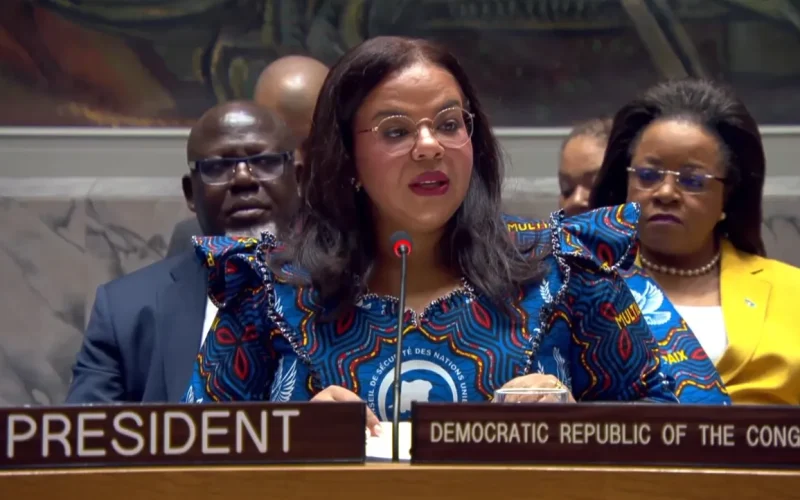
THE Democratic Republic of the Congo used the full weight of its presidency of the United Nations Security Council this week to force the world’s most powerful states to confront an uncomfortable truth: the resources that power the global economy and the green transition are, in many of the places that produce them, also the fuel of war. At a high-level public debate held in New York on Wednesday, July 22, 2026, under the theme “The governance of natural resources: foundation of peace, security, and prosperity,” Kinshasa did not merely host a discussion. It set an agenda.
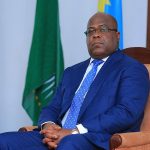
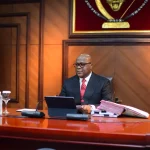
State Minister Thérèse Kayikwamba Wagner delivered the message on behalf of President Félix-Antoine Tshisekedi Tshilombo, and its central claim was unambiguous: peace in the eastern DRC cannot be separated from the economics of the war that has ravaged the region for decades.
“Lasting peace remains inseparable from the fight against the illegal exploitation of natural resources, the dismantling of armed groups, the drying up of their funding channels, and the end of networks that allow minerals from conflict zones to enter global supply chains.”
It is a formula stripped of diplomatic softening. For Kinshasa, the militias that have terrorised North and South Kivu are not an isolated security problem to be managed with peacekeepers and ceasefires alone; they are the armed end of a supply chain that stretches from artisanal mines in the Congolese bush to refineries, factories and consumer electronics thousands of kilometres away. Break the financing, the President’s message argued, and the fighting loses its purpose.
A Warning to the Architects of the Energy Transition
Tshisekedi’s message reserved its sharpest language for the global rush toward decarbonisation — a transition the DRC is uniquely positioned to enable, and uniquely exposed to be exploited by. The world’s appetite for cobalt, coltan, copper and lithium has turned the Congo into an indispensable supplier of the transition’s raw materials. But indispensability, the President warned, has not translated into justice.
“There can be no truly just energy transition if it is based on the injustice done to producing peoples. There can be no truly secure supply chains without security for the states and communities that produce these resources.”
The warning lands at a moment when Western governments, battery manufacturers and automakers are racing to lock in long-term supply agreements for Congolese minerals, often through commercial arrangements struck far from the mining communities that bear the human and environmental cost of extraction. The President’s framing recasts that dynamic not as a side effect of the energy transition, but as a structural flaw at its foundation — one that, left unaddressed, will keep reproducing the very insecurity that disrupts supply in the first place.
A New Doctrine: Sovereignty, Traceability, Equity
Rather than confine the debate to grievance, the DRC used its Council presidency to table a concrete proposal: a new international doctrine governing how the world sources its critical minerals. The pillars, as conveyed by Minister Kayikwamba Wagner, are precise and actionable — respect for the sovereignty of states over their natural resources; transparency across supply chains; stronger mechanisms to trace minerals from mine to market; a decisive fight against the economic impunity that allows conflict minerals to be laundered into legitimate trade; equitable partnerships between producing and consuming nations; and direct involvement of local communities in decisions over how their resources are governed.
Each element is a rebuke to the status quo. Traceability mechanisms, in particular, target the laundering networks that allow minerals extracted under the control of armed groups to enter formal international markets indistinguishable from legitimately sourced material — the very mechanism the President identified as sustaining the conflict economy in the east.
“Not Favours. Not Charity.”
If there was a single line intended to reframe how the world listens to Kinshasa, it was this one. The President was explicit that the DRC’s demand is not for aid, nor for sympathy, but for the ordinary terms of a fair economic relationship.
“Producing countries ask neither for favours nor charity; they demand equity, respect, and partnerships that create value, promote industrialisation, and sustainably improve the living conditions of populations.”
That distinction matters. It positions the DRC not as a supplicant seeking assistance, but as a strategic actor asserting its right to capture value from its own resource wealth — through processing and industrialisation on Congolese soil, not merely the export of raw ore. It is a vision of African agency in the global economy, consistent with Kinshasa’s broader ambition to be recognised as an indispensable player in the fight against climate change, the global energy transition, and the industrialisation of the continent — not merely its supplier of last resort.
Guterres Breaks Ranks with the Old Extraction Model
Perhaps the most consequential development of the debate was not Kinshasa’s message itself, but who echoed it. UN Secretary-General António Guterres endorsed the thrust of the DRC’s position, calling on the international community to break decisively with the historical pattern in which value is extracted from resource-rich states while local communities are left impoverished — a pattern he noted has played out with particular severity in the DRC, which alone accounts for more than 70 percent of the world’s cobalt production.
Coming from the UN’s highest office, that intervention gives Kinshasa’s proposed doctrine institutional weight it would not otherwise carry. It signals, at minimum, that the argument for reforming global mineral governance is no longer confined to producer states pleading their case — it now has a hearing at the very centre of the multilateral system.
What Comes Next
The test of Wednesday’s debate will not be the strength of its language but whether it produces enforceable change. Traceability regimes, sanctions on networks that launder conflict minerals, and binding commitments to equitable industrial partnerships all require follow-through — from the Security Council, from mineral-importing states, and from the corporations that sit at the top of these supply chains. The DRC has used its presidency to put the architecture of a new doctrine on the table. Whether the Council, and the world’s major economies, choose to build on it will determine whether Wednesday’s debate marks a genuine turning point in how the world governs the resources it cannot do without — or another well-worded statement absorbed into the routine of extraction it was meant to end.