
SOUTH Africa has moved to contain a widening diplomatic rupture with two of West Africa’s largest economies, reaffirming its commitment to Pan-African solidarity and continental dialogue even as Ghana and Nigeria intensify a campaign to have Pretoria’s handling of undocumented migration placed on the African Union’s agenda.
In a statement responding to the final communiqué of the 69th Ordinary Session of the ECOWAS Authority of Heads of State and Government, the Department of International Relations and Cooperation (DIRCO) described the regional bloc as “a vital pillar of continental integration” and pledged “open, constructive, and action-oriented dialogue” with its member states on regional stability and migration management.
The statement lands at a delicate moment. Nigeria and Ghana have jointly condemned what they term “Afrophobic” protests targeting African nationals in South Africa, and are pushing for the issue to be tabled at the next AU summit. The pressure follows a bilateral meeting between the two countries’ foreign ministers on the margins of the ECOWAS Mid-Year Summit, where they called for a coordinated regional response and renewed emphasis on the free movement of people across the continent.
A CAMPAIGN PRETORIA DISPUTES
The diplomatic temperature has risen sharply in recent weeks. The Presidency has accused Ghana of helping to drive a narrative portraying South Africa as isolated on the continent, with presidential spokesperson Vincent Magwenya confirming that DIRCO had raised Pretoria’s concerns directly with Ghana’s High Commissioner over what officials characterised as misinformation about developments inside South Africa.
International Relations and Cooperation Minister Ronald Lamola, who also serves as President Cyril Ramaphosa’s special envoy to Ghana and Nigeria, has since travelled to Accra to meet Ghanaian President John Mahama in an effort to repair strained ties. DIRCO Director-General Zane Dangor has acknowledged that South Africa “deeply regrets” the anti-immigrant sentiment that has surfaced in parts of the country, while stressing that the government has unequivocally condemned criminal conduct – including vigilante demands that foreign nationals produce proof of immigration status – and that perpetrators of violence and intimidation will be held accountable.
Dangor has also suggested that legitimate domestic grievances are being exploited for geopolitical ends, noting what he called an emerging pattern in which South Africa’s standing as a human-rights norm entrepreneur is being deliberately diminished.
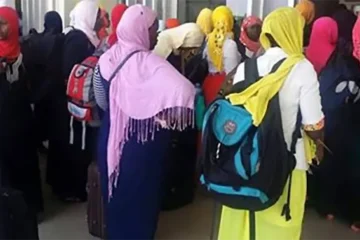
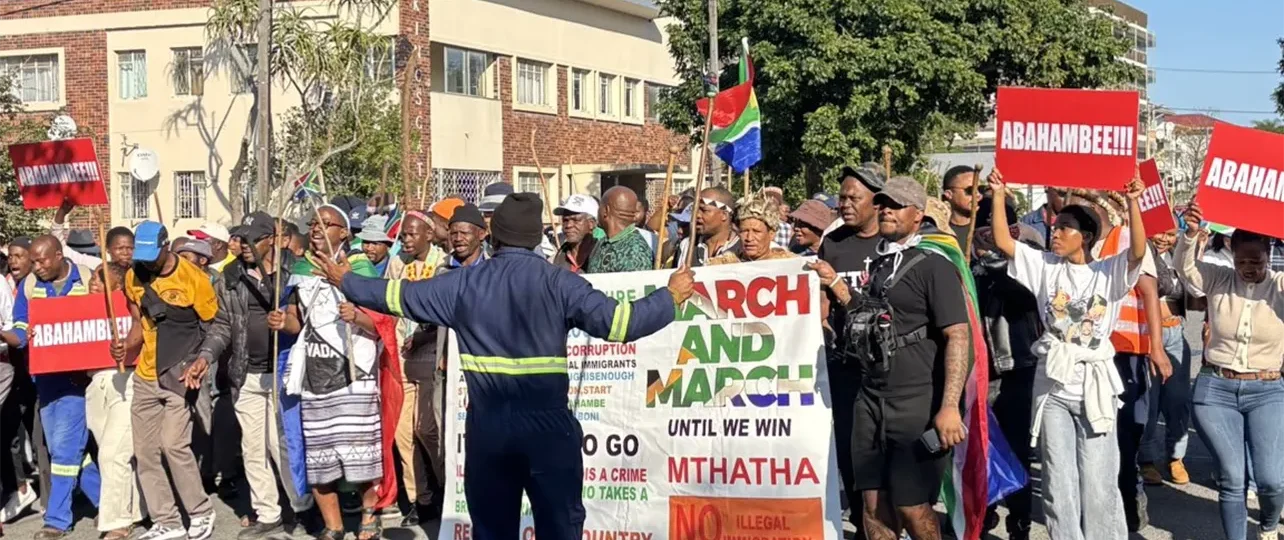
The numbers underline why the issue has escalated. Nigeria evacuated close to 1,500 of its nationals from South Africa between mid-June and mid-July, while Ghana has repatriated close to a thousand of its citizens over the same period, alongside voluntary departures facilitated by South Africa’s Border Management Authority and the Ghanaian High Commission. South Africa’s Department of Home Affairs has, in turn, formally deported and banned close to 600 Nigerian nationals for five years. The repatriations followed a rise in anti-immigrant demonstrations linked to civic formations such as March and March, which has organised protests against undocumented migrants in Pretoria, Johannesburg and Durban since April.
SADC, NOT ECOWAS, AT THE COALFACE
DIRCO’s statement draws a sharp distinction that is likely to shape the diplomatic contest ahead: while Pretoria continues to work through bilateral irritants with West African partners, it insists that the bulk of its migration pressure originates far closer to home, within the Southern African Development Community. That framing is central to South Africa’s pushback against any suggestion that its migration challenges are primarily a West African, ECOWAS-linked phenomenon, and it positions Pretoria to argue that a West African-driven campaign misreads – or misrepresents – the actual geography of the crisis.
“South Africa reiterates, in the strongest terms, its unyielding stance against all forms of social prejudice. We categorically reject xenophobia, racism, homophobia, and intolerance and discrimination in all their manifestations.”
DIRCO statement
At the same time, the department has taken care not to appear defensive on the substance of the xenophobia allegations themselves. It has restated that upholding the dignity of every person within South Africa’s borders is a constitutional imperative and a moral duty, and that the rule of law will apply fully to anyone found responsible for violence or unlawful conduct against foreign nationals.
LAMOLA PUSHES FOR AN AU-LEVEL RESET
Rather than resisting continental engagement outright, Lamola has sought to reframe it. He has welcomed the prospect of taking the migration question to the highest level of the African Union, arguing that a dedicated AU agenda item on the push-and-pull factors behind irregular migration – anchored in governance, democracy and economic stability – would allow for a more pragmatic and comprehensive continental response than bilateral finger-pointing.
“Establishing a dedicated agenda item at the African Union to address the primary push-and-pull factors and root causes of irregular migration… will enable a pragmatic, comprehensive approach to continental migration challenges.”
Minister Ronald Lamola
The approach is a calculated one: by embracing an AU-level conversation on root causes rather than a narrower West African complaint about South African conduct, Pretoria is attempting to shift the terms of the debate from an indictment of its immigration enforcement to a shared continental responsibility for the conditions driving irregular movement in the first place.
THE ICC PETITION DISMISSED
DIRCO has also moved to close down a parallel legal front. Two Ghanaian civilians have filed a petition with the International Criminal Court over South Africa’s handling of the migration issue. The department has dismissed the filing as failing to meet the Court’s statutory legal triggers and jurisdictional requirements, and has invoked the principle of complementarity to argue that South Africa’s own legal architecture is fully capable of addressing the underlying conduct.
Central to that argument is the Prevention and Combating of Hate Crimes and Hate Speech Act, which DIRCO says gives direct effect to South Africa’s constitutional and international obligations on racism, racial discrimination, xenophobia and related intolerance by creating distinct, prosecutable offences of hate crime and hate speech.
ANALYSIS: A CONTEST OVER NARRATIVE AS MUCH AS POLICY
What is unfolding is as much a battle over continental narrative as it is a dispute over immigration policy. Ghana and Nigeria – anchored by their weight within ECOWAS and buoyed by renewed West African solidarity around free movement and reparative justice for the trans-Atlantic slave trade – are seeking to use AU-level pressure to force accountability on South Africa’s treatment of African migrants. Pretoria, for its part, is attempting to hold two positions simultaneously: acknowledging genuine failures in protecting foreign nationals from vigilante violence, while resisting a framing that casts it as an outlier state acting in defiance of Pan-African norms.
The stakes extend beyond diplomatic optics. Bilateral trade between South Africa and Ghana runs into the billions of rand, and any prolonged rupture carries economic consequences alongside reputational ones. With Senegal’s Bassirou Diomaye Faye newly installed as ECOWAS chair and the AU summit looming as the likely venue for a formal reckoning, South Africa’s insistence on dialogue over defensiveness will be tested in the coming months – as will its ability to convince fellow African states that its migration challenges, rooted overwhelmingly in its own region, do not amount to a betrayal of continental solidarity.
For now, Pretoria’s position is one of engagement without capitulation: welcoming the AU conversation Ghana and Nigeria have forced onto the table, while rejecting the premise that South Africa stands isolated, or that its domestic legal system is inadequate to address the conduct at the heart of the dispute.