
THE US-Israel war on Iran has crippled key Middle East trade arteries, thrusting African ports and airports into unaccustomed prominence as global shipping and aviation scramble for alternatives.
US and Israeli airstrikes on 28 February targeted Iranian military and nuclear sites, killing Supreme Leader Ali Khamenei and sparking Iranian missile and drone retaliation across the Gulf. The Strait of Hormuz — conduit for 20% of global daily oil — is shut to commercial traffic. Insurance firms halted coverage, freight surcharges soared, and crude prices spiked toward multi-year highs. Dubai, Doha, and Abu Dhabi airports suspended operations amid strikes and airspace closures over Iran, Iraq, Kuwait, Bahrain, Qatar, and the UAE.
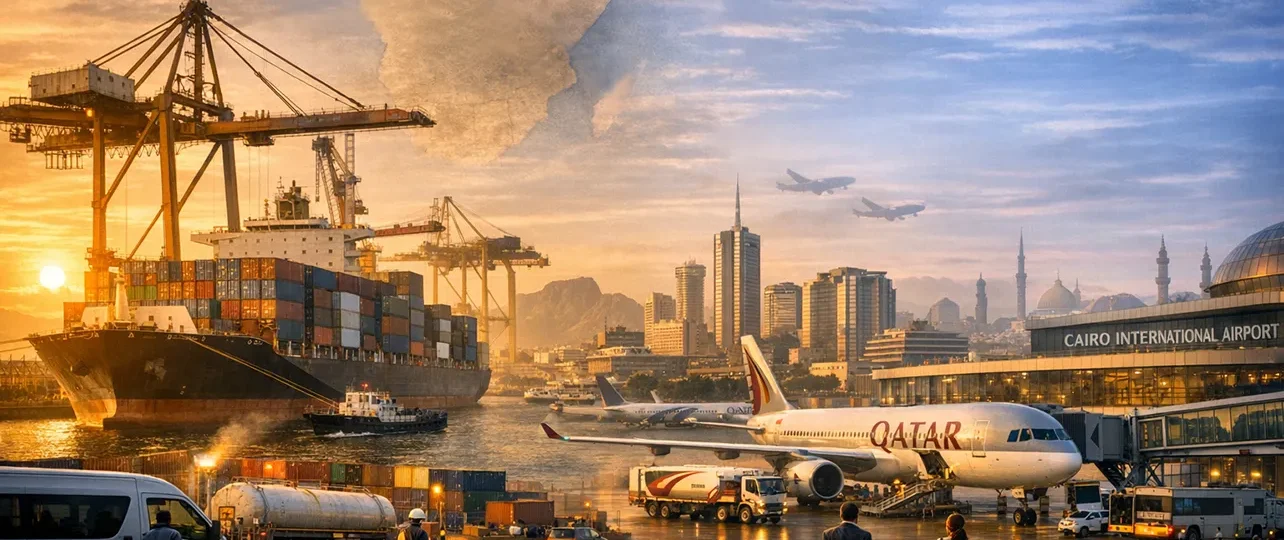
African hubs filled the void. Egypt’s Cairo International Airport, Africa’s busiest with 30.9 million passengers in 2025, absorbed 22 diverted flights on day one — 12 at Cairo, 10 across Sphinx, Alexandria, Hurghada, Sharm El-Sheikh, and Luxor. Unaffected by restrictions due to its eastern Mediterranean position, Cairo emerged as the southern bypass node linking Europe, East Africa, and Asia. Gulf carriers parked aircraft there, generating surges in landing fees, refuelling, and ground services. EgyptAir suspended 11 Gulf routes but benefited from the influx. Egypt’s civil aviation ministry maintained elevated security while keeping skies open.
South Africa’s Cape of Good Hope route saw a 112% vessel surge in early March, per Cape Town port data. Major lines — Maersk, CMA CGM, Hapag-Lloyd, MSC — ditched Suez transits amid Hormuz and Red Sea (Bab el-Mandeb) closures tied to Houthi risks. The detour adds 4,500 nautical miles, 10-14 days, $1 million in fuel per voyage, and $2,000-$4,000 container surcharges. Durban and Cape Town reported spikes in bunkering, provisioning, and maintenance revenues. South Africa’s gold and platinum sectors gained from safe-haven demand amid layered conflicts, including Russia-Ukraine and Gaza.
Namibia’s Walvis Bay, Madagascar’s Toamasina, and Mauritius’ Port Louis logged traffic boosts on Cape legs. Kenya’s Mombasa and Tanzania’s Dar es Salaam eyed Gulf transhipment shifts but faced capacity limits, per UNCTAD. Morocco’s Tanger Med — Africa’s top container port — positioned for Atlantic reroutes. West African ports like Nigeria’s Lagos and Angola’s Luanda saw peripheral gains from South Atlantic traffic.
Oil exporters Nigeria and Angola booked higher revenues as Brent crude rose over 15%, exceeding 2026 budget benchmarks of $60-65 per barrel. Nigeria could see major fiscal lifts at $100 oil, though Dangote Refinery struggles, matching import hikes with retail petrol surges.
Drawbacks mounted fast. South Africa, a net fuel importer from the UAE and India, faced diesel hikes of 62-65 cents per litre in March. Brent’s climb fueled pump under-recoveries, Road Freight Association warnings of supply-chain cascades, and stranded Shoprite containers. Western Cape farmers reported export snarls. Inflation, rand stability, and rate cuts teetered.
Nigeria’s pump prices breached thresholds despite refinery output. Angola grappled with import inflation offsetting exports. The African Energy Chamber noted fiscal windfalls for exporters could evaporate via debt costs and FX strains. Net importers from Sahel to Lusaka endured pure pain: higher fuel, food insecurity.
Port flaws hindered full capture. South Africa’s Durban, Cape Town, and Ngqura battled breakdowns, shortages, and congestion; Algoa Bay bunkering halted over tax disputes. The Economist Intelligence Unit flagged operational gaps.
Shipping firms now plan summer 2026 Cape schedules assuming prolonged Hormuz and Bab el-Mandeb closures — the third major diversion in a decade after 2023 Houthi attacks and a brief 2026 Gaza lull. Experts see structural shifts over temporary fixes.
African officials eye infrastructure upgrades to lock in gains. Egypt’s aviation pivot and Cape revenues stem from geography, not policy — a windfall amid zero continental sway over the war.