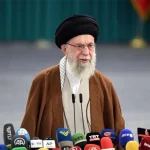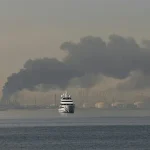

WHEN US and Israeli warplanes struck Iranian military and nuclear installations on 28 February 2026 — killing Supreme Leader Ali Khamenei and triggering a cascade of Iranian missile and drone retaliation across the Gulf — the immediate read was one of pure catastrophe for global commerce. The world’s most critical oil transit corridor, the Strait of Hormuz, through which roughly 20 percent of the world’s daily petroleum supply normally flows, was effectively shut down. The world’s busiest aviation interchange — the triangle of Dubai, Doha, and Abu Dhabi — went dark. Insurance underwriters refused coverage for Hormuz transits. Freight surcharges exploded. Crude oil prices lurched toward levels not seen in years.
But in the rubble of the Middle East’s commercial architecture, a different story is being written across Africa — one of unexpected strategic advantage. For a continent that has long complained of being marginalised in global trade governance, the collapse of Gulf and Red Sea routes has, with brutal irony, placed African geography at the centre of the world’s commercial map.
“The Cape sea route is rapidly becoming the new normal. This is no longer ad hoc diversion — it is structural realignment.”
EGYPT: THE LAST OPEN SKIES OF THE MIDDLE EAST
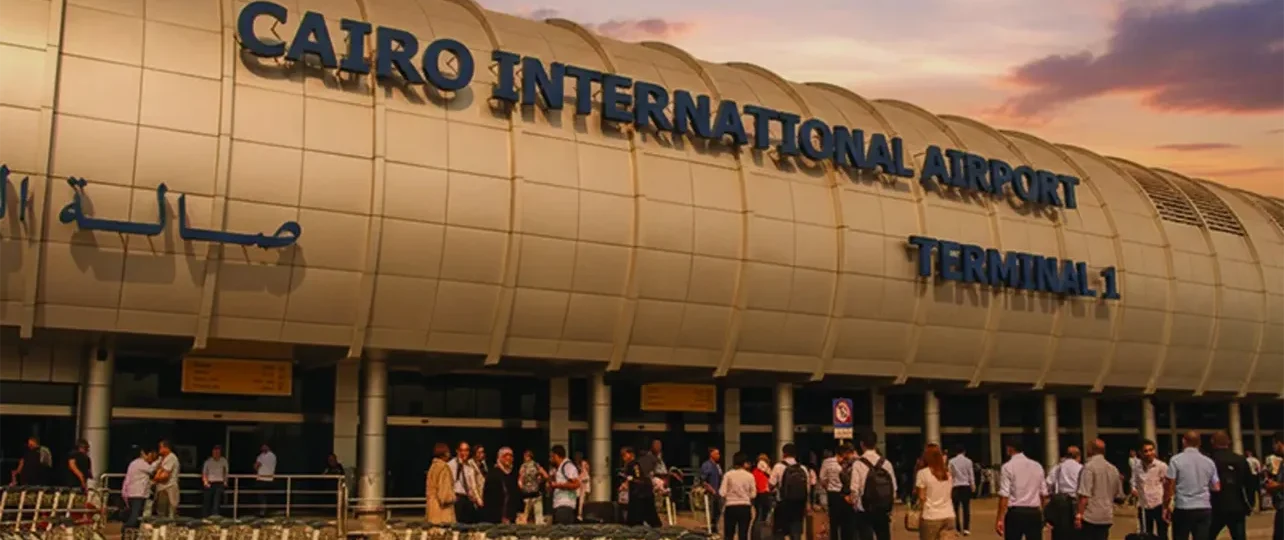
No African country has moved faster to capitalise on the crisis than Egypt. While Dubai International Airport — the world’s busiest — suffered direct suspension of operations following Iranian strikes near the UAE, and while the airspace over Iran, Iraq, Kuwait, Bahrain, Qatar and the UAE was slammed shut by Notam and EASA conflict-zone bulletins, Cairo International Airport remained open under an elevated security posture. Egypt’s own airspace, uniquely positioned over the eastern Mediterranean and the northern tip of the Red Sea, was neither targeted nor restricted.
The consequences were immediate. On the first day of hostilities alone, Egyptian airports received 22 diverted international flights — 12 at Cairo and 10 spread across Sphinx, Alexandria, Hurghada, Sharm El-Sheikh, and Luxor. Cairo, Africa’s busiest airport with 30.9 million passengers in 2025, rapidly emerged as the pivot point for flights attempting to maintain connectivity between Europe, East Africa, and the Indian subcontinent. European, African, and Asian carriers began routing through Cairo to reach Gulf markets or bypass the closed central Middle East corridor entirely.
Aviation planners noted that with the normal Gulf corridor effectively severed — removing the standard links between Europe and Asia that pass through Dubai, Doha, and Abu Dhabi — only two viable bypass routes remained: north through the Caucasus and Afghanistan, or south through Egyptian and Saudi Arabian airspace. Cairo became the critical node on the southern bypass. Gulf airlines, scrambling for sanctuary as their home airports took missile debris and drone strikes, began parking and repositioning aircraft at Cairo. The airport, already Africa’s most capable hub, was effectively absorbing the overflow of three of the world’s largest aviation economies simultaneously.
For Egypt, the economic implications are significant but not without complexity. EgyptAir, the national carrier, was among the hardest-hit African airlines by the crisis, having been forced to suspend flights to 11 Gulf and Levantine destinations where airspace remained restricted. Yet Cairo’s role as a regional safe haven was generating landing fees, refuelling revenues, handling charges, and ground services income at a pace the airport had never previously seen under crisis conditions. Egypt’s civil aviation ministry confirmed elevated alert status but kept operations running — a decision that, combined with Egypt’s geographic luck, has transformed the country into an unlikely aviation sanctuary.
“Cairo is not just a diversion airport. It is the spine of the southern bypass route that now connects Europe, Asia, and Africa.”
SOUTH AFRICA: A 112% SURGE AND A SWORD THAT CUTS BOTH WAYS
No country on the continent has a more dramatic — or more contradictory — relationship with the Iran war’s trade consequences than South Africa. The Cape of Good Hope, which the Suez Canal rendered largely redundant as a commercial route in 1869, has returned with force as the planet’s most important maritime detour. Since the effective closure of the Strait of Hormuz to commercial shipping in late February 2026 — reinforced by renewed Houthi-linked risk in the Bab el-Mandeb Strait cutting off the Red Sea simultaneously — the world’s major container lines, including Maersk, CMA CGM, Hapag-Lloyd, and MSC, have suspended Suez Canal transits and rerouted their fleets around the southern tip of Africa.
The numbers are striking. Cape diversions surged 112 percent in early March 2026 alone, according to data cited by Cape Town port authorities and logistics analysts. Durban’s port registered a measurable spike in vessel traffic. Container ships are now moored in Cape Town harbour in scenes reminiscent of the era before the Suez Canal existed. The Cape route adds roughly 4,500 nautical miles and between 10 and 14 additional days to Asia-Europe rotations, consuming roughly a million dollars more in fuel per round voyage and triggering emergency conflict surcharges from carriers of between $2,000 and $4,000 per container. Each vessel transiting the Cape requires bunkering, crew provisioning, maintenance, and logistics support — revenue streams that flow directly into South African port services.
South Africa’s gold and platinum mining sector is also emerging as an unlikely beneficiary. Analysts at Infrastructure News reported that geopolitical instability and conflict consistently drive investor flight toward safe-haven assets — gold, silver, and platinum group metals — as equity markets become too volatile to hold. South Africa, sitting on the world’s largest known platinum deposits and significant gold reserves, benefits from every ratchet upward in geopolitical risk premium. The Iran war, running concurrently with the Russia-Ukraine conflict and ongoing instability in Gaza, has created compounding safe-haven demand that is lifting precious metal prices precisely when South African producers are positioned to supply them.
Yet the sword cuts both ways. South Africa is a net importer of refined petroleum, sourcing much of its fuel from the UAE and India. The Strait of Hormuz closure directly disrupts those supply chains. Brent crude prices climbed more than 15 percent in the weeks following the strike on Iran, and April 2026 fuel prices are tracking a significant under-recovery at South African pumps — with diesel prices rising between 62 and 65 cents per litre in March alone. The Road Freight Association warned that transport cost increases would cascade rapidly through supply chains. Western Cape agricultural exporters reported immediate logistical disruptions and rising input costs. Shoprite, South Africa’s largest retailer, disclosed that 162 containers of stock were stranded en route. South Africa’s inflation trajectory, its interest rate cutting cycle, and the rand’s stability are all suddenly at the mercy of a war in which the country has no formal stake.
The cruel irony is structural: South Africa’s ports benefit most from the very crisis that is ravaging its import economy. Port operators, bunkering services, cold chain facilities serving provisioning needs, and maritime logistics firms are on the right side of the ledger. South African manufacturers, retailers, agricultural exporters, and consumers are not.
BEYOND EGYPT AND SOUTH AFRICA: THE CONTINENTAL BENEFICIARY MAP
The disruption of Hormuz and the simultaneous closure of Red Sea corridors have produced a tiered set of African winners, determined largely by geographic proximity to the new routing and port infrastructure quality.
Namibia (Walvis Bay) has emerged as one of the most consistently cited beneficiaries. Strategically located on the east-west route connecting Asia with Europe via the Cape, Walvis Bay offers bunkering and logistics services to vessels that previously had no reason to call there. Shipping companies rerouting away from both the Suez and Hormuz corridors are finding Walvis Bay a useful provisioning and refuelling stop on the Atlantic leg of the detour. Analysts at logistics firm Fictiv confirmed measurable volume increases at the port since late 2023 — a trend that has accelerated sharply since the Iran war began.
Madagascar (Toamasina) and Mauritius (Port Louis) have similarly seen connectivity spikes from the Cape diversion traffic. Both islands lie on the Indian Ocean leg of the Cape of Good Hope route and serve as logical refuelling and crew-change points for vessels moving between Asia and the Atlantic. Port Louis in particular has seen its connectivity with east-west trade lanes increase significantly as a proportion of EU-Asia vessel traffic began avoiding Suez Canal transits from late 2023 onwards — a trend that the Iran war has now locked in for the foreseeable future.
Kenya (Mombasa) and Tanzania (Dar es Salaam) occupy a more ambiguous position. Both ports lie outside traditional shipping lanes connecting Asia with Europe directly, but have been picking up trade from vessels handling Gulf-to-East-Africa cargo that was previously routing through Hormuz. With Hormuz effectively shut, Gulf ports including Jebel Ali and Khor Fakkan — which serve as transhipment hubs for East African cargo — are isolated by geography, potentially redirecting some of that cargo flow through East African ports directly. However, UNCTAD has noted that both Mombasa and Dar es Salaam lack the operational sophistication and handling capacity to manage large volumes of major container vessels efficiently, limiting their ability to fully capitalise on the disruption.
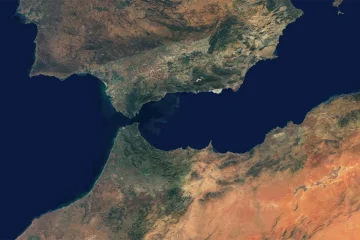
Morocco (Casablanca and Tanger Med) offers a different angle. Royal Air Maroc, whose Casablanca hub serves as a critical transit point for sub-Saharan African passengers travelling to Gulf destinations via Dubai and Doha, has seen its own connectivity to the Gulf severely disrupted by the airspace closures. However, Tanger Med — the continent’s largest container port by volume — stands to benefit structurally from any sustained rerouting of Asia-Europe container flows around Africa’s western seaboard. With vessels now transiting past Morocco’s Atlantic coast on the return leg of Cape diversions, Tanger Med’s transhipment model becomes more, not less, relevant.
West and Central African ports — Luanda in Angola, Douala in Cameroon, Lagos in Nigeria, Dakar in Senegal — are generally regarded as well-equipped but poorly positioned to capture diversion revenues from the specific trade lanes being rerouted. They lie too far outside the main Asia-Europe corridor to offer cost-effective restocking and bunkering for diverted traffic, though they will benefit from the broader surge in vessel numbers transiting the South Atlantic and West African coastline.
THE OIL EXPORTERS: WINDFALL REVENUE, IMPORTED PAIN
Africa’s oil-exporting economies present their own contradictions. Nigeria and Angola — the continent’s two largest crude producers — are recording improved revenue figures on paper as Brent crude trades sharply above the $60-65 per barrel benchmarks both governments embedded in their 2026 budgets. For Nigeria, analysts noted that oil at $100 per barrel would improve fiscal oil revenue significantly. For Angola, higher export receipts are a short-term relief against a backdrop of structural fiscal pressure.
But the benefits are not clean. Nigeria remains deeply dependent on imported refined petroleum products despite the commissioning of the Dangote Refinery, which is still calibrating its output against domestic demand and global crude pricing. Reports indicated petrol prices at the retail level breached significant thresholds in multiple Nigerian states as the conflict intensified, with the refinery’s ex-gantry pricing reset upward in line with rising feedstock costs. The crude bonanza at the government level does not automatically translate into relief at the pump. Angola faces a similar dynamic: higher export receipts on one side, rising import and inflation pressures on the other.
The African Energy Chamber summarised the continental position precisely: oil exporters may see fiscal windfalls if export volumes hold, but imported inflation, higher debt servicing costs, and FX pass-through can rapidly offset those gains. For most African economies — the net importers — the Iran shock is simply inflationary, FX-draining, and confidence-sapping, particularly in fragile Sahelian economies where food security is already under structural stress.
THE STRUCTURAL QUESTION: TEMPORARY WINDFALL OR PERMANENT REALIGNMENT?
The deeper question animating port operators, shipping analysts, and African policymakers is whether the current disruption represents a temporary shock — one that resolves when hostilities cease, and the Strait of Hormuz reopens — or whether it marks a permanent inflexion point in how global trade routes are conceived.
The evidence increasingly suggests the latter. The Cape sea route has now experienced three successive major diversion events within a decade: the Red Sea Houthi crisis beginning in late 2023, a near-return to normalcy following the Gaza ceasefire in early 2026, and the immediate reversal of that return triggered by the Iran war. Shipping companies had been carefully rebuilding Suez Canal service schedules only to abandon them within days of the US-Israeli strikes. Major carriers have already indicated they are building summer 2026 schedules on the assumption that Hormuz and Bab el-Mandeb remain restricted, with optionality to revert if conditions improve.
Researchers who have studied African maritime security for over a decade argue that the constant rerouting now demands less ad hoc decision-making and more structural planning — both by shipping companies and by African port authorities. The Cape sea route, once viewed as the world’s great detour, is increasingly being designed into primary routing models. For Africa, that is both an opportunity and an obligation.
The constraint is infrastructure. South Africa’s ports — Durban, Cape Town, Ngqura — suffer from chronic equipment breakdowns, staff shortages, and congestion that prevent them from fully exploiting the surge in traffic. Bunkering services in Algoa Bay were largely suspended during the period under investigation due to a domestic tax dispute, an almost unfathomable self-inflicted wound at a moment of global maritime opportunity. The Economist Intelligence Unit has reported that even Cape Town and Durban — the continent’s most capable southern ports — have been unable to fully exploit the routing advantage because of operational deficiencies.
The message from the market is blunt: African ports need investment, operational reform, and expanded capacity to convert geographic advantage into lasting economic gain. The Iran war has not created Africa’s opportunity — the continent’s geography has always provided it. The war has simply removed the barrier of competitive pricing that previously made Suez Canal routing the rational default.
“Africa’s geography always provided the opportunity. The Iran war has simply removed the pricing barrier that kept Suez as the default.”
ADVANTAGE WITHOUT AGENCY
What the Iran war has produced for Africa is something the continent’s strategic community must grapple with carefully: advantage without agency. Egypt’s open skies, South Africa’s Cape ports, Walvis Bay’s bunkering capacity, Mauritius’s connectivity — none of these outcomes were produced by African diplomatic choices, African military power, or African economic statecraft. They are the accidental fruits of a war fought by external powers over interests that are not Africa’s own.
The continent’s oil exporters enjoy higher revenues from a conflict they did not choose and cannot control. Its ports benefit from shipping reroutes caused by a war zone that may yet draw African economies into supply-chain dependency risks they are poorly positioned to manage. Its airspace — in Egypt’s case — remains open precisely because Egypt is not a party to the conflict, not because it has built the diplomatic architecture to guarantee that neutrality endures.
Africa’s strategic community and its policymakers would do well to resist the temptation to declare the Iran war a continental windfall. The same disruption that is inflating port revenues in Cape Town is inflating fuel prices in Nairobi, Lusaka, and Dakar. The same war that is filling Cairo’s airport terminals is emptying the trading books of African carriers that depended on Gulf connectivity. The same oil price spike that is improving Nigeria’s budget arithmetic is pushing fertiliser costs toward levels that threaten the planting seasons of net-importing economies across the Sahel.
The net assessment is mixed at best — and the continent’s ability to shape outcomes in the conflict remains, for now, close to zero. What Africa can control is whether it uses this moment of accidental geographic relevance to build the port capacity, logistical infrastructure, and diplomatic positioning needed to claim that relevance permanently — on its own terms, when the next crisis arrives.