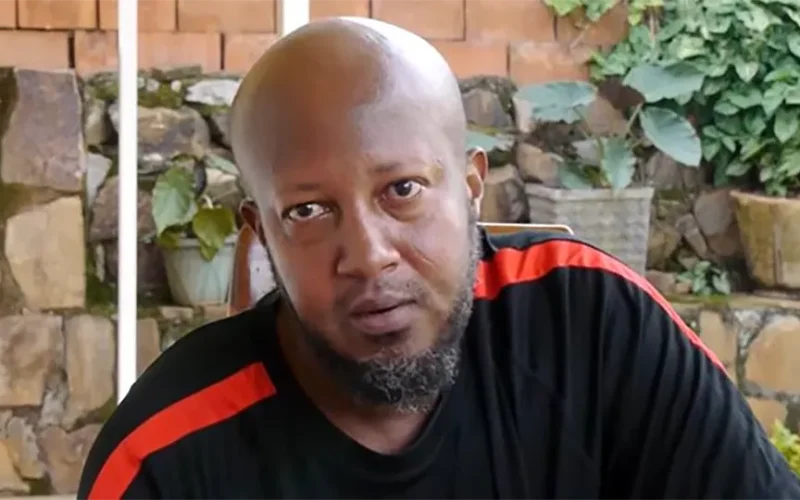
AIMABLE Karasira had signed his release papers. His family was on its way to collect him. Five years of imprisonment – years scarred by alleged torture, medical neglect, and a prosecution that sought to silence him with a 30-year sentence – were finally behind him. Then, on the night of 6 May 2026, he was dead.
The 48-year-old Rwandan academic, YouTuber, and relentless government critic died at Nyarugenge District Hospital in Kigali on the very day the state was legally obliged to set him free. Rwandan Correctional Services announced that he had died of a medical overdose, saying through a spokesman that he had consumed excessive amounts of medication prescribed for a pre-existing condition while still awaiting collection by relatives after completing his release formalities.
Within hours, the official account was met with widespread disbelief – and fury.
Human Rights Watch (HRW) was among the first to demand answers, calling on Rwandan authorities to conduct an independent, transparent, and effective investigation. Clémentine de Montjoye, HRW’s senior Great Lakes researcher, said the burden of proof lay squarely with the government. “There are many reasons to question the circumstances surrounding Aimable Karasira’s death in custody, not least the years of harassment and persecution he experienced at the hands of the authorities,” she said. “The government bears the burden of proving that Karasira was not unlawfully killed, and Rwanda’s partners should be watching closely.”
The Committee to Protect Journalists (CPJ) echoed the call, with Africa Programme Coordinator Muthoki Mumo stating that given past reports of torture behind bars and five years of unjust detention, Rwandan authorities had serious questions to answer. “Aimable Karasira Uzaramba’s death in state custody on the day he was expected to finally walk free is devastating,” Mumo said, urging a credible and independent inquiry.
Karasira’s story began to attract international alarm in 2020 when he published a YouTube video speaking openly about the deaths of family members both during the 1994 genocide and in its aftermath – at the hands of the ruling Rwandan Patriotic Front (RPF). The video earned him state surveillance, threats, and eventually a demand from intelligence officials that he use his platform to spread disinformation about government opponents. When he refused, the consequences were swift. He was arrested in May 2021 and charged with genocide denial, divisionism, and related offences.
During a court hearing in May 2022, Karasira told the bench directly that prison authorities had subjected him to torture – sleep deprivation through constant light and loud music, beatings, forcible appearances in court despite illness – while simultaneously denying him medical care for diabetes and mental health conditions. In September 2025, he was sentenced to five years in prison. Prosecutors, dissatisfied, appealed and demanded a 30-year term. That appeal was still pending when Karasira died on his scheduled day of release.
Michela Wrong, the British historian who has written extensively on RPF crimes, captured the prevailing sentiment on social media platform X. “He told visitors he was being beaten and tortured,” she wrote. “Prison eventually proved a fatal experience, as for so many in Rwanda. Now he’s supposedly died of an overdose of his prescription medicine.”
Prominent Rwandan opposition figure Padre Thomas Nahimana, President of the Rwandan Opposition Coalition for Democratic Change, was more direct. “The reviled regime of Paul Kagame has just assassinated Aimable Karasira in the most cynical manner possible,” he declared on X from exile. “Regime change in Kigali is the most urgent solution.”
Across social media, the hashtags #KagameAratumaze – “Kagame has finished us” – and #FreeRwandaNow trended as diaspora communities, activists, and journalists expressed outrage. Critics noted the absence of any independent autopsy, any CCTV footage, or any access for family members prior to the announcement of Karasira’s death.
The circumstances drew immediate comparisons to the 2020 death in custody of celebrated Rwandan gospel singer and peace advocate Kizito Mihigo. Mihigo, who had been pardoned after an earlier imprisonment, was rearrested as he attempted to leave the country. Four days later, Rwandan authorities declared he had died by suicide in a Kigali police cell. He had told Human Rights Watch before his arrest that he feared the state would kill him. No credible investigation has ever been conducted into his death.
HRW invoked the Revised United Nations Minnesota Protocol on the investigation of potentially unlawful death, which holds that the state bears responsibility for a death in custody unless it can prove otherwise – particularly when the deceased was a government critic or human rights defender, or where the circumstances are unexplained. The organisation called on the UN Special Rapporteur on extrajudicial, summary or arbitrary executions and the African Commission on Human and Peoples’ Rights to lead an independent panel of inquiry, with findings made public.
“Karasira is just the latest government critic to suffer a suspicious death,” de Montjoye said. “Rwanda’s partners need to speak up for those who risk their lives to express themselves and condemn the worsening pattern of repression against dissenting voices in the country.”
The Rwandan government has not issued a formal response to international calls for an independent investigation. Authorities have said a post-mortem report is pending.
For the many who knew Aimable Karasira – who survived a genocide, who built a platform to speak forbidden truths, who endured five years of what his own lawyers documented as state brutality – the question is not whether justice will come. It is whether it will come at all.