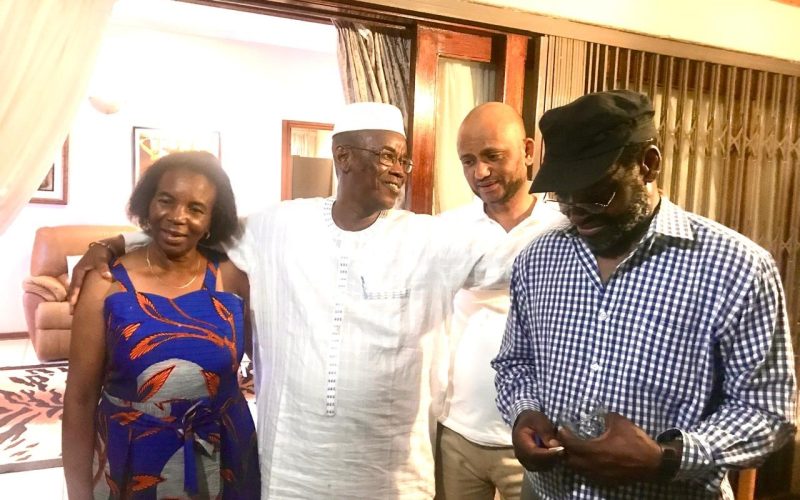
THERE is a particular kind of greatness that the world rarely stops to celebrate. It does not announce itself with fanfare. It does not seek the spotlight or linger near the podium waiting for applause. It works, instead, in the warm hush of a kitchen at dawn, in the steady reassurance of a goodnight kiss given to children whose father is somewhere far away, filing a story, chasing the truth. It speaks in the language of sacrifice — fluently, generously, without complaint.
Florah Marubini Tsedu spoke that language better than anyone.
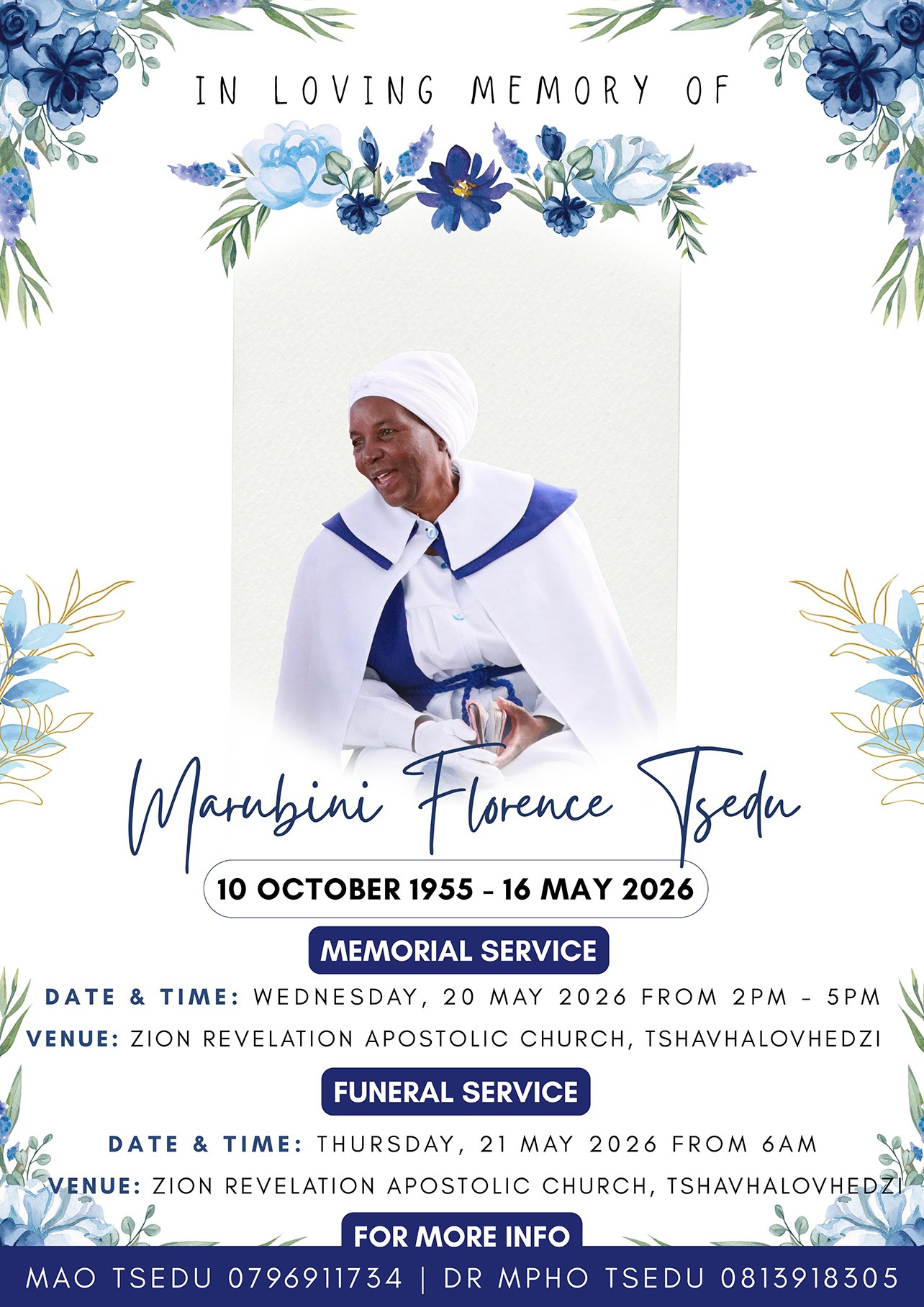
Florah has departed this earth, and in doing so she has left a silence in the lives of her husband Mathatha, their children, their grandchildren, and the vast and beloved extended family she held together across seven extraordinary decades. It is a silence that will take lifetimes to understand, and longer still to fill.
But before we grieve, we must celebrate. Before we speak of the void she has left, we must speak of the life she built. And what a life it was.
A WOMAN IN HER OWN RIGHT
Let us be clear from the outset: Florah Marubini Tsedu was not merely a footnote in the story of her husband’s remarkable career. She was not background. She was not simply ‘the wife of.’ She was a human being of singular depth, warmth, and purpose – a woman who made a conscious and courageous choice about how she would deploy her gifts, and who deployed them with breathtaking generosity.
She chose love. She chose family. She chose to be the root so that others could be the branches. And in making that choice, she did not diminish herself. She defined herself. Completely, powerfully, on her own terms.
To understand Florah, you have to understand what she took on willingly, and what she gave ungrudgingly, for decade upon decade. You have to understand what it means to be the steady hand when the world is anything but steady.
To truly honour Florah, as we do today, you must first understand the scale of what she made possible. Because the man she stood behind – quietly, unconditionally, through every storm – stands today as a colossus in South African journalism. A living testament to the transformative power of a free press. And she was there, always, at the foundation of it all.
Mathatha’s journey began in rural Limpopo, where a young freelance journalist picked up his pen and pointed it at injustice – exposing shocking human rights abuses at a time when doing so carried enormous personal risk. From those beginnings, he rose to the editorial helm of some of this country’s most influential publications: the Sunday Times, City Press, The Star, the Sunday Independent and the SABC. His pen became, as one tribute rightly described it, both sword and shield – cutting through apartheid’s veil of censorship while protecting the democratic principles that underpin our nation’s freedom.
The apartheid regime knew exactly what Mathatha represented. They detained him repeatedly without trial. They subjected him to solitary confinement and torture. They banned him for six years and barred him from practising the journalism that was his calling. They tried, with the full and brutal weight of the state, to silence him.
They could not silence Florah. She kept the home. She kept the children whole. She kept the fire burning. And when the banning ended and Mathatha emerged – unbowed, his commitment to journalistic integrity unshaken – it was because she had held the world together in his absence.
When Mathatha was in Zebediela, giving voice to the agricultural workers whose suffering the apartheid state preferred the world not to see, Florah was at home. When he was investigating the horrific death of John Tsambo at the hands of racist farmers – stories that demanded to be told, stories that cost their teller in ways that are not always visible – Florah was at home. Not waiting passively. Not enduring reluctantly. But actively creating, in that home, a world of warmth and safety and love that would be there when he returned.
She made sure the children did not experience the regular, necessary absence of their father as a wound. She was present enough for two. She was warm enough to fill every room. She answered every question and soothed every worry and kept every routine and lit every birthday candle and remembered every small thing that makes a childhood feel held and whole.
As Mathatha rose through the ranks of South African journalism – editing the nation’s most powerful mastheads, managing complex and high-pressure newsrooms, writing the headlines that shaped public discourse and held power to account – it was Florah who made the long hours possible. Not by asking nothing of him, but by giving everything of herself. By being, in every sense that matters, the engine that kept the household, and therefore the career, running.
THE WINGS BENEATH HIS WINGS
And then came the institution-building years — the years that will define Mathatha’s place in African journalism history long after the last newspaper has been printed.
He was instrumental in creating the Union of Black Journalists. He helped build the South African National Editors’ Forum — SANEF — and the Southern African Editors’ Forum, serving as chairperson and executive director of these vital organisations. And then TAEF: The African Editors’ Forum, built from scratch, from nothing but vision and determination and an unshakeable belief in the future of African journalism. Mathatha travelled Africa and the world to build it. He sat in meeting rooms in Lagos and Nairobi and Accra and Brussels. He lobbied and negotiated and persuaded and organised. He became the kind of leader that institutions are named after.
At the critical Sun City talks in 2001, when the Thabo Mbeki government mounted a direct challenge to the independence of South Africa’s media, Mathatha demonstrated the kind of leadership that pivotal moments demand – keeping a fractious coalition of editors focused and unified, negotiating from a position of principle, never crossing the line between journalist and activist. It was one of the most consequential moments in post-apartheid press freedom, and he was at the centre of it.
Beyond his editorial and institutional roles, Mathatha founded the Media24 Journalism Academy, investing in the training and development of generations of working and student journalists. As Adjunct Professor at Wits University’s School of Journalism, he mentored emerging voices across the country. His opinions on journalism and political developments are sought by media across the world. He has conducted training programmes across the African continent, carrying South Africa’s democratic media ethos far beyond our borders.
He was able to do all of it because Florah made it possible. Not once. Not occasionally. Always.
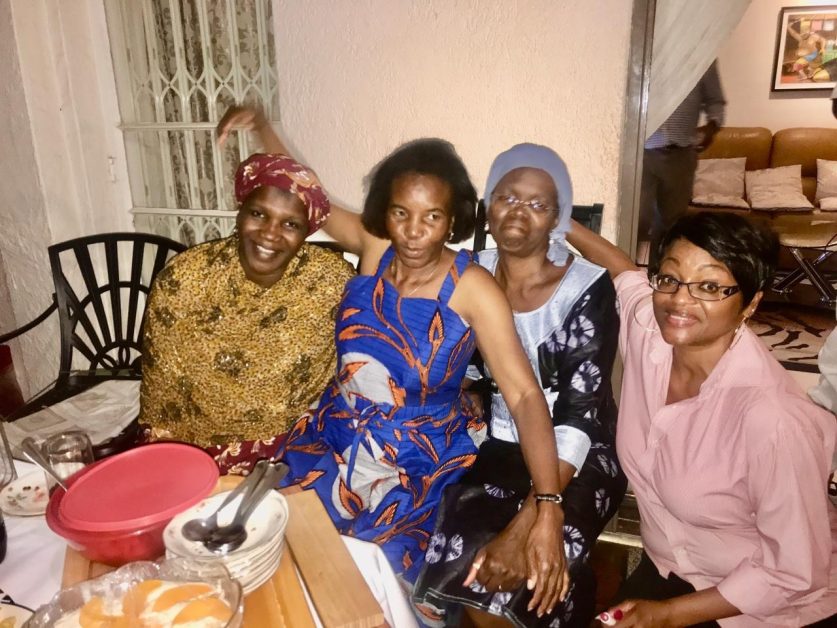
She welcomed delegations from SANEF and TAEF into their home – journalists and editors from across the continent, people who had driven the struggle for free expression at great personal cost. And in the tradition of African hospitality at its finest and most generous, Florah fed them. Not reluctantly, not ceremonially, but with the full warmth of a woman who understood that these gatherings mattered, that the conversations happening around her table were shaping something important, and that her role in making those conversations possible was itself a form of leadership.
The meals she cooked are, in a very real sense, woven into the history of African press freedom. The organisations that grew from those meetings and those conversations have helped defend journalism across a continent. Her contribution to that project is unmatched, and it is time it was named.
THE HARVEST OF A LIFE WELL-LIVED
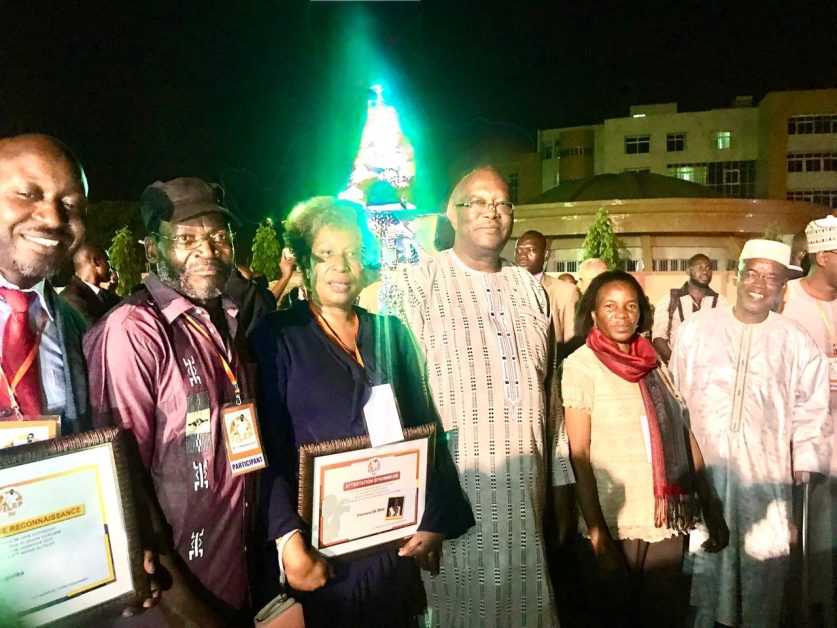
The honours bestowed upon Mathatha Tsedu by a grateful profession and a grateful nation speak for themselves – and they speak loudly. President Cyril Ramaphosa conferred upon him the Order of Ikhamanga in Silver, recognising his excellent contribution to South African journalism and to journalism on the African continent, as well as his selfless contribution to the liberation of his country and continent. He received the Nat Nakasa Award for Courageous Journalism. The prestigious Nieman Fellowship. The Mondi Shanduka Lifetime Achiever Award. And most recently, the 2025 Vodacom Journalist of the Year Lifetime Achievement Award — recognition not merely of an extraordinary individual career, but of a living bridge between a painful past and a democratic present.
He also received an honorary doctorate from the University of the Western Cape — the university that, in the darkest years of apartheid, stood as a beacon of resistance and academic integrity. That the same institution chose to honour Mathatha is a symmetry that means everything.
Every one of those awards. Every platform. Every podium. Every citation is read into the official record. Florah’s fingerprints are on all of it. You cannot separate what Mathatha built from the foundation she provided. The Order of Ikhamanga belongs to both of them. The Nieman Fellowship was possible because of her. The Lifetime Achievement Award is a tribute, in ways that the award-givers may not have fully known, to two lives lived in service of something larger than themselves.
Every award Mathatha has ever received, he has received on behalf of two people. The world may have handed the trophy to one set of hands, but it belongs equally to the hands that were always there, just out of frame, making everything possible.
And Mathatha knew it. He showed it. In the way a man of his character shows the things that matter most — consistently, in private and in public, through the decades. His acknowledgement of her was not performative. It was the settled, certain knowledge of a man who understood exactly what kind of woman walked beside him.
GRANDMOTHER, MATRIARCH, LIGHT
But Florah was more than the woman behind the journalist. She was a mother with the kind of love that leaves its children both fiercely independent and permanently secure. And she was a grandmother whose love was a different flavour entirely – sweeter, perhaps, and even less conditional, if such a thing is possible.
Her grandchildren knew her as the woman whose arms were the safest place on earth. They will carry her in the way that grandchildren carry their grandmothers who truly loved them: not as a distant memory, but as a living presence, a standard, a voice that surfaces at the moments they need it most.
She built a family that will outlast all of us. That is the truest measure of a life.
SHE HAS LEFT HER FOOTPRINT IN THE SAND
Florah Marubini Tsedu is gone. And yes, the void is real, and it is vast, and it will not be easily filled, because the truth is that it cannot be filled at all. There was only one Florah.
But she leaves behind something that voids cannot touch. She leaves a legacy – built not in newsprint or boardrooms or on public platforms, but in the lives of the people she loved, the institutions her support helped sustain, and the culture of warmth and sacrifice and dignity that she modelled, every single day, for seven decades.
She has left her footprint in the sand. And unlike footprints, which the tide erases, hers will remain. Because the lives she shaped carry her forward. Because the work she made possible continues. Because the love she gave was the kind that does not end when a heart stops beating.
To Mathatha: you have lost the person who knew you most completely. The person who chose you, again and again, across every season of your life. There are no words adequate to that loss. But know this – you were loved by one of the finest human beings ever to grace this earth. That is not a small thing. That is everything.
To the children and grandchildren: you were shaped by greatness. Carry it forward.
To Florah Marubini Tsedu: thank you. For what you gave. For who you were. For the immeasurable, irreplaceable gift of your life.
Rest now, Mama. Rest in the fullness of a life gloriously, beautifully lived.