
FOR more than 150 years, South Africans have sung Tiyo Soga’s prayer as if it arrived from the heavens without an author. At funerals, in churches, at political gatherings and in moments of national longing, “Lizalis’ idinga lakho” — fulfil your promise — has risen from our throats with solemn force. We know the hymn. We know its ache. We know the promise it demands. Yet, too often, we do not know the man who gave it to us.
That forgetting is not innocent. It belongs to the larger wound Soga spent his life resisting: the erasure of African memory, African intellect and African authorship. The hymn endured, but the name behind it receded. The prayer remained in the mouths of the people, while its maker slipped from public memory.
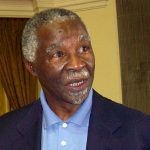
The Thabo Mbeki Foundation and Classics on Turf will seek to repair that breach on Saturday, 20 June, with a concert that restores Soga to the centre of the story. It is more than a performance. It is an act of recovery, linking Soga’s nineteenth-century vision to the present while marking the eighty-fourth birthday of the Foundation’s Patron, President Thabo Mbeki. Instead of placing Mbeki himself at the centre, the Foundation honours the mission that has animated much of his public life: the belief that Africa’s renewal begins with the recovery of its memory. In lifting Soga, whom Mbeki regards as something close to a father of the African Renaissance, the concert turns commemoration into restoration.
Mandisi Dyantyis directs the evening—a musician whose deep feel for the African idiom brings nineteenth-century hymnody into a contemporary hall. Kutlwano Masote conducts, leading the Chamber Orchestra of Johannesburg and the Renaissance Singers through careful (re)interpretations of music woven into our consciousness for over a century.
The concert both preserves and innovates, taking from the granary and adding to it in the same motion — the cycle on which the African Renaissance depends. Dyantyis and Masote are not embalming Soga. They treat his music as a living tradition that handles, turns, and makes it speak in old, new, and different ways.
Born in 1829, Soga became the first black South African to be ordained as a church minister. He was also a translator, essayist and composer of more than 30 hymns. In August 1862, he founded a Xhosa-language newspaper called Indaba. Writing as Nonjiba Waseluhlangeni, the Dove of the Nation, he used the paper’s opening issue to explain the paper’s purpose. He called it a container. Into it, Soga wrote, older people should pour their knowledge. Every story, custom and remembered deed should be kept, because the deeds of a nation are worth more than its cattle and money. In a journal entry from the same year, he put it more plainly. “What was history and legend must be recounted,” he wrote. “We should revive and bring to light all this great wealth of information. Let us resurrect our ancestral forebears who bequeathed to us a rich heritage.”
The resonance of Soga’s vision continues: what he set down in words, the Thabo Mbeki Presidential Centre will raise in earth and steel. Its architects modelled the eight rammed-earth cylinders on the pre-colonial grain store, the structure that held a season’s harvest against the lean months ahead. Soga had reached for the same image in 1862, a container for the harvest of a people’s mind. The Centre, when it opens, will stand around a mission it states without apology: Reclaiming Africa’s memory to build its future.
A quieter call runs through Soga’s life, and this season needs to hear it. He wrote when colonial voices confidently predicted Africans would wither and disappear. Soga refused that prophecy. Instead of accepting a fate set by others’ convenience, he championed his people’s right to belong and shape their futures. Beyond survival, he urged unity across the lines dividing black people, holding that for a people pressed from every side, union above all things is strength. The African beside him was not a stranger to be sorted or measured; she was kin.
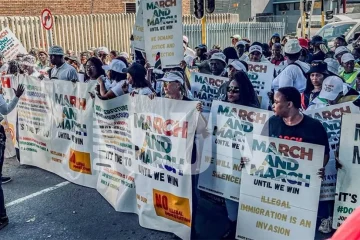
That conviction is worth sitting with now, when a colder sentiment is gaining volume in our streets. The temptation is an old one, and not ours alone. Over the years, Nigeria and Ghana have lived through their own versions of it. When the harvest looks thin, the reflex is to bar the container door and blame the shortage on whoever happens to be standing nearest it. The neighbour becomes the intruder. The fellow African, the one who shares the very future we are trying to reclaim, is recast as the reason the storehouse stands empty.
Unfortunately, there is a long and unpleasant lineage to the belief that this country somehow stands apart from the continent that helped to make it, that we might draw freely on Africa’s labour, struggle, and heritage while pulling up the drawbridge against our fellow Africans. Soga would have recognised the move and refused it. You cannot reclaim a memory held in common while disowning the people you hold it with.
This is much of why the Centre is being built, and why the concert is more than a birthday tribute. Colonialism and apartheid did not only take land and labour. They tried to remove Africans from the story of human civilisation, wearing away histories, languages and names until a people might forget it had built anything worth keeping. The Centre’s mandate is to serve as the continent’s foremost repository for the records, ideas and objects through which Africa has thought about itself. It will hold the archives of historical and contemporary leaders such as Kwame Nkrumah, Kenneth Kaunda and Lindiwe Mabuza, alongside new work imagining what is still to come. The Wits Great Hall on 20 June is a rehearsal for that Centre. For one night, the hall becomes a temporary granary, and Soga’s hymns come down from the shelf, restored to their author and their mission.
Soga’s hymn, Lizalis’ idinga lakho, began as a prayer but now stands as a summons. He offered his wisdom to the future, trusting that those who came after him would act. Yet the discord — ziphithi-phithi — that he lamented has not disappeared. It is in our streets, in our politics, in our policies, and in the hardening instinct to turn neighbours into scapegoats. A concert cannot, on its own, dispel these shadows. But the hymn demands more of us: that we confront the disorder in our public life and in our everyday beliefs about who belongs. It calls us back to unity — zonk’ iintlanga, zonk’ izizwe — all nations and tribes gathered here.
As we celebrate President Mbeki’s eighty-fourth year, the truest tribute is not merely to hear Soga’s voice fill the Johannesburg hall, but to let it remind us that our inheritance is shared, unfinished, and still asking something of us.
Neer is an entrepreneur and COO at the Thabo Mbeki Foundation.