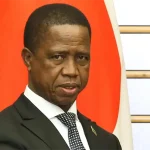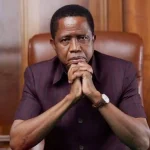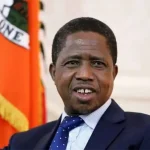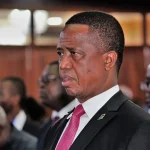

EDGAR Lungu will be buried in South Africa, not Zambia, after Zambia’s government formally abandoned any further legal challenge to a Supreme Court of Appeal ruling that handed the late president’s family the final word on where he rests. The concession, delivered by Attorney General Mulilo Kabesha within hours of Tuesday’s judgment, removes the last procedural obstacle standing between the Lungu family and a burial they have fought for since the former president died in a Pretoria hospital on 5 June 2025.
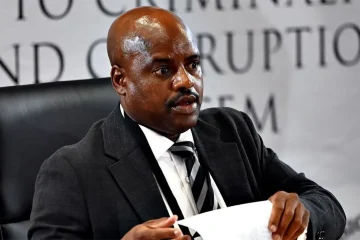
“We accept the judgment, although we don’t agree. But we respect the law. We accept and obey what the court has directed,” Kabesha told the BBC Focus on Africa. “We know, of course, that we have the right of appeal to the Constitutional Court of South Africa, but we’ll leave it at that. We’ll leave the wishes of the Lungu family to go by what they desire to have.”
It is a remarkable climbdown from a government that spent twelve months in South African courts insisting that a former head of state belonged to the nation, not merely to his family – and that walked away from the Supreme Court of Appeal having lost on every front, and ordered to pay the legal costs of the fight it had picked.
Delivering the majority judgment on Tuesday, Justice Raylene Keightley set aside a 2025 Gauteng High Court order that had granted Zambia’s government authority to repatriate Lungu’s remains for a state funeral in Lusaka. The court found that South Africa’s constitutional protections for dignity, privacy and family autonomy, read together with common-law rights of next of kin, decisively favoured the family’s position over the Zambian state’s claim of custody.
The bench rejected, in turn, every plank of Lusaka’s case. It found no admissible expert evidence to support the government’s claim that former Zambian heads of state must be buried under fixed state protocol. It dismissed the government’s contention that the family had already agreed, in writing, to a state funeral on Zambia’s terms, ruling that the document relied on amounted to no more than a proposal under ongoing negotiation. And it found that Zambia’s Benefits Act conferred no enforceable burial entitlement on the state at all. The court dismissed the government’s application in its entirety and ordered it to bear the legal costs.
For the family – led by former First Lady Esther Lungu and represented through the litigation by spokesperson Makebi Zulu and senior advocate Tembeka Ngcukaitobi – the ruling confirms what they had argued from the outset: that Lungu had explicitly rejected any role for his successor and political rival, President Hakainde Hichilema, in his funeral, and that the obvious resolution, if Zambia could not bury him without Hichilema’s involvement, was burial outside Zambia altogether. The family has indicated it intends to lay him to rest at Fourways Memorial Park in Johannesburg, close to where he died and where he has remained in mortuary limbo for a full year.
From State Funeral to “Private Family Matter”
Kabesha’s statement marks a sharp rhetorical retreat from a government that had, as recently as the eve of judgment, defended its claim on grounds of national custom and the dignity of the presidency. The Attorney General had earlier cited the precedent of Michael Sata, buried at Lusaka’s Embassy Park in 2014 under Acting President Guy Scott, and of Kenneth Kaunda and Rupiah Banda, both interred at the same site under presidential authority – arguing that Lungu, as a former head of state, should be accorded the same treatment regardless of the political bitterness that had defined his final years.
That argument did not survive the judgment. Kabesha now describes the matter as one to be “handled as a private family affair,” a formulation that quietly concedes the very principle Zambia had spent a year contesting: that a president, in death, reverts to being a husband, a father, a private citizen whose family’s wishes outrank the state’s appetite for ceremony. Government has confirmed it will not pursue the available avenue of approaching South Africa’s Constitutional Court, the country’s apex court, which, in any case, accepts only matters of genuine constitutional significance.
The Politics Beneath the Coffin
Strip away the legal technicalities and what remains is a story about power outliving its holder. Lungu and Hichilema were never merely electoral opponents; theirs was a rivalry that survived a treason charge, a prison cell, an election defeat and, by the family’s account, surveillance and restriction of movement in Lungu’s final years. That a Zambian government insisted, even after his death, on presiding over his send-off was read by many across the region not as an act of national mourning but as one final assertion of control over a man who had spent his last years trying to escape it.
Seen in that light, the South African courts did more than settle a custody dispute over a body. They drew a line that other governments on the continent will now have to reckon with: that the ceremonial authority of the state over a former leader’s burial is not absolute, and that family autonomy – grounded in evidence of the deceased’s own wishes – can prevail even against a sitting government’s claim of national interest. The episode invites comparison with Zimbabwe’s contested handling of Robert Mugabe’s burial, where family wishes likewise ultimately prevailed over the state’s preferred ceremonial site, reinforcing a regional pattern in which courts are increasingly willing to check executive overreach into what the South African bench called “the inner sanctum of family life.”
With Lusaka’s concession, the remaining steps are logistical rather than legal: confirming arrangements at Fourways Memorial Park, finalising security and ceremonial planning for a private service, and bringing to a close the mortuary arrangement that has held Lungu’s remains in South Africa since the immediate aftermath of his death triggered an earlier, last-minute court order halting a planned funeral on the day mourners had already gathered.
Kabesha, for his part, has sought to close the chapter on conciliatory terms, extending condolences to the family and stating that Lungu’s place in Zambia’s history “is firmly secured” regardless of where he is ultimately buried. Whether that olive branch survives the politics still ahead – with Zambia’s next general election on the horizon and Hichilema and the Lungu family’s Patriotic Front allies still locked in unrelated court and political battles – is a separate question. For now, though, a year-long humiliation of grief by litigation has ended the only way it credibly could: with the state stepping back, and a family finally permitted to bury its own.