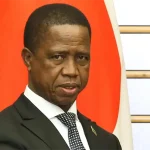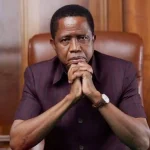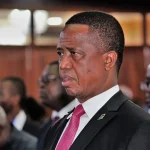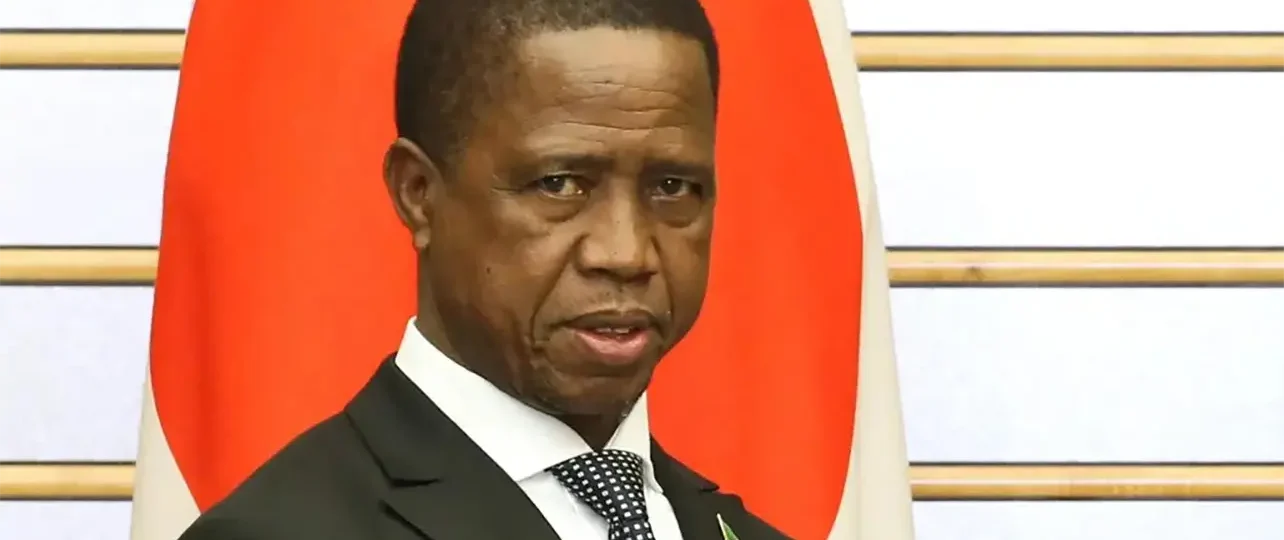

IN a dramatic turn of events, the Pretoria High Court has granted the Zambian government’s urgent application, stopping Edgar Lungu’s burial and postponing the matter to July 18, 2025.
The court ruling brings to a halt the high drama that erupted just 24 hours earlier when the Zambian government approached the South African courts to prevent Lungu’s family from proceeding with the burial, in the face of Lusaka’s determined efforts to have the former president buried in his home country.
The three-week postponement means Lungu’s remains will continue to be held by Two Mountains PTY (LTD) while legal arguments are prepared for what promises to be a landmark case in international law and state sovereignty.
The former president, who died while receiving medical treatment in South Africa, now finds himself at the center of an unprecedented legal battle that has exposed deep political divisions and raised fundamental questions about presidential authority that extend far beyond Zambia’s borders.
The July 18 hearing will determine whether the Zambian state’s claim over its former leader’s remains supersedes family wishes, potentially setting legal precedents that could influence similar disputes across Africa for years to come.
With the burial indefinitely postponed, the diplomatic crisis between Zambia and South Africa enters a new phase, as both nations await a judicial decision that could reshape the understanding of state power and family rights in the post-colonial African context.
On Tuesday, President Hakainde Hichilema’s administration lodged documents, suing Lungu’s widow, Esther and his children in the Pretoria High Court, insisting that the former president must be buried in Zambia according to state protocol. The dramatic legal move represents a last-ditch effort to assert state authority over a burial that would make Lungu the first former head of state of another country to be permanently interred in South Africa.
Attorney General Mulilo Kabesha, filing the injunction as “custodian of the public interest,” has named Lungu’s wife, Esther, children Bertha, Tasila, Dalitso, and Chiyeso, along with Charles Phiri, Makebi Zulu, and Two Mountains PTY (LTD) – the South African company holding the former president’s remains.
The government argues that the burial of a former president is a matter of public interest governed by state protocol, and that Lungu should be interred in Zambia “with full military honours, customs, and traditions, as mandated by Zambian law.”
In a striking legal argument, Kabesha contends that even if Lungu had personally wished against a state funeral, “such a wish must be overridden by the greater public interest,” describing state funerals as “public ceremonies, conducted under strict protocol, held to honour individuals of national significance.”
Family Fights Back with Accusations of Hypocrisy
The Lungu family has pushed back strongly against the government’s legal challenge, accusing President Hichilema of hypocrisy. They point out that Hichilema previously withdrew Lungu’s presidential benefits, citing legal provisions, but is now demanding adherence to protocols when it suits his political purposes.
Family representatives argue that no Zambian law mandates that a former president must be buried in Zambia or at a ceremony presided over by a sitting president.
More explosively, sources close to the family have accused the government of desperation to access Lungu’s body for “so-called rituals” – an embarrassing allegation that has begun to taint Zambia’s international image and adds a sinister dimension to the burial dispute.
The legal battle has drawn in South African President Cyril Ramaphosa, who dispatched Foreign Minister Ronald Lamola to Lusaka to deliver a clear message to President Hichilema: South African law prohibits government intervention in judicial matters.
According to sources within the South African government, Hichilema asked if anything could be done to prevent the burial, but was told that President Ramaphosa has no power to intervene as South African institutions operate independently and are not subject to presidential directives.
This response underscores the fundamental difference in how the two countries approach the separation of powers, with South Africa’s democratic institutions proving resistant to political pressure even from a neighbouring head of state.
Echoes of Mugabe Controversy
The Lungu burial drama bears striking similarities to the 2019 dispute over Robert Mugabe’s burial in Zimbabwe. When Mugabe died, his family refused government demands to bury him at Heroes Acre in Harare, opting instead for a private burial at his rural home in Zvimba.
Crucially, Zimbabwean President Emmerson Mnangagwa – who had removed Mugabe through a 2017 coup – did not pursue legal action to stop the burial, despite similar accusations about ritual purposes being raised against Mugabe’s wife, Grace.
There were later attempts to exhume Mugabe’s body using what critics called a “captured judiciary,” but these efforts ultimately failed, leaving the former liberation hero buried according to his family’s wishes rather than state protocol.
A Diplomatic Crisis Deepens
The legal standoff has created a diplomatic crisis that extends far beyond a family burial dispute. What began as a disagreement over funeral arrangements has evolved into a test of sovereignty, judicial independence, and the limits of presidential power across international borders.
Lungu, who died in Pretoria on June 5, had been locked in a bitter rivalry with Hichilema for years. When Lungu held power, he persecuted his political opponent relentlessly. After losing the presidency, the roles reversed, with Hichilema’s government pursuing various actions against the former president.
The current burial dispute represents the final chapter in their toxic political relationship, with Lungu’s death failing to end the animosity that defined Zambian politics for years.
The protracted drama has already caused significant diplomatic embarrassment for Zambia. Earlier this month, the South African Defence Force prepared elaborate military honours for Lungu’s repatriation, only to stand down when his body was not made available by the family for the planned ceremony.
President Hichilema was forced to issue a public apology to President Ramaphosa and the South African government for the wasted preparations and taxpayer expense.
Now, the legal battle threatens to further damage Zambia’s international standing, particularly the allegations about ritual purposes that have begun circulating in diplomatic circles.
Legal Precedent at Stake
The Pretoria High Court hearing, scheduled for June 25, will determine not only where Lungu is buried but could set important legal precedents about the extent of state power over deceased former leaders and the rights of families to make burial decisions.
Legal experts say the case raises fundamental questions about sovereignty, international law, and the balance between public interest and private family rights that could influence similar disputes across Africa.
The outcome will determine whether Lungu becomes the first former head of state of another country to be buried in South Africa, or whether the Zambian government’s legal gambit succeeds in forcing his repatriation for a state funeral.
As the courtroom drama unfolds, the man who once wielded presidential power finds himself at the centre of a constitutional crisis that has tested the limits of state authority and exposed the deep political divisions that continue to plague Zambian democracy even after his death.
The hearing is expected to begin at 9:00 AM local time at the Pretoria High Court, with both sides preparing for a legal battle that could reshape the understanding of presidential authority across southern Africa.