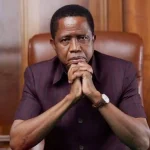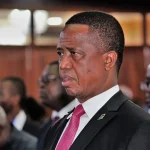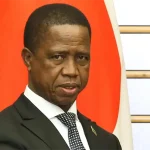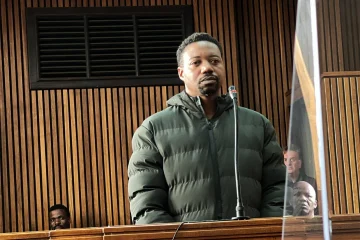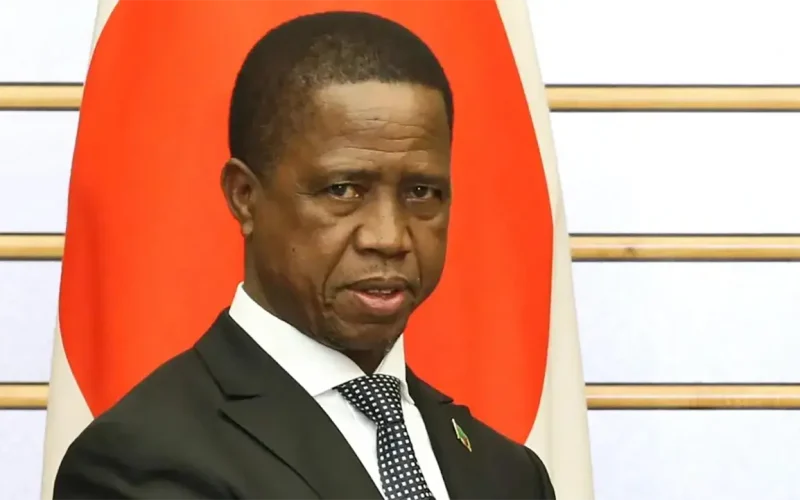
HE died far from home, in a hospital in Pretoria, on the fifth day of June 2025. He was sixty-eight years old. He had served his country as president. And yet, almost a full year later, Edgar Chagwa Lungu – Zambia’s sixth Republican President – remains unburied, his mortal remains shuttled between funeral parlours and government facilities, between court orders and counter-orders, between the competing claims of a grieving family and a government that many Zambians believe is settling political scores from beyond the grave.
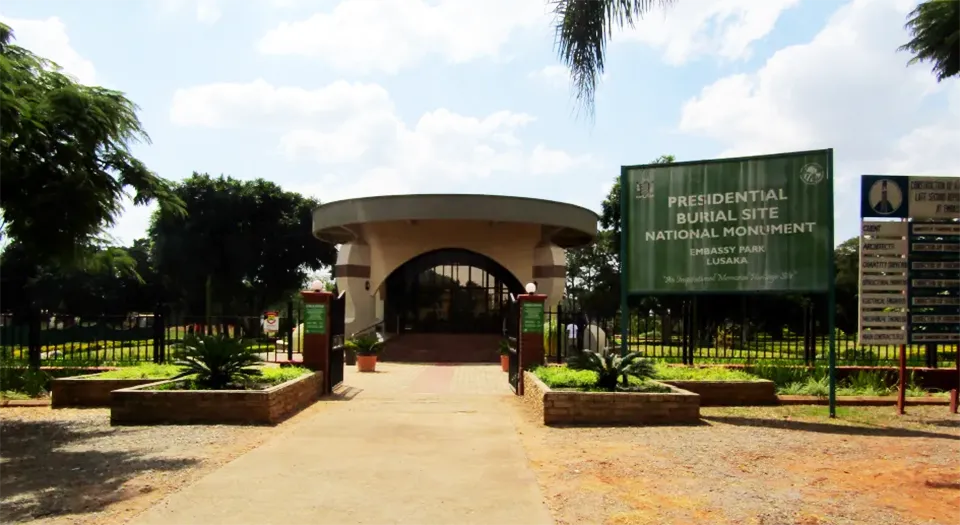
The latest episode in this grim saga played out in the early hours of Wednesday, 22 April 2026, when Zambia’s Attorney General, Mulilo Kabesha, announced triumphantly that the High Court in Pretoria had formally transferred Lungu’s remains to the Zambian state. The body, he said, had been relocated from Two Mountains Burial Services in Pretoria to a facility managed by the South African government – the first tangible step toward repatriation and burial at Embassy Park in Lusaka, the designated cemetery for Zambian heads of state.
The announcement was brief, clinical, and did not dwell on the extraordinary circumstances that made it necessary: that a former president’s body had spent nearly ten months in a South African mortuary while lawyers argued and politicians manoeuvred.
“A former president’s personal wishes or the wishes of his family cannot outweigh the right of the state to honour that individual with a state funeral.”
Pretoria High Court, August 2025
Hours later, however, the South Africa Supreme Court of Appeal dramatically intervened. In an urgent ruling delivered late on Wednesday evening, the appellate court ordered both governments to return the body to the Two Mountains funeral parlour. In an extraordinary additional step, the court summoned both the Zambian and South African governments to show cause why they should not be cited for contempt – a rare and severe judicial rebuke that signals the court’s deep alarm at the manner in which a former head of state’s remains have been handled.
Family spokesperson Makebi Zulu confirmed the dramatic reversal, stating that the stay had been granted and that the court had directed all parties to reverse any actions already taken. The matter will return to court on 21 May 2026, leaving the question of Edgar Lungu’s burial unresolved for at least another month – and almost certainly longer.
A STORY OF HATRED DRESSED AS HONOUR
To understand why a man who led a sovereign nation cannot be buried nearly a year after his death, one must understand the deep and poisonous hatred between the Lungu and Hichilema camps – a feud that predates Lungu’s death and which his passing has grotesquely amplified.
Edgar Lungu served as Zambia’s president from 2015 to 2021, when he was unseated by Hakainde Hichilema in elections that were widely praised as credible. What followed was not the dignified transition that Southern Africa hoped for. Hichilema’s government launched a sweeping wave of prosecutions against Lungu’s family: his wife and daughters were arrested on fraud charges; his daughter Tasila was detained again in February 2026 on money laundering charges. The Patriotic Front, Lungu’s party, characterised the prosecutions as a political vendetta. Hichilema’s government insisted it was the rule of law in action.
Lungu himself claimed he had been effectively placed under house arrest, his movements restricted by police. When his health deteriorated, and he travelled to South Africa to seek medical treatment, it became his final journey.
His family says one of his last wishes was unambiguous: President Hichilema should have no part in his funeral. He should not go near his body. He should not preside over any ceremony. It was an instruction born of bitterness – but a man’s dying wishes are not merely a private matter. They are a moral claim on the living.
Almost a year after his death, Edgar Lungu lies in a Pretoria mortuary — hostage to a political vendetta masquerading as protocol.
The Zambian government has taken the position that these wishes are legally and constitutionally irrelevant. The state, it argues, has a sovereign right – indeed, a duty – to honour its former heads of state with the dignity of a state funeral, regardless of personal animosity. The August 2025 Pretoria High Court ruling endorsed this view, declaring that no family’s preferences could override the state’s right to conduct a national funeral. The court’s words were blunt and constitutional in framing.
But legality is not the same as morality. And the manner in which the Zambian government has pursued this right – the drama of removing the body at night, the competing statements, the Secretary to the Cabinet reportedly unaware of developments in real time – does not suggest a state acting from dignified constitutional duty. It suggests a state acting from political urgency, anxious to close a chapter before the first anniversary of Lungu’s death on 5 June 2026.
THE LEGAL MAZE AND ITS HUMAN COST
The timeline of this dispute is a study in legal and human misery. Lungu died on 5 June 2025. On 25 June, the South African High Court stopped a private funeral service, mid-ceremony, as the family had gathered at the Cathedral of Christ the King in Johannesburg. Family members were forced to abandon the church and travel to a courthouse instead. The Zambian government had brought the urgent application just in time to prevent the burial.
Two months later, on 8 August 2025, the Pretoria High Court ruled in Lusaka’s favour, directing the family to hand over the body for repatriation and a state funeral. Lungu’s sister Bertha was in tears in the courtroom as the judgment was read out. The Patriotic Front immediately filed an appeal. That application for leave to appeal was dismissed on 16 September 2025.
The family then mounted a further appeal before the Supreme Court of Appeal – South Africa’s second-highest court. This week, that appeal apparently collapsed when the family was unable to proceed within an agreed expedited timeline. The Zambian government moved swiftly to execute the original August judgment, and the Attorney General issued his statement announcing custody of the remains.
Then came the Supreme Court of Appeal’s dramatic late-night intervention – a stay, an order to return the body, and the threat of contempt proceedings. What had looked like a resolution dissolved back into crisis within hours.
Sources quoted in Zambian media suggest that behind the scenes, a consensus had quietly been reached between the family, the Zambian government, and South African authorities: that Lungu should be buried in Zambia on 5 June 2026, the first anniversary of his death. Yet the competing public narratives – one describing an unauthorised removal, the other framing it as a lawful diplomatic process — suggest that whatever private understanding may exist, it has not been sufficient to prevent legal chaos from erupting again.
A CONTINENT WATCHES WITH DISCOMFORT
There is no precedent in modern Africa – or anywhere in the democratic world – for a former head of state remaining unburied for a year, his body a contested object in an active legal dispute. Not all of Africa’s recent political transitions have been gentle. But even in the bitterest of adversarial politics – in Zimbabwe, in Kenya, in Nigeria – the dead have been buried.
The Lungu case has disturbed African leaders and publics in equal measure. It raises questions that go beyond Zambia: What protections, if any, does a former president retain against his successor? What rights does a family have when the state asserts sovereign interest over a body? And what does it say about a democracy when its courts are the arena not for constitutional principle, but for the extension of political warfare into the mortuary?
It says nothing good.
Whatever the legal merits of the Zambian government’s position – and they are real; states do have legitimate interests in honouring former leaders – the optics of this protracted, undignified struggle are devastating. The image of a former president’s body removed from a funeral parlour at night, with the Cabinet Secretary unaware of what is happening, is not the image of a government acting from constitutional principle. It is the image of a government acting from political anxiety.
Zambia deserves better. Edgar Lungu deserves better. And the family — whatever one thinks of their legal arguments — deserves better than to have a loved one become a pawn in a political game.
A NATION WAITING FOR CLOSURE
Zambia will now wait until at least 21 May for the South African Supreme Court of Appeal to revisit this matter. If history is any guide, it is unlikely to be the final word. The legal wrangling may yet run for months more, as the parties manoeuvre, appeal, and counter-appeal in what has become an embarrassing spectacle for a country that prides itself on its tradition of peaceful transitions.
In the meantime, the remains of Edgar Lungu lie in a Pretoria facility – not quite in his family’s hands, not quite in his government’s hands, caught between two court orders and the wreckage of a political relationship that turned toxic long before his death. He led a nation of eighteen million people. He won two presidential elections. He managed, however imperfectly, the demands of power in a fragile democracy.
He deserved to be buried. He still does.
Zambia deserves better than this. Edgar Lungu deserves better than this. And the family – whatever one thinks of their legal arguments – deserves better than to have a loved one become a pawn in a political game that did not end when he drew his last breath, but has raged, indecently and insistently, across the entire year since he closed his eyes in a South African hospital and went wherever the dead go.
The court will rule on 21 May. Or it will not. And the waiting will continue. — TAM