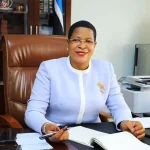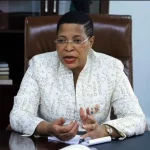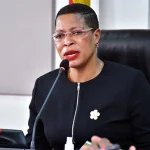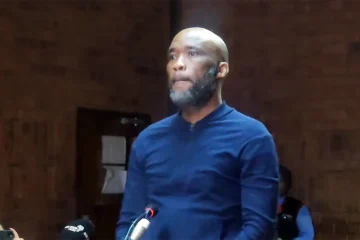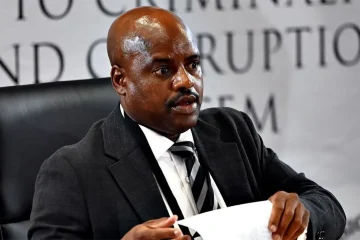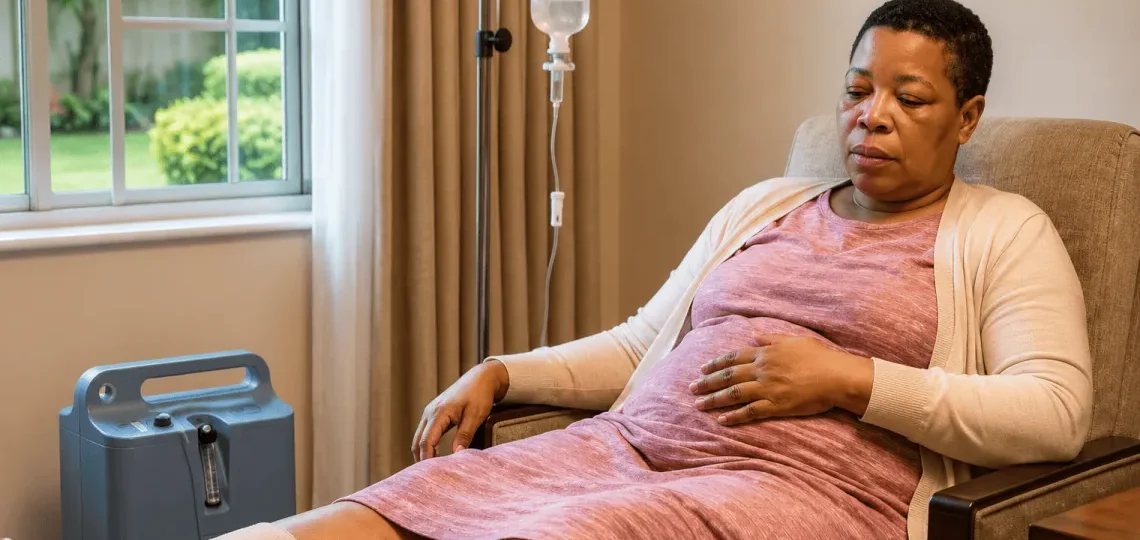

THEY call her “AAA” with an affectionate wink — a tidy, sing-song shorthand for a woman who, until six weeks ago, occupied the third-highest office in the Ugandan state. Today the initials trail a rather different story: a former Speaker of Parliament confined to a heavily guarded compound in Nakasero, her bank accounts frozen, her passport withdrawn, and – if a viral TikTok broadcast is to be believed – her legs so swollen with a suspected blood clot that she can no longer stand. Welcome to the third act of Anita Annet Among’s political life, in which corruption allegations meet compassion, and Uganda must decide which one it believes.
A Speaker, a Rolls-Royce, a Reckoning
Among’s fall has been one of the swiftest in recent East African memory. In April she imported a 2025 Rolls-Royce Cullinan from Britain, reportedly worth around $440,000 – roughly Shs3.4 to 3.6 billion – cleared through customs under a company called Anita Foundation Limited. When the purchase became public, General Muhoozi Kainerugaba, the army chief of defence forces and President Yoweri Museveni’s son, attacked it directly on X, declaring he had never sat in a Rolls-Royce in 52 years as “Mzee’s son” and that he could not support corruption. Within 48 hours, the Patriotic League of Uganda withdrew its earlier endorsement of Among for a second term as Speaker, Museveni summoned her to State House in Entebbe, and joint teams from the Criminal Investigations Directorate and the Uganda People’s Defence Forces fanned out across her residences in Nakasero, Kigo and Ntinda. They left with the Rolls-Royce, a Range Rover, a Mercedes-Maybach, a Lexus, two Toyota Land Cruisers and her mobile devices – and, in time, with her freedom of movement.
Among withdrew from the speakership race, pledged her support to whichever candidate Museveni and the NRM preferred, and promised to cooperate with investigators probing alleged illicit enrichment, money laundering and breaches of the Leadership Code Act. Her accounts were frozen, she was barred from leaving the country, and her husband, football administrator Moses Magogo, was drawn into the same dragnet. By late May, outlets were describing the security posture around her Nakasero residence – heavy Special Forces Command deployment, screened visitors, no official confirmation of “house arrest” but no convincing argument against the label either – in terms that have barely shifted a month on. The Inspectorate of Government has reportedly completed its investigation and handed a report to the President. He has said nothing public since.
Enter the Swollen Legs
Then came the legs. Former Kampala Central MP Muhammad Nsereko, a close Among ally, told a widely shared broadcast that the former Speaker had a blood clot, could no longer walk, and needed treatment that “may only be accessible abroad” – recasting a criminal probe, in a single sentence, as a humanitarian emergency. It is a familiar script: when the legal heat rises, change the subject to a hospital bed.
Bukedea County MP David Beecham Okwere, who actually visited Among at Nakasero, offered a cooler account to Uganda Radio Network. He confirmed visible swelling in her feet but said she “moves normally within her compound” and was well enough recently to host a Catholic priest for prayers and share a meal with visiting MPs. He stopped short of calling her situation house arrest – government has issued no formal explanation either way – but could not confirm whether her own doctors had been allowed in. Okwere traced the swelling to the marathon campaign trail Among walked ahead of January’s election, aggravated since, he suggested, by the stress of her current circumstances. Alice Alaso of the Alliance for National Transformation corroborated that Among has genuine health issues, without confirming Nsereko’s clot diagnosis or offering much else. A subsequent visit by Uganda Radio Network found access to the residence tightly screened but not absolute: an unannounced reporter was turned away, while MPs who had cleared it in advance, gifts in hand, were waved through.
Why a Swollen Ankle Is a Political Weapon
None of this, in the end, is really about ankles. Swelling is, medically speaking, a low-information symptom – it can signal lymphedema, infection, cardiac or renal trouble, or genuinely a deep vein thrombosis, distinguishable from one another only by ultrasound Doppler, D-dimer testing, or, if a clot is suspected to have travelled, a CT pulmonary angiogram. Declaring “blood clot” on a livestream, without a scan in evidence, is not a diagnosis. It is a strategy.
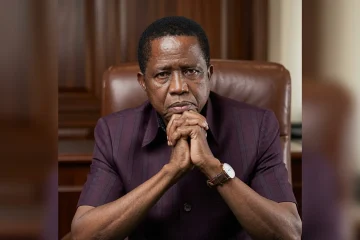
It works because sympathy is a shield that legal argument cannot easily pierce. A formerly powerful woman on a settee, hands folded, legs elevated, photographs handsomely for a social media timeline and badly for a prosecutor’s case calendar – not because it disproves the underlying allegations, but because pursuing them too hard now looks cruel. If the state genuinely restricts a sick person’s access to her own doctors, it hands her allies a real grievance and foreign critics a ready-made headline. If her allies overplay an unconfirmed clot into a death-watch, they hand the prosecution room to dismiss the entire health narrative as theatre the moment an independent doctor says otherwise. Both sides are gambling on which image Ugandans believe first: the woman in bandages, or the Rolls-Royce on the low-bed truck.
The State’s Awkward Hand
Here lies Museveni’s discomfort. He authorised the raids, accepted Among’s withdrawal, and watched his own son fire the opening shot on X – yet weeks after the IGG’s report reportedly landed on his desk, no charges have followed. One NRM insider told The Observer that the President had personally assured Among nobody would arrest her, even as a rival faction has pushed for prosecution to match the public spectacle of the raids. Former PLU general secretary David Kabanda has complained, pointedly, that Uganda convicted a former junior minister over a few hundred stolen iron sheets while a Speaker accused of far larger sums sits comfortably under house guard – a comparison that captures the credibility gap a stalled prosecution would leave behind. Indecision, in this case, is its own kind of answer, and not a flattering one for an anti-corruption drive that announced itself with such theatre.
Three Ways This Plays Out
An independent medical review confirms a genuine, serious condition, and the state grants supervised treatment without dropping the case – the cleanest outcome, and therefore the least likely to arrive intact.
Among is allowed abroad for treatment, the case stalls or proceeds in her absence, and Ugandans add another name to a long list of the politically connected who left the country ahead of their court date.
The clot claims are shown to be exaggerated or unproven, the prosecution gains momentum — and the backlash over a sick woman’s restricted access lingers regardless, because cruelty, once alleged, is hard to fully retract.
The Ledger
There is a moral ledger here, and Uganda’s institutions are being watched closely to see which way it tips. Convict on the evidence while denying a confined woman reasonable medical access, and the ledger tilts toward cruelty. Wave through an easy medical exit and let Leadership Code Act charges quietly evaporate, and it tilts toward impunity wearing a hospital gown. Among rose from the opposition benches to the Speaker’s chair in under a decade, survived earlier corruption clouds and a 2024 UK sanctions listing, and built, by her own account, a business empire spanning education, health and media. Whether she now exits the stage as a cautionary tale about unchecked power, or as proof that the right symptoms can outrun the right subpoena, will depend less on her legs than on whether Museveni – and the institutions nominally independent of him — can stomach following through on a case his own family helped start.