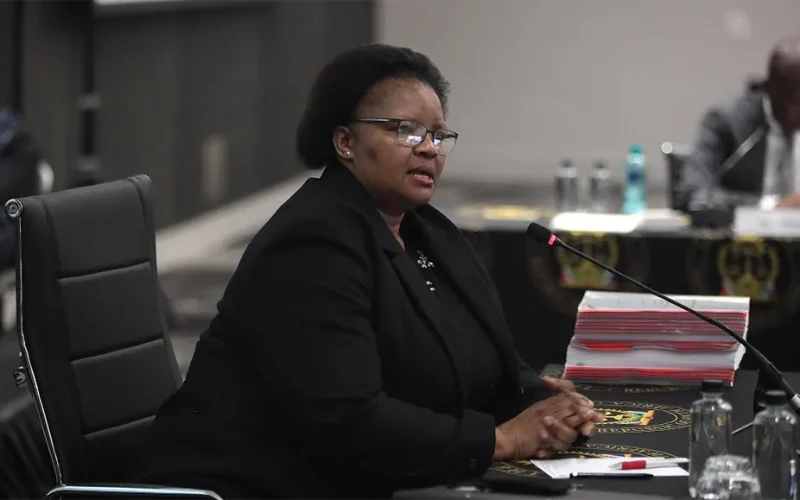
FOR three decades, South African courts have stripped tenderpreneurs, fraudsters and cartel bosses of the houses, cars and bank balances bought with stolen or laundered money. This week, that same machinery – the Asset Forfeiture Unit of the National Prosecuting Authority (NPA) – turned on a woman who, until recently, might have been the one signing the order.
A preservation order granted by the High Court in Pretoria has frozen a R6-million luxury property in Hartbeespoort registered in the name of Judge Portia Dipuo Phahlane, placing it under the control of a curator bonis pending forfeiture. It is alleged to have been bought, in part, with the proceeds of the very crime she now stands accused of: corruption.
The order is not the headline event in Phahlane’s unravelling. It is something more pointed — the moment the state moved from prosecuting her conduct to dismantling the lifestyle prosecutors say it bought her.
A FALL WITHOUT PRECEDENT
Phahlane’s case is, by the admission of her own peers, without precedent. When a Judicial Conduct Committee considered a misconduct complaint against her earlier this month, the panel of three judges wrote that it had never imagined a day would come when it would be asked to weigh corruption allegations against one of its own. Since South Africa’s first democratic election in 1994, no sitting judge has been arrested and criminally charged the way Phahlane was on the night of 25 November 2025.
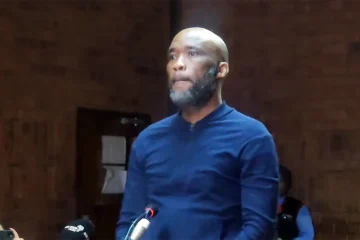
She was 57, appointed to the Gauteng High Court bench barely four years earlier, when Hawks investigators took her into custody alongside her son, Kagiso Phahlane, church leader Bhekumuzi Mike Sandlana, and Sandlana’s spokesperson, Vusi Soli Ndala. All four appeared the next morning at the Pretoria Specialised Commercial Crimes Court — the same building in which Phahlane had, only days earlier, still worn a robe.
THE PRICE OF A VERDICT
At the centre of the 19 charges against her is a long-running succession battle inside the International Pentecostal Holiness Church, a dispute over who would lead the church that had dragged through the Gauteng High Court since 2022. Phahlane was the case management judge assigned to it — a role that, unusually, prosecutors say she allowed to tip into deciding the matter’s outcome behind closed doors.
The State alleges that Sandlana, one of several men claiming the church’s leadership, used a court interpreter as a go-between to offer the judge money in exchange for rulings in his favour. More than R2.4 million allegedly changed hands between late 2021 and early 2022, some of it in cash handed over at clandestine meetings in Brits, Nigel and Pretoria East, the rest funnelled into Phahlane’s accounts and, prosecutors now say, into the deposit on the Hartbeespoort house.
It is a strikingly intimate portrait of capture: not a faceless tender or a procurement scam, but a judge allegedly negotiating the outcome of a case while still hearing it, then using the proceeds to buy a multimillion-rand home in her own name.
THE NET WIDENS
This week’s preservation order signals that the NPA’s case has matured well beyond the original four arrests. Court papers filed by the Asset Forfeiture Unit now place six people before the Specialised Commercial Crimes Court, with court interpreter Morongwa Malope named for the first time as an alleged conduit in the scheme, alongside Sandlana and the judge herself.
The NPA says its evidence includes financial records, electronic tracking data and sworn statements it believes corroborate the allegations objectively — the kind of paper trail that asset forfeiture proceedings, unlike criminal trials, can act on using a lower civil standard of proof, well before guilt or innocence is decided in a criminal court.
“No person is above the law, particularly those entrusted with positions of authority, integrity and public confidence.”
Adv Andy Mothibi, National Director of Public Prosecutions
National Director of Public Prosecutions Adv Andy Mothibi was blunt about what the case represents. Corruption, he said, rarely survives as a deal between two people; it is sustained by networks of facilitators and enablers — a description that fits a case now stretching from a cash handover in Brits to a title deed in Hartbeespoort.
THE LAST LINE OF DEFENCE
The damage to public confidence has travelled well beyond one courtroom. Chief Justice Mandisa Maya placed Phahlane on special leave within days of her arrest, and by February, the Judicial Service Commission had removed her from all judicial duties entirely. A separate disciplinary process, triggered by a complaint from Gauteng Acting Judge President Aubrey Ledwaba, is now headed for a full tribunal that could end in her impeachment — a process that runs independently of, and regardless of the outcome of, the criminal case.
Opposition parties have seized on the case to demand a forensic review of every judgment Phahlane has handed down, warning that if a judge can be bought once, every ruling she has made is now open to question. It is not an abstract concern: Phahlane was, until her arrest, presiding over a double murder trial and had handed a rapist-murderer two life sentences only months before Hawks investigators came for her.
Mothibi’s statement reached beyond the legal mechanics of a single case, framing it as a wound to two pillars of society at once: the courts South Africans turn to for justice, and, because a church leader allegedly bought his way to victory, the religious institutions many turn to for moral guidance. The credibility of both, he said, is severely undermined when corruption infiltrates the structures society relies on for justice and moral leadership.
Phahlane denies the charges. She has called the case against her a personal vendetta engineered by rivals in the very church dispute she was hearing, and none of the allegations has yet been tested before a trial court. She remains free on R50,000 bail, barred from entering the High Court buildings she once worked in, her passport surrendered to the State.
The criminal trial, postponed twice already as prosecutors chase down new evidence, is now due back before the Specialised Commercial Crimes Court on 23 July. Sandlana, denied bail twice, remains behind bars. The Hartbeespoort property sits under the control of a court-appointed curator, its fate tied to a forfeiture process that does not require a criminal conviction to succeed — only a court satisfied, on the lower civil standard, that the house was bought with dirty money.
Whatever the outcome, the symbolism is already fixed. A woman once entrusted with deciding whether other South Africans had broken the law is now waiting to learn whether she did — and whether the home she built on a Hartbeespoort hillside will be the first thing the State takes from her, or merely the first of many.