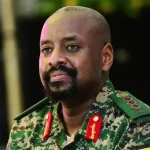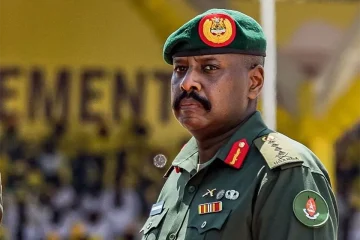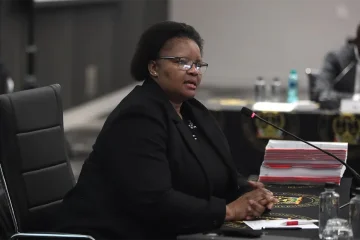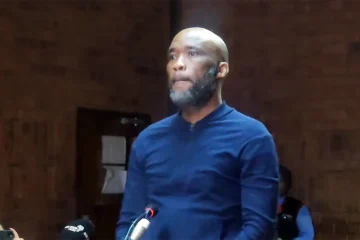
UGANDA woke on Sunday to find soldiers stationed outside the country’s largest independent newsroom and one of its most respected elder stateswomen still missing, after Chief of Defence Forces Gen Muhoozi Kainerugaba moved within a single week to silence both the press that scrutinises him and the activists who criticise him.
Shortly after midnight on Sunday, armed personnel surrounded the Namuwongo, Kampala headquarters of Nation Media Group (NMG) Uganda and the Kampala Serena Hotel broadcast centre housing NTV Uganda and Spark TV, sealing the compounds and restricting movement in and out. By 5 am, NTV Uganda and Spark TV screens had gone dark, replaced by a blank “video unavailable” message; KFM and Dembe FM briefly went off air; and uncertainty hung over the fate of the Daily Monitor, The East African and the rest of NMG’s Ugandan platforms, which together employ more than 500 people.
The siege followed a late-night barrage of posts on X in which Gen Muhoozi announced, without citing any court order, regulatory process, or stated legal basis, that the outlets would cease operating, that they would not resume without his personal permission, and that all future reporting critical of Uganda would first require clearance from his office. He left little doubt about his underlying view of journalism itself: “In Uganda, I DO NOT believe in a free press!” he wrote. By the time of publication, neither Uganda’s military, the police, nor the Uganda Communications Commission – the statutory regulator empowered to license and sanction broadcasters – had issued any official order, citation, or legal justification for the shutdown, a silence press freedom monitors describe as a now-familiar pattern: act first, explain never.
An Escalation Years in the Making
NMG Uganda’s confrontation with the Kainerugaba family is not new, but Sunday’s siege marks its most severe escalation yet. The same Namuwongo premises were sealed for more than a week in May 2013, after police raided the Daily Monitor over a leaked intelligence letter that first surfaced persistent allegations – always denied by government – of a succession plan that became known as the “Muhoozi Project.” President Museveni has previously dismissed the paper as an “enemy and evil newspaper.”
Pressure has mounted steadily since. During the March 2025 Kawempe North by-election, the Committee to Protect Journalists documented at least 18 journalists beaten, blindfolded or briefly detained by masked security operatives, including NMG’s own photojournalist Abubaker Lubowa, who was held with colleagues in an unmarked vehicle and beaten about the head, arms, legs and ribs. In October 2025, Parliament and State House barred NMG-Uganda journalists outright from covering both the legislature and the presidency, a move the Uganda Editors Guild and National Association of Broadcasters condemned as unconstitutional censorship. Uganda’s standing on the World Press Freedom Index fell fifteen places to 143rd out of 180 countries over the period, against the backdrop of a contested January 2026 general election.
The Vanishing of Miria Matembe
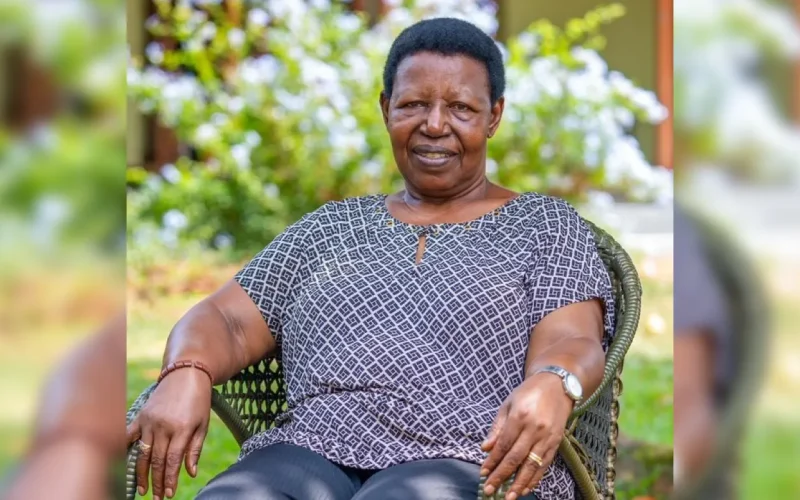
The media siege lands six days after Gen Muhoozi’s security operatives raided the Luzira home of Dr Miria Matembe, a framer of Uganda’s 1995 Constitution and the country’s first Minister of Ethics and Integrity, who has not been seen or heard from since 22 June. Armed men in a vehicle popularly known as a “drone” scaled her perimeter wall, searched every room without identifying themselves, and withdrew only because she had already left for her morning exercise; her phones have been unreachable ever since. By Saturday, with still no word from her, former MP Samuel Odonga Otto broke down in tears on live radio, demanding to know her whereabouts, while family friend JK Kazoora appealed publicly for her body to be released for burial should she have been killed, or for her to be spared torture if she remained alive.
Before she vanished, Matembe had accused Muhoozi of behaving like “Idi Amin incarnate” – a charge many Ugandans now point to as the likely trigger for the raid on her home, and one echoed in recent days by figures including retired Maj Gen Kahinda Otafiire, who has likened the current spate of disappearances to the darkest years of Amin’s rule.
Constitutional Rights Under Siege
Legal experts argue that the crackdown’s two fronts – a newsroom blackout and a missing rights defender – are not separate stories but two expressions of the same erosion of constitutional government. Article 29(1)(a) of Uganda’s Constitution guarantees freedom of expression and of the press; Article 41 guarantees access to information; Article 23 protects every citizen against arbitrary arrest or detention; and Article 28 guarantees a fair hearing, including the right to choose one’s own legal representation – a right rights groups say was already violated when lawyer Erias Lukwago was abducted, held incommunicado and, his wife says, beaten and stripped before his own court appearance on 17 June, an episode that triggered a nationwide lawyers’ strike on World Anti-Torture Day. Uganda is separately bound under Article 9 of the African Charter on Human and Peoples’ Rights and Article 19 of the International Covenant on Civil and Political Rights to protect free expression, obligations the Uganda Editors Guild has invoked repeatedly as NMG’s access to Parliament and the presidency was stripped away over the past year.
Rights defenders, including Dr Sarah Bireete, Doreen Nyanjura, Salaam Musumba and Winnie Kiiza, have spent the past week making the same essential demand on Matembe’s behalf that media bodies are now expected to make on NMG’s: that the State immediately account for what it has done, under what legal authority, and to whom.
A country that cannot account for one missing grandmother, and goes dark in its newsrooms the moment she vanishes, has stopped pretending to be governed by law.
Reaction — and What Happens Next
Exiled opposition leader Robert Kyagulanyi, popularly known as Bobi Wine, condemned the shutdown as proof that Muhoozi was acting with his father’s full backing to silence Uganda’s remaining independent voices, describing the country as now living under open military rule in all but name. Formal statements from the Uganda Editors Guild, the National Association of Broadcasters and international press freedom bodies, all of which condemned earlier restrictions on NMG in 2025, are expected to follow; none had been issued by the time of publication.
Neither NMG Uganda, the Uganda People’s Defence Forces, the Uganda Police Force nor the Uganda Communications Commission had issued an official statement on the shutdown, or on Matembe’s whereabouts, as The African Mirror went to press. The combined effect, say analysts, is to leave Uganda’s last weekend before the next stage of the election season with its constitutional framers vanished, its lawyers on strike, and its largest independent newsroom dark — all on the say of one man. The African Mirror has sought comment from UPDF, the Uganda Police Force, the UCC and NMG-Uganda. This is a developing story and will be updated as fresh information is verified.