FOR 91 minutes and 59 seconds, Bafana Bafana did the unthinkable and made it look almost ordinary. Then Stephen Eustáquio remembered he was Portuguese-trained, Canadian-capped, and entirely without mercy, and ruined everybody’s evening with one perfectly struck football.
It arrived in the 92nd minute, the cruellest postcode in the sport. A loose, bouncing clearance fell into space at the top of the box, and the Toronto FC metronome met it first-time, low and true, past a despairing Ronwen Williams and into the bottom corner. Los Angeles Stadium erupted in maple-leaf delirium. Fourteen thousand kilometres away, South Africa exhaled the long, ragged exhale of a nation that had dared to dream and very nearly got away with it.
Final score: South Africa 0, Canada 1. Final verdict on South Africa’s tournament, however, reads rather better than the scoreline suggests — because for the first time in four World Cup appearances, Bafana Bafana are a knockout-stage football team. Sunday’s defeat stings. The history doesn’t go anywhere.
Eighty-Nine Minutes of Glorious Stubbornness
Hugo Broos sent his side out at SoFi Stadium – rebadged, FIFA-style, as ‘Los Angeles Stadium’ for the tournament – with a gameplan that could be summed up in one word: refuse. And refuse they did, magnificently, for the better part of an hour and a half. Canada huffed, puffed, and generally treated the South African penalty box like a commuter treats a Monday-morning queue: present constantly, achieving very little.
The co-hosts’ best first-half openings arrived in stereo, right on the half-time whistle’s cue, as if scheduled. First Aubrey Modiba materialised on the goal-line like a man who’d forgotten his own back post existed until precisely the moment he needed it, hooking away Moise Bombito’s header. Seconds later it was Williams’ turn to be the hero, somehow getting a glove to a Tajon Buchanan effort that had ‘goal’ written all over it in indelible ink.
South Africa’s goalkeeper and captain was, by full-time, comfortably the most important man on the pitch not wearing a maple leaf. He repeated the trick early in the second half, parrying away a Tani Oluwaseyi shot with the unflappable calm of a man who has saved penalties for a living — only for Canada’s pressure to nearly bite back anyway, Mbekezeli Mbokazi required to hack the rebound clear before the Juventus forward could tap home what would have been a horribly avoidable opener.
Enter Davies, Exit Bafana’s Luck
If there was a moment the contest tilted irreversibly Canada’s way, it had a name, a number, and a Bayern Munich badge. Alphonso Davies’s introduction in the 75th minute – his tournament debut, after a hamstring injury had kept the co-hosts’ captain on the sidelines for the entire group stage – sent a charge through a crowd that had been waiting all summer for exactly this. He took the armband, he took the left flank, and South Africa’s previously serene right side suddenly had a great deal more to think about.
Canada coach Jesse Marsch had said as much before kick-off, telling Goal.com his side should expect a battle from a Bafana Bafana team he felt had been written off too readily after their stirring 1-0 win over South Korea sealed their passage to the knockouts. For long stretches on Sunday, he looked entirely right to be worried. It simply didn’t matter in the end.
Davies’s energy stretched a tiring South African back line just enough; Jonathan David, the tournament’s most ruthless African-continent nightmare so far, kept probing without quite finding the finish his evening deserved. And then, with the clock deep in injury time and South Africa’s fans already composing their thank-you speeches, the ball bounced kindly for Eustáquio and unkindly for everyone in red, gold, black and green.
History Made, History Postponed
There is no soft way to lose a World Cup match in the 92nd minute, and South Africa will feel this one for a while. But context is everything in football, and the context here is extraordinary: a Bafana Bafana squad assembled overwhelmingly from two clubs – Mamelodi Sundowns and Orlando Pirates supplied eight players apiece – turned a group containing Mexico, Czechia and South Korea into a launchpad for the country’s deepest World Cup run in history. Broos’s men leave Los Angeles with their heads up, their nation’s flag flying further up the pole than ever before, and absolutely nothing left to prove about whether they belonged on this stage.
Canada, for their part, advance to face the winner of Monday’s Netherlands-Morocco tie in Houston on 4 July, carrying home advantage, a returning captain, and the unmistakable sense that they got away with one. Co-hosting a World Cup was supposed to be the easy part. Surviving South Africa’s stubbornness very nearly wasn’t.
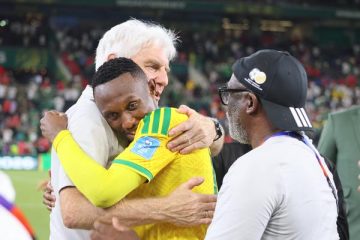
Bafana Bafana go home. Bafana Bafana’s fairytale, on the other hand, has simply been put on pause — and South African football has a brand-new benchmark for the next generation to chase down. Sunday hurt. History will remember it kindly anyway.