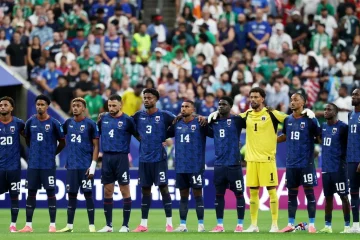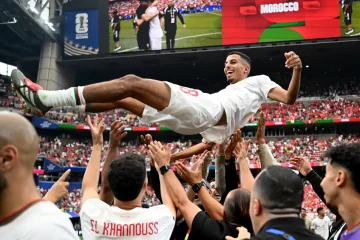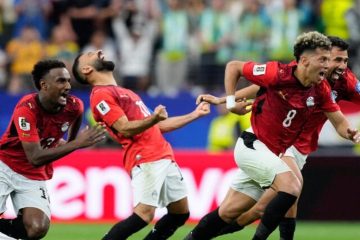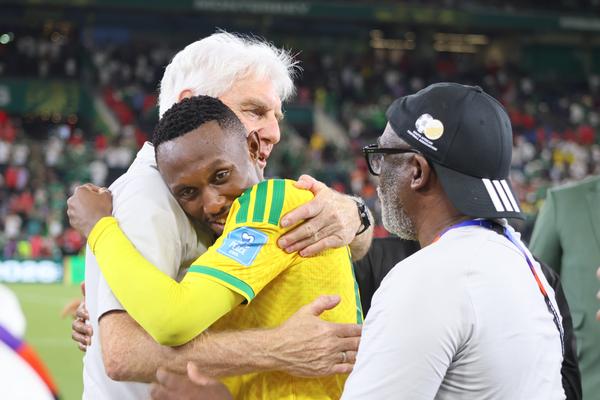
FORGET the script. Africa was supposed to arrive at this World Cup, applaud politely from the group-stage cheap seats, and go home in time for the round of 16 – as usual. Instead, the continent has spent the past week treating the tournament like a Sunday taxi rank: loud, chaotic, occasionally terrifying, and somehow always arriving at the destination. Five teams are still chasing knockout football. One has already made history. And at least one goalkeeper has personally apologised to his own net.
Bafana Bafana: 32 Years in the Making, One Left Foot to Finish It
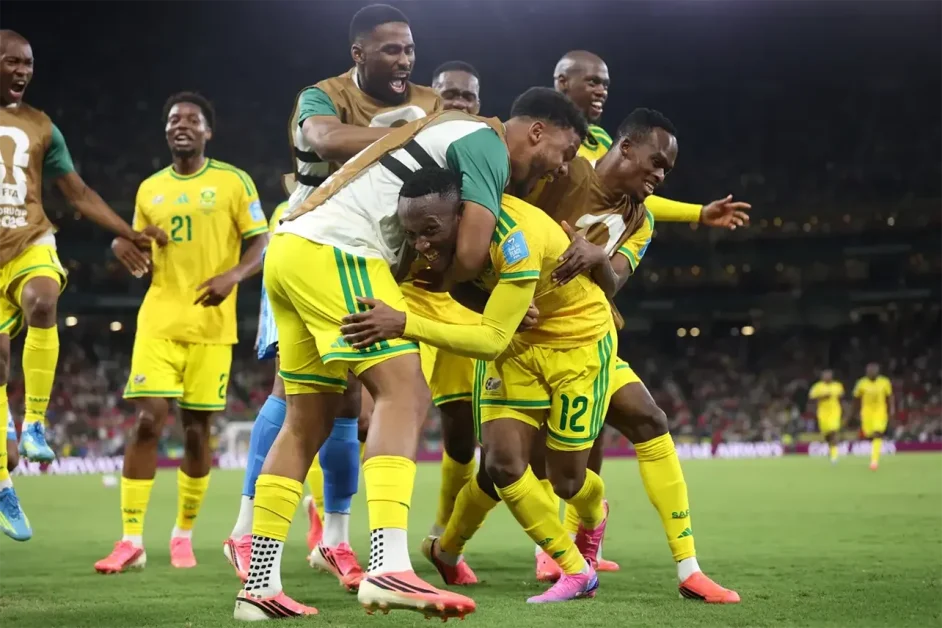
Let’s start where the fireworks were loudest. South Africa beat South Korea 1-0 in Group A on Thursday morning, and somewhere in Soweto, a vuvuzela that has been gathering dust since 2010 was hauled out of a cupboard and pressed back into service. This was not just three points. This was Bafana Bafana’s first-ever appearance in a World Cup knockout round, a sentence South African football has been waiting three decades to write.
It very nearly didn’t happen in the second minute, when Aubrey Modiba performed the footballing equivalent of catching a falling vase before it hit the floor – a goal-line clearance to deny Kim Min-jae from a dangerous Lee Kang-in corner. South Korea, who only needed a draw to go through, spent the rest of the half believing the universe owed them an easy night. The universe disagreed.
Bafana grew into the game through Relebohile Mofokeng, Thapelo Maseko and Evidence Makgopa, with Thalente Mbatha forcing a fine save from Kim Seung-gyu before the break. Then, in the 63rd minute, substitute Tshepang Moremi – on barely long enough to break a sweat – slid in a pass that Maseko shifted onto his left foot and stroked into the bottom corner with the unhurried calm of a man posting a letter. Cue scenes.
From there it was siege warfare. Ronwen Williams marshalled his goal, Mbekezeli Mbokazi marshalled everyone else, and South Korea were left to dominate possession the way a person dominates a locked door – lots of pushing, nothing opening. Six minutes of added time later, Hugo Broos’ side had done what no Bafana Bafana team had managed before them.
Morocco’s Group-Stage Fever Dream
If South Africa’s win was a tidy thriller, Morocco’s 4-2 victory over Haiti was a full telenovela, complete with twin betrayals, a comeback, and a VAR cliffhanger nobody asked for. The Atlas Lions fell behind twice in Atlanta – first to a Yassine Bounou own goal sparked by a cheeky Lenny Joseph backheel, then to a thumping Wilson Isidore strike – before Achraf Hakimi and Ismail Saibari dragged them level either side of the interval.
Haiti, scoring their first World Cup goal since 1974, deserve every ounce of credit for refusing to play the role of pushover. But Morocco’s bench had other ideas: on came Soufiane Rahimi, Azzedine Ounahi and Yassine Jassim around the 70th minute, and the match changed shape almost immediately. Rahimi converted a Hakimi corner for 3-2, and Jassim added a fourth in the 89th minute after a VAR check long enough for several supporters to age visibly.
Morocco finish second in Group C behind Brazil on goal difference alone, unbeaten through the group stage, and with a knockout date likely against the Netherlands. Coach Mohamed Ouahbi will not enjoy the rewatch of that first half. He will very much enjoy everything that came after it.
DR Congo: Heroic, Honourable, and Heading Home
Not every African story this week ends with a vuvuzela solo. DR Congo’s 1-0 defeat to Colombia was the kind of result that makes losing feel almost noble. Lionel Mpasi produced a string of outstanding saves to deny Luis Díaz and Gustavo Puerta, while captain Chancel Mbemba organised a defence that caught Colombia offside with irritating regularity for long stretches of the match.
It held until the 76th minute, when substitute Juan Fernando Quintero picked out Daniel Muñoz, who finished low into the far corner. The Leopards leave the tournament with no points to show for a performance built almost entirely out of defiance — the sporting equivalent of losing an argument you clearly won on style.
The Chasing Pack: A Continent Refusing to Sit Down
Elsewhere, Africa’s bid to beat its own 2014 record – when Algeria, Nigeria and Côte d’Ivoire all reached the knockouts – is shaping up to be one of the stories of the tournament. Egypt have been quietly excellent, unbeaten after holding Belgium and beating New Zealand 3-1, and now face a straightforward must-not-lose against Iran. Cape Verde, the tournament’s most charming overachievers, have drawn with Spain and Uruguay and need only beat Saudi Arabia to send the Blue Sharks into their first-ever knockout stage — a sentence that would have sounded like satire two years ago.
Ghana opened with victory over Panama and now eye a statement result against England before a finale against Croatia. Algeria revived their campaign with a comeback win over Jordan after an opening defeat to Argentina. South Africa’s neighbours in the wider continental push, Côte d’Ivoire and Senegal, still control their own destinies despite defeat to Germany and a tricky fixture against Iraq respectively – Senegal in particular still chasing the kind of knockout run that took them to the quarter-finals in 2002.
Put it all together and Africa is one good final round away from doing something it has never done before: sending five teams into the round of 32 at the same World Cup. South Africa have already made sure this tournament will be remembered on the southern tip of the continent no matter what happens next. Morocco have made sure nobody can write them off. And from Kinshasa to Cairo to Praia, the rest of the continent appears to have collectively decided that group-stage exits are simply no longer on the agenda.
Africa came to 2026 looking for respect. At this rate, it may have to settle for history instead.