
SIXTY-SIX years have passed since that historic day when the Congolese people, after long years of colonial domination, rose up in their dignity to assert before the world their inalienable right to freedom, self-determination, and mastery of their own destiny.
30 June is therefore not a simple date on our republican calendar. It is at once a memory, a promise, and a responsibility.
It is the memory of those who, through their courage and sacrifice, opened the path to our freedom. For them, the unity, dignity, and sovereignty of the Congolese people mattered more than their own lives.
It is also the promise made to every generation never to abandon the ideal of a free, united, and sovereign Congo.
Finally, it is a responsibility: that of protecting, deepening, and embodying every day the independence won by our forebears – in our institutions, our economy, our diplomacy, our national defence, and our collective commitment to the service of the Republic.
On this day of national communion, I bow with respect before the memory of our Founding Fathers of independence, our national heroes, our martyrs, and all the freedom fighters, known and unknown, who made this country a free homeland.
I pay particular tribute to Joseph Kasa-Vubu and to Patrice Emery Lumumba, as well as to all the builders of our national consciousness.
I also pay tribute to all the women and men who, in our villages, our towns, our schools, our churches, our administrations, our mines, our fields, our markets, our businesses, and our families, continue every day, through their work, their courage, and their resilience, to carry the Republic forward on their shoulders.
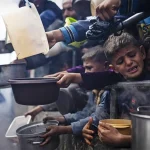
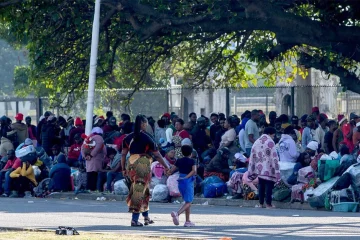
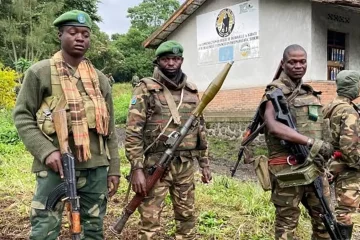
In the East of our country, our compatriots continue to suffer the painful consequences of aggression, the activity of armed groups and terrorists, violence against civilians, forced displacement, looting, economic predation, and repeated violations of international law.
I think, at this moment, of our brothers and sisters in North Kivu, South Kivu, Ituri, Tanganyika, Maniema, and all the areas scarred by insecurity.
I think of grieving families, of the displaced forced to live far from their land, of women who are victims of violence, of children deprived of schooling, of farmers deprived of their fields, of traders deprived of their livelihoods, and of young people deprived of prospects by war and by fear.
To each of them, I want to say again, on behalf of the entire Nation: you are not forgotten. Your pain is the pain of the whole Republic, and your security remains an absolute priority of my action.
I pay solemn tribute to our Armed Forces, our National Police, our security services, and to the Wazalendo patriot resistance fighters engaged within the legal framework of the defence of the homeland.
To you who hold the line, who defend our borders and protect our people, a grateful Nation says thank you. Your courage is the rampart of our sovereignty, and your commitment will remain etched in the memory of the Republic.
Last year, at this same time, I addressed you in the wake of important diplomatic advances, notably under the Washington Accord and the Doha discussions.
These efforts opened a window of hope and placed the Congolese tragedy back at the heart of regional and international agendas. Above all, they established an essential truth: no lasting peace in the Great Lakes region can be built against the sovereignty of the Democratic Republic of the Congo (DRC), nor at the expense of the dignity of its people.
The choice of diplomacy has never been a sign of weakness. It was the choice of responsibility, of self-mastery, and of the pursuit, through every legitimate means, of an end to the suffering imposed on our people.
The Washington Accords, the Doha discussions, and the Montreux commitments have meaning only if they produce concrete, verifiable, and irreversible results: the silencing of weapons, the end of all support to armed groups, the effective withdrawal of uninvited foreign forces, the disarmament of combatants, the dignified and secure return of the displaced and refugees, the protection of civilians, the restoration of state authority, justice for victims, and credible guarantees of non-repetition.
The DRC remains committed to peace. It keeps its word, honours its commitments, and remains open to dialogue when it is sincere, balanced, and consistent with the fundamental interests of the Nation.
But peace cannot mean setting truth aside, nor can it be a reward granted to those who take up arms against the Republic – still less a compromise on our sovereignty, our justice, or our territorial integrity.
The peace we seek is a just peace: a peace that respects borders, restores state authority, punishes crimes, and turns our natural resources into instruments of development rather than fuel for war. That is the peace we want. That is the peace we will defend.
I thank our partners who are supporting these efforts, notably the United States of America, the State of Qatar, the African Union, the United Nations, SADC, the EAC, the ICGLR, and all the friendly countries committed to peace in our region.
The DRC will no longer be reduced to the image of a country that is coveted, plundered, or destabilised. I have sworn this before the Nation.
And since taking up the highest office, I have worked to have our country recognised for what it is truly destined to become: a pillar of peace, growth, energy transition, regional stability, and shared prosperity in Africa and in the world.
The way our country is viewed is changing. The DRC is no longer seen merely as a territory of crisis; it is now identified as a “solutions country,” thanks notably to our critical minerals – cobalt, copper, coltan, lithium – which are already helping to shape the world’s future and which give our country a historic lever for repositioning and transformation.
It is in this spirit that we are building the strategic partnership with the United States of America, as well as those we intend to forge with our other partners. All must meet one clear requirement: to serve the fundamental interests of the Congolese people, to strengthen our sovereignty, to support peace, to foster local transformation, to secure value chains, and to create lasting jobs for our youth.
The era in which our minerals were extracted at home, exported raw, processed elsewhere, and then sold back to the world while our people remained in poverty now belongs to the past.
It is in this same spirit that the DRC holds the presidency of the International Conference on the Great Lakes Region, with the ambition of making it a more useful, more responsible, and more effective framework in the service of peace, security, stability, and shared development. There, we defend clear principles: respect for the territorial integrity of states, non-interference, the fight against the illegal exploitation of natural resources, economic integration, collective security, and accountability for commitments made.
This is also the voice our country will bring to the United Nations Security Council, notably at the high-level meeting I will have the honour of chairing next month on the links between natural resources, peace, security, and sustainable development. Our message will be clear: the natural resources of the DRC must no longer be seen as a curse. They must become a lever for peace, prosperity, sovereignty, justice, and transformation for the Congolese people.
The health of our people remains an essential priority of our public action. No Nation can claim lasting prosperity without a solid, accessible, and resilient health system.
It is in this spirit that, in recent years, we have continued strengthening our health infrastructure, the capacities of our health personnel, epidemiological surveillance, and medical research, notably through the recognised expertise of the National Institute of Biomedical Research.
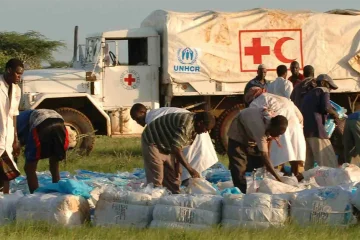
As these efforts continue, our country faces a new health challenge: the resurgence of the Ebola virus disease epidemic, caused by the Bundibugyo strain. This new outbreak mainly affects the health zones of Rwampara, Mongwalu, and Bunia in Ituri province.
In these painful circumstances, I extend, first, the Nation’s compassion to families who have lost a loved one, and to all those affected by this ordeal.
In the face of this threat, response mechanisms have been swiftly activated. Drawing on the experience gained during previous Ebola outbreaks, our country now has strengthened capacities to prevent, detect, isolate, treat, and protect our people. A comprehensive response plan, budgeted at 319 million US dollars, has been drawn up. The Government has urgently mobilised the first necessary resources to support operations on the ground, limit the spread of the disease, and save as many lives as possible.
I want to salute here the courage and professionalism of our doctors, researchers, nurses, laboratory technicians, community health workers, surveillance teams, provincial authorities, customary authorities, technical and financial partners, and the local communities engaged in this response.
Often working in difficult conditions, sometimes in direct contact with danger, these women and men are protecting lives, reassuring families, supporting the sick, and strengthening the resilience of our health system. They deserve the gratitude of the whole Nation.
I call on our compatriots living in the affected areas, and on the population as a whole, to remain vigilant, responsible, and disciplined. Ebola is neither a rumour nor a shame. It is a health emergency that demands responsibility, solidarity, and truth.
I ask each and every one of you to follow the instructions of the health authorities, to observe hygiene measures, to immediately report any suspected case, to avoid risky practices, and not to give in to disinformation.
In this ordeal, our strength will lie in trust, collective discipline, national solidarity, and the State’s capacity to act swiftly, effectively, and as close as possible to the people.
On this particular day, I would like to address all Congolese women and men, beyond convictions, sensibilities, and political affiliations.
Our country is going through important political debates. This is normal in a living democracy. Debate is legitimate, disagreement is natural, and contradiction is useful, provided they are expressed with respect for the Republic, its institutions, its laws, and the higher interest of the Nation.
I do, however, wish to recall an essential principle: no personal or partisan ambition is worth more than peace for all; no political divergence must be stronger than the unity of the Republic; no strategy to seize or contest power must be allowed to weaken the sovereignty of the Congolese people.
I am aware of the discussions surrounding the Constitution and institutional reforms. In a democracy, no question of national interest should be confiscated or forbidden from reflection. At the same time, no debate touching the Nation’s foundational pact can be conducted in haste, manipulation, or partisan obsession.
The Constitution is neither a tool of convenience nor an object to be adapted at will. It organises our shared life, guarantees the balance of our institutions, enshrines the rights of the people, and protects the stability of the Republic. Debating it, therefore, demands calm, rigour, transparency, and a high sense of the general interest.
My responsibility, as Head of State and guarantor of the Nation, is to ensure that debates concerning the country’s future are conducted with respect for the Constitution, the rule of law, the institutions, and popular sovereignty. It is also my responsibility to listen, to soothe, to clarify, and, when necessary, to seek paths toward a responsible national consensus.
Regarding the referendum law adopted by the two Chambers of Parliament, I wish to recall that it falls within the normal functioning of our institutions and the principle of separation of powers. In a democratic Republic, Parliament debates, deliberates, and legislates. The President of the Republic, as guarantor of the proper functioning of institutions, exercises the prerogatives conferred upon him by the Constitution. The competent courts, for their part, ensure respect for the constitutional order and the rule of law.
It is in this spirit of inter-institutional cooperation and respect for the rule of law that I referred this law to the Constitutional Court for review of its constitutionality, prior to its possible promulgation, in accordance with Article 160, paragraph 3, of our Constitution.
This step stems from a deep republican conviction: in a democracy, no decision, however important, can escape the rules, procedures, and guarantees imposed on us by the fundamental Law.
The Republic closes its door to none of its children, so long as they choose the path of peace, dialogue, respect for institutions, and loyalty to the Nation. But dialogue must not be diverted from its purpose. It cannot become a tool of pressure, a means of bypassing institutions, or a challenge to the will of the people as expressed in accordance with the Constitution and the laws of the Republic.
The Congolese people are the sole sovereign. No one can claim to speak for the Nation against the Nation itself, indefinitely. No one can claim to defend democracy while rejecting the very principles on which it rests: free debate, respect for institutions, separation of powers, popular sovereignty, and accountability to the people.
At this point, I wish to insist, with the utmost firmness, on one thing: recourse to violence, to weapons, to hatred, to disinformation, or to any form of assault on our sovereignty and territorial integrity cannot constitute a form of political expression.
It can in no way confer a special right to negotiation, nor place those who threaten the Republic above those who respect its laws.
We can debate, disagree, and oppose one another within the republican framework. But we have no right to weaken the Nation at a time when it faces existential threats. Faced with the challenges weighing on our country, national unity is not an option: it is a historic necessity, it is an absolute imperative!
I therefore call on political actors, of both the majority and the opposition, on social, religious, economic, media, and civic leaders, and on civil society as a whole, to show elevation, restraint, and responsibility.
Sixty-six years after independence, the DRC still stands.
It stands despite wars, covetousness, the wounds of history, and the trials it has endured. It stands, above all, because its people have never stopped believing in themselves, in their dignity, and in their destiny.
This inner strength, this capacity to resist and to rise again, is one of our Nation’s greatest assets. And today, more than ever, our responsibility is to go further.
Political independence was a historic conquest. Our duty now is to turn it into a sovereignty that is fully lived, concrete, and irreversible.
A security sovereignty, so that no armed group, no foreign force, and no outside agenda can ever again dictate its will over any part of our territory.
An economic sovereignty, so that the resources of our land and subsoil serve first the development of our country, the transformation of our economy, the creation of local value, the rise of national champions, and the well-being of our people.
A digital sovereignty, so that the identity of our citizens, our country’s data, and our State’s public services are protected, modernised, and placed at the service of Congolese women and men.
And finally, a diplomatic sovereignty, so that the DRC speaks to the world with respect, clarity, dignity, and firmness.
This is the deeper meaning I give to this celebration: making 30 June not only a moment of memory, but also a call for national awakening.
Our Republic is a shared home. Everyone in it has rights, duties, a dignity to protect, and a responsibility to bear. That is why we must look beyond the urgencies of the moment and prepare, with method and determination, the DRC of 2030, of 2040, and of 2050.
The DRC we want to hand down to our children is a Congo at peace, modern, prosperous, and respected; a DRC where every child has access to quality education, where every family receives dignified care, where every young person can find their place, exercise their talent, and fulfil their ambitions; a DRC where national wealth is transformed into jobs, infrastructure, public services, and a better life for the people.
This DRC will not be built through resignation, division, or passive waiting. It will be built through work, discipline, unity, integrity, and patriotic resolve.
Every Congolese woman and man has a part to play in this national endeavour: the teacher who educates conscientiously, the soldier who protects with honour, the police officer who provides security without abuse, the doctor who heals with devotion, the civil servant who serves with integrity, the judge who delivers justice independently, the entrepreneur who creates jobs, the young person who innovates, the parents who raise their children in strong values, the citizen who respects the law and protects public property, and the diaspora who invests in, passes on, and champions the country’s worth.
As Nelson Mandela once said, “With freedom comes responsibilities.” Our independence has given us a Nation to love; it also entrusts us with a Republic to serve, protect, and uplift. For patriotism is not merely a feeling. It is a way of behaving, a discipline, a way of serving, protecting, respecting, and elevating the nation.
On this 30 June, let us rise with confidence, courage, and love for our homeland. United in truth. Firm in sovereignty. Responsible in action. United in effort. Confident in the future.
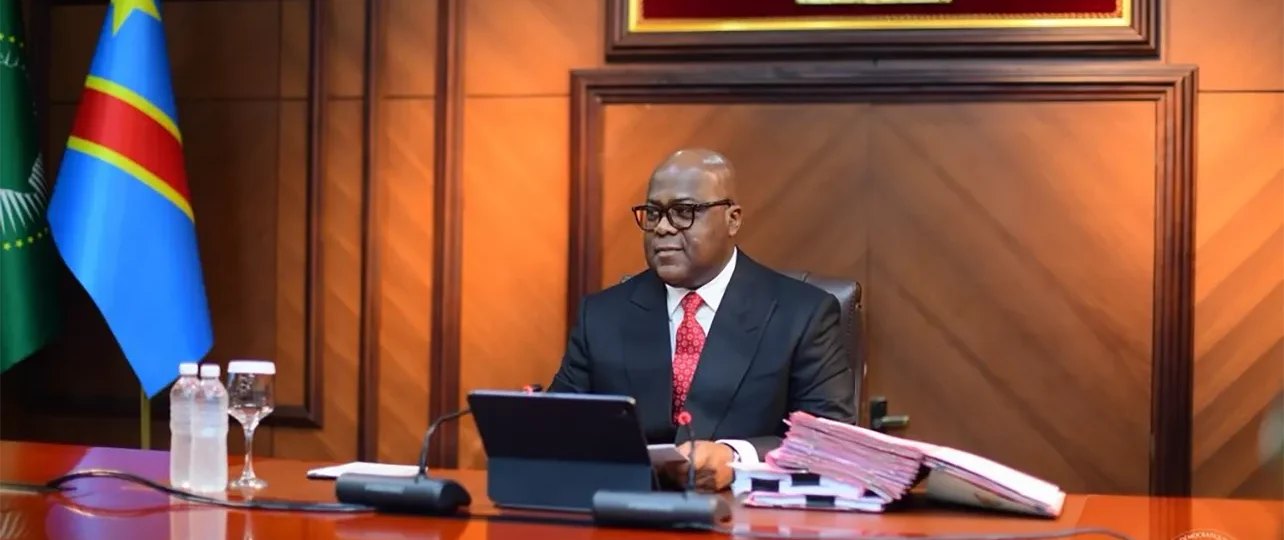
- This Is An Edited Version Of An Address By His Excellency Mr Felix-Antoine Tshisekedi Tshilombo, President Of The Democratic Republic Of The Congo, On The Occasion Of The 66th Anniversary Of The Independence Of The Democratic Republic Of The Congo