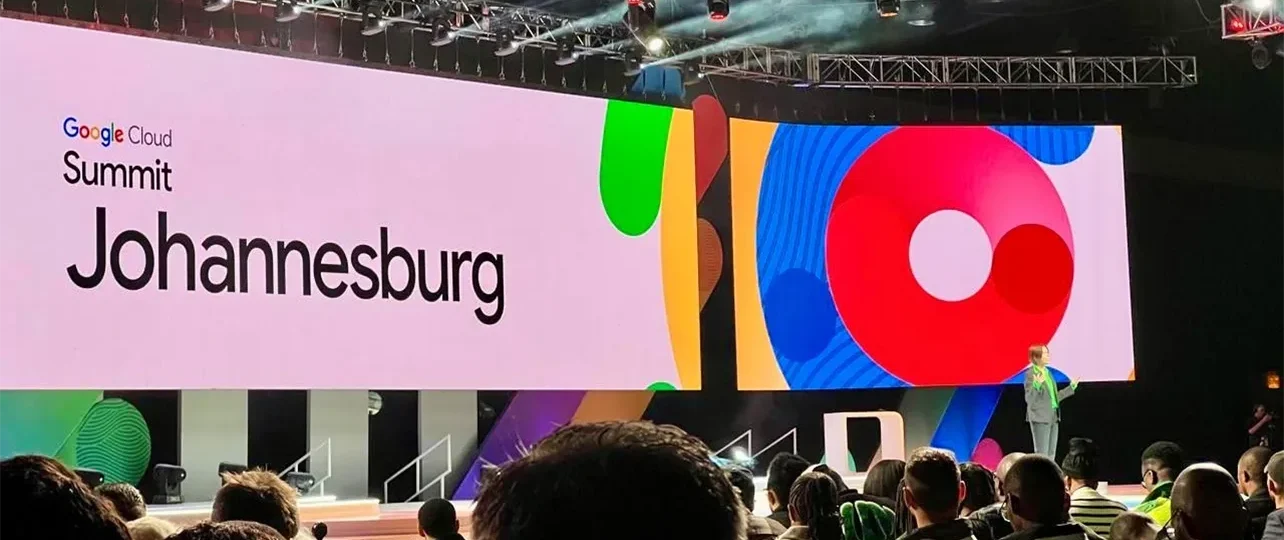

ALPHABET-OWNED Google has confirmed it has exceeded the five-year, US$1-billion investment pledge it made to Africa in 2021, using the inaugural Google Cloud Summit in Africa — held this week at the Sandton Convention Centre in Johannesburg — to unveil a new wave of infrastructure, artificial intelligence and skills initiatives that signal a deliberate pivot: from wiring the continent up, to building its capacity to compete in the global AI economy.
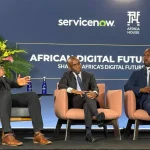
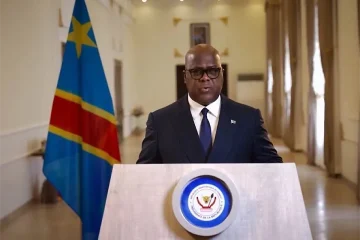
The summit, opened by President Cyril Ramaphosa under the banner “Building for Africa with Google Cloud,” drew roughly 3,000 business leaders, developers, policymakers and investors, among them Econet founder Strive Masiyiwa. It was the clearest signal yet that Google regards South Africa – anchored by last year’s launch of its Johannesburg Cloud Region – as its principal beachhead for scaling AI infrastructure and talent across the rest of the continent.
Google says the five new initiatives announced at the summit build on its existing $1-billion commitment, a recent $37-million AI skills and research allocation, and last year’s launch of the AI Community Centre in Accra. James Manyika, Google’s Senior Vice President for Research, Labs, Technology & Society, framed the announcements as a deepening rather than a departure: infrastructure, African-led innovation, and education and skills-building, in his words, “to amplify and scale Africa’s incredible vibrancy, hustle and innovation for the world.” Speaking to reporters at the summit, Manyika was more direct about the stakes, telling Reuters plainly that “the AI opportunity for Africa is significant.”
THE EASTERN CAPE: A NEW DIGITAL GATEWAY
The centrepiece of the infrastructure announcement is a new connectivity hub – which Google is calling a “Digital Exchange Port” – to be built in South Africa’s Eastern Cape. It is the first of four such hubs Google has committed to deliver across the continent, and it is designed to do more than serve South African users: it will position the country as an international switching point, directly linking Africa to Australia via the Umoja subsea cable and opening a new subsea route to India.
The strategic logic is about resilience as much as speed. Much of Africa’s international bandwidth still funnels through a small number of cable landing points on the west and east coasts, leaving the continent exposed when a single cable is damaged, as has repeatedly happened off the coast of West Africa in recent years. A switching hub that ties South Africa directly into Indian Ocean and Pacific routes – rather than routing everything back through Europe – diversifies that exposure and deepens South-South digital links, a point likely to resonate with policymakers pursuing Global South digital sovereignty.
The Eastern Cape hub also extends a decade-long pattern. Google’s first major physical bet on African connectivity was Equiano, the private subsea cable announced in 2019 and finally activated in 2022 after COVID-era delays, linking Portugal to South Africa via landing points in Togo, Nigeria, Namibia and St Helena. Google has never disclosed Equiano’s exact cost, but it formed the backbone of the original $1-billion, five-year pledge made in October 2021 — a pledge the company says it has now surpassed, roughly three years ahead of its own 2026 deadline horizon.
SOWETO: FROM CONNECTIVITY TO CAPACITY-BUILDING
If the Eastern Cape hub is about moving data, the second flagship announcement is about moving people into the industry that increasingly runs on it. Google’s Economic and Community Development programme, together with coding education non-profit WeThinkCode, has committed roughly R3 million (about $183,000) to build a digital innovation centre at the George Tabor Campus in Soweto, Johannesburg.
The sum is modest set against the headline billion-dollar figure, and that gap is itself instructive. Where Equiano and the Digital Exchange Port are capital-intensive infrastructure plays that Google alone can fund, the Soweto centre is a comparatively low-cost, high-leverage skills investment — routed through an established local partner rather than built from scratch — aimed at ensuring South Africa’s next generation of engineers and entrepreneurs is not merely a market for AI tools built elsewhere, but a source of AI-native talent and companies. It sits alongside Google’s startup accelerator programme, which will back 15 South African firms this year as part of a wider pledge to support 50 African ventures between 2024 and 2028, with applications for the 2026 cohort opening on 21 July.
GHANA’S APPLIED AI LAB AND THE CONTINENTAL PICTURE
Beyond South Africa, Google used the summit to formalise what it describes as Africa’s first applied AI lab, based at the Accra AI Community Centre in Ghana. Run jointly with the Google AI Futures Fund, Google Research and venture capital partners, the lab will pair African founders with Google researchers and give them early access to the company’s latest AI models, targeting what Google calls “uniquely African challenges” across work, creativity, entertainment and software development. Applications opened immediately and close on 31 August 2026.
A separate creative-industries partnership with The Akuna Group — the media venture co-founded by UK actor Idris Elba — will channel more than $1-million (about R17 million) in Google.org funding into AI-driven storytelling training for underrepresented African creators, aimed at giving local creative talent both the tools and a professional pathway into the industry rather than leaving them dependent on platforms and models built for other markets.
READING THE ANNOUNCEMENT IN CONTEXT
Taken individually, none of this week’s announcements is enormous. The Eastern Cape hub’s cost has not been disclosed; the Soweto centre is worth less than $200,000; the Akuna Group partnership is just over $1-million. What matters editorially is the pattern they form together, and what it reveals about how a dominant global technology company is choosing to compete for a continent of 1.5 billion people that Google itself has previously argued will add roughly 300 million new internet users this decade.
That pattern is a shift up the value chain. The 2021 pledge and its flagship project, Equiano, were fundamentally about access — laying cable to get more Africans online cheaply. This week’s announcements are about what happens once they are online: AI models, cloud compute, applied research labs, creator tools and startup capital. Google’s own framing — moving “beyond surface-level integrations” toward infrastructure, innovation and skills together — amounts to an acknowledgment that connectivity alone does not capture economic value for the continent; the compute, the models and the platforms sitting on top of that connectivity do.
For African policymakers and editors, that shift raises the harder and more durable questions. Ownership of subsea cables, cloud regions and AI labs by a single foreign hyperscaler — however welcome the jobs, GDP contribution and connectivity gains — concentrates critical digital infrastructure in the hands of a company answerable to shareholders in Mountain View, not to African governments or citizens. Google has cited independent research crediting Equiano-linked investment with billions of dollars in additional GDP and hundreds of thousands of jobs in South Africa and Nigeria; those figures come from Google-commissioned analysis and, like similar claims from other hyperscalers investing on the continent, warrant independent scrutiny rather than uncritical repetition.
There is also a competitive backdrop. Google is not alone in courting Africa’s digital future: Microsoft, Amazon, Meta and a cluster of Chinese infrastructure financiers are all vying for cloud regions, cable landing rights and AI partnerships across the continent. The Johannesburg summit, and South Africa’s positioning at its centre, is as much a statement about where Google wants to be seen leading that contest as it is about the specific rand-and-dollar figures unveiled this week.
Three details will determine whether this week’s announcements mark a genuine deepening of Africa’s digital sovereignty or simply a rebranding of dependency on a single foreign platform. First, whether the remaining three connectivity hubs Google has committed to are distributed to strengthen intra-African and South-South routes, or continue to prioritise routes back to Europe and North America. Second, whether the Accra Applied AI Lab and the Soweto centre produce African-owned intellectual property and companies that retain value locally, rather than talent pipelines that ultimately feed Google’s own research and product teams. And third, whether South Africa’s positioning as Google’s continental anchor translates into policy leverage on data governance, taxation and market competition — or whether it simply cements Johannesburg’s role as the best-connected outpost of someone else’s cloud.