
GIANNI Infantino has done something that no FIFA president has managed before, and it is not an achievement. He has taken the one institutional virtue football’s governing body always claimed for itself – independence from political interference – and handed it, gift-wrapped, to a foreign head of state. FIFA has always thundered about keeping governments out of football. It has suspended national federations for exactly this offence. And now its own president has let a government reach into a World Cup and rewrite a refereeing outcome.
Let us be precise about what happened, because the facts are damning enough without embellishment.
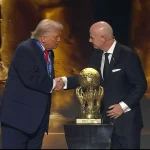
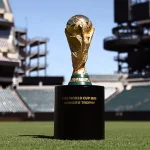
In December 2025, Infantino’s FIFA invented an award that football did not need and had never had: the FIFA Peace Prize. Its inaugural recipient was Donald Trump – a president whose foreign policy record is not remotely associated with peace. There was no natural constituency for this prize inside the game. It existed for one purpose only: to flatter a man Infantino has spent two years courting, appearing at his side at rallies, dinners and photo opportunities that no football administrator serious about neutrality would ever attend. FIFA’s own staff seemed to sense the absurdity of it; a formal complaint was later lodged calling for an investigation into how the prize was awarded, alleging Infantino had breached FIFA’s own political-neutrality rules. That complaint tells you everything. This was not diplomacy. It was genuflection.
On 1 July, USMNT striker Folarin Balogun was shown a straight red card during the USA’s last-32 win over Bosnia and Herzegovina, for a challenge that left an opponent’s leg awkwardly twisted. Under FIFA’s own regulations, that red card is not appealable. Article 9.6 of the World Cup regulations says as much in black and white: refereeing decisions on facts of play are final. Balogun should have missed the Round of 16 against Belgium. That is what the rules, applied evenly, require.
Instead, within days, FIFA’s disciplinary committee quietly lifted the suspension attached to that red card, and Balogun walked back onto the pitch in Seattle. Neither FIFA nor US Soccer offered the public a footballing explanation for why this case qualified for such treatment. What we got instead was silence from FIFA and a triumphant social media post from Donald Trump, thanking the organisation for “reversing a great injustice.” The Peace Prize recipient claimed credit for a footballing decision. FIFA let him.
To be fair to the record, this was not without precedent – Cristiano Ronaldo received similar relief from a red card earlier in this tournament. But that is precisely the point: it is not one embarrassing exception, it is becoming a pattern, and the pattern only ever seems to favour players whose federations, sponsors or political patrons carry weight in rooms Infantino wants to stay welcome in. A disciplinary system that bends for the powerful and holds firm for everyone else is not a disciplinary system. It is a favour bank.
Here is what makes this so unforgivable for African football in particular. FIFA has, over the years, suspended entire national federations – Kenya, Zimbabwe, Nigeria, Kuwait, and others across the world – the moment their governments were judged to have interfered in football administration. The doctrine has always been rigid: politicians stay out, or the federation pays with suspension from world football. That doctrine was FIFA’s shield against the very corruption of sport it now claims to fight.
So explain this to the football associations that have suffered suspension for far lesser political meddling than what has now visibly occurred at the very top of the pyramid. Explain it to the players and federations across our continent who have watched their governments’ interference cost them World Cup dreams, while the most powerful government on earth appears to reach into FIFA’s disciplinary process and get the outcome it wanted. If a South American or African government had leaned on FIFA to overturn a red card for their own star striker, Infantino’s FIFA would have opened an ethics case before the final whistle. When it is Washington asking, apparently the answer is yes, and no one has to explain why.
Infantino rose to the FIFA presidency in 2016, promising exactly the opposite of this. He was swept in on the wreckage of the Sepp Blatter era – with considerable American help, it should be remembered, given that it was a US Department of Justice investigation that broke Blatter’s FIFA open – promising transparency, good governance, and distance between football and the political and financial interests that had corroded it. A decade on, he has built himself into precisely the kind of figure he was elected to replace: a football president more comfortable in the company of presidents and billionaires than with the game’s own institutions, more interested in prizes and photo-ops than in the integrity of a red card.
This is not a minor administrative slip. It goes to the very legitimacy of the competition and of FIFA’s disciplinary authority. If red cards can be lifted when the political weather demands it, then every decision FIFA makes for the rest of this tournament, and every tournament after it, is now open to the same question: was that a footballing call, or a political one?
Gianni Infantino has had a decade to prove that FIFA could be cleaner, fairer and more independent than the organisation he inherited. Instead, he has built a personal brand around access to power, culminating in a prize invented for one man and a disciplinary outcome that conveniently followed that man’s public wishes. Football’s oldest and most important defence – that the game is not for governments to run – has been quietly surrendered by the one man whose job was to protect it.
FIFA has, in effect, been shown a red card of its own: a moment of serious foul play against the principle of political neutrality that the organisation has policed against everyone but itself. Infantino should not be allowed to talk his way past this one. He should resign, and do so in disgrace. If this World Cup is remembered for anything beyond football, let it be remembered as Gianni Infantino’s own biggest, and last, own goal.