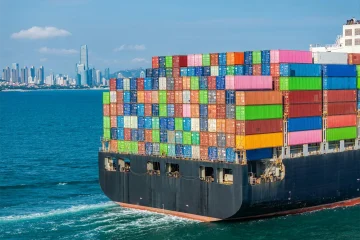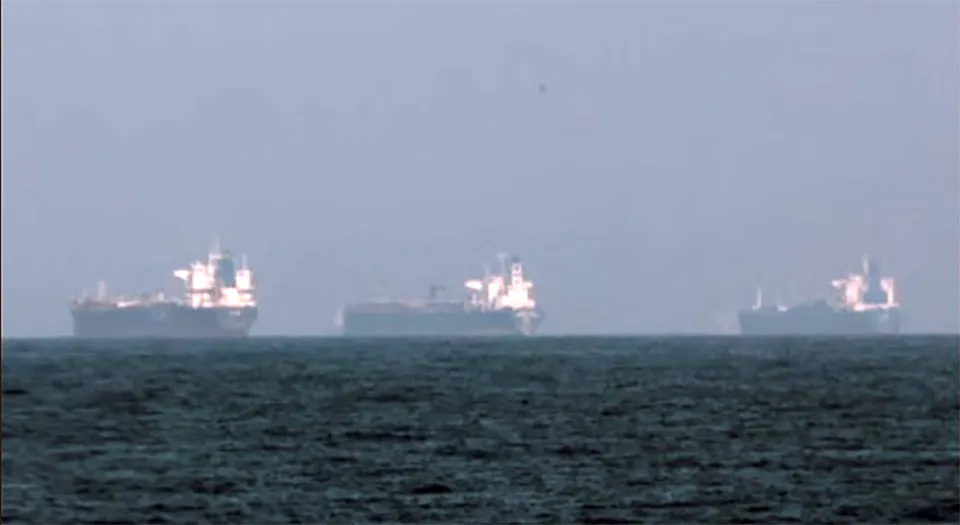

WEEKS after the guns fell silent in the waters between Iran and the Arabian Peninsula, thousands of ordinary workers remain trapped in what the United Nations now describes as one of the most under-reported human rights emergencies of the war — a maritime hostage crisis playing out in plain sight, on vessels the world has simply stopped counting.
Speaking at the bi-weekly UN press briefing in Geneva on 24 July, UN Human Rights Office spokesperson Shabia Mantoo delivered a stark accounting of the toll the Iran-Israel-US conflict has exacted on the seafarers of the Strait of Hormuz, the chokepoint through which a fifth of the world’s oil and gas still attempts to pass. UN High Commissioner Volker Türk, she said, was calling for urgent action to address what his office termed a “dire humanitarian and human rights crisis.”
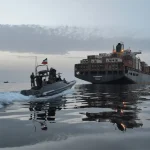
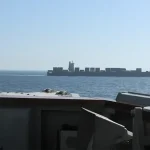
The numbers are staggering for a story that has barely registered beyond specialist shipping circles. According to information relayed to the UN by the International Maritime Organisation, at least 6,000 seafarers aboard roughly 400 vessels remain stranded in and around the Strait, unable to evacuate even during the ceasefire window. Mantoo was careful to stress that the figure is a floor, not a ceiling: an unknown further number of crew are believed marooned on smaller vessels scattered through the Persian Gulf, unlocated and uncounted by any agency.
DESERTED BY THEIR OWN EMPLOYERS
More troubling than the scale of the stranding is what the UN Human Rights Office says is happening to some of those left behind. Investigators have documented at least nine ships, carrying 93 crew members between them, whose owners have simply abandoned them at sea since the war began — walking away from their legal and moral obligations to the men and women who sail their vessels, leaving them without support, without a route home, and in many cases without the wages they are owed.
“The seafarers have been left on their ships to fend for themselves without food, water, fuel, medical care, electricity or means to communicate with their families. They face prolonged isolation and confinement in a conflict zone, with uncertainty about their safety and disembarkation — risking a severe toll on their mental and physical well-being.”
Shabia Mantoo, UN Human Rights Office Spokesperson
It is a description that strips away the abstraction of shipping-industry statistics to reveal something closer to a hostage situation with no captor: crews confined not by an enemy but by corporate abandonment, drifting in a war zone with no electricity to run a fridge, no fuel to power a generator, and no means even to tell their families they are alive.
A RISING BODY COUNT
The abandonment crisis sits alongside a mounting death toll. Mantoo confirmed that two Indian seafarers were killed in the Strait in recent weeks, and that further crew members died last month in an attack on an oil tanker. Taken together, the UN now counts 17 confirmed seafarer deaths since the conflict began — mariners killed not as combatants, but as civilian workers caught in a maritime corridor that international law was explicitly designed to keep open to them.
“Attacks against civilian vessels are unacceptable and must stop,” Mantoo told journalists. “They are protected under international humanitarian law.” It is a reminder, delivered almost as an aside, that the ships drifting off Hormuz are not legitimate military targets — and that every attack on them, and every shipowner who walks away from a stranded crew, compounds a violation of rights that the laws of war and labour were built to prevent.
A CRISIS WITH AN AFRICAN AND GLOBAL SOUTH FACE
For readers across Africa and the wider Global South, the Hormuz crisis is not a distant shipping-lane footnote. The Strait remains a critical artery for the energy imports and export revenues that shape fuel prices, freight costs and food-import bills on the African continent, and the merchant fleets that transit it are crewed overwhelmingly by seafarers from the Global South — from India and the Philippines to Kenya, Ghana and beyond. When shipowners abandon crews with impunity in a war zone, it is workers from the world’s poorer regions who are left to absorb the human cost of a conflict fought thousands of kilometres from their shores, while the vessels’ registries, insurers and ultimate beneficial owners often sit safely in the wealthiest maritime capitals.
That imbalance of risk and accountability is precisely what the Manila Declaration — the global seafarers’ rights framework the UN invoked in its briefing — was designed to correct. Adopted last year as a landmark call to action, it commits states, flag registries and shipowners to keep the dignity, safety and welfare of seafarers at the centre of maritime policy and industry practice. The events in Hormuz since June are now the sharpest test yet of whether that commitment survives contact with an actual war.
THE UN’S DEMANDS
Mantoo laid out a specific set of obligations the High Commissioner is now pressing on governments and industry: urgent action to ensure stranded seafarers have effective access to consular assistance, essential supplies and services, and concrete facilitation of evacuations and repatriations. She called on all parties to the conflict to urgently enable safe passage for stranded crews to evacuate and disembark, and to ensure critical supplies reach those still trapped aboard.
Crucially, the UN also restated a labour right too often overlooked in the fog of a shipping crisis: that seafarers retain the right to freely choose or refuse to sail or continue sailing into a high-risk war zone. Flag states and shipowners, Mantoo said, are obliged to uphold that right — and to keep paying wages regardless of whether a ship is moving or marooned.
Six weeks after a ceasefire that was meant to lower the temperature in the Gulf, the men and women aboard those 400 vessels remain a test of whether the international system that speaks so fluently about the laws of war can still enforce the far older, far simpler obligation owed to any worker: that no employer may simply sail away and leave them to die at sea.