Our website use cookies to improve and personalize your experience and to display advertisements (if any). Our website may also include cookies from third parties like Google Adsense, Google Analytics, and Youtube. By using the website, you consent to the use of cookies.

Colonial tax records hold 3 lessons for South Africa today – economic historian

Colonial tax records hold 3 lessons for South Africa today – economic historian

IN 1825, a tax collector compiling a census in South Africa’s Cape Colony paused to write a poem in the margin of his work. In it, he complained about the idle chatter of townsmen in Stellenbosch and uncooperative taxpayers. It is a tiny window on the regular frustrations of a 19th-century taxman. But the poem survives only because the bureaucracy did. Year after year, from the 1660s to the 1840s, local officials appointed by the Dutch East India Company and, after 1806, the British colonial government, recorded settler households, their harvests and their labour obligations in ledgers known as opgaafrolle…
Read More
Why East Africa tops Africa’s 2026 economic projections

Why East Africa tops Africa’s 2026 economic projections

EAST Africa is expected to be Africa’s fastest-growing subregion in 2026, with GDP projected to expand by 5.8%, according to the UN World Economic Situation and Prospects 2026. The UN names Ethiopia and Kenya as the main drivers, putting the sub-region well ahead of the continent’s projected 4.0% average. The UN report says East Africa will record the highest growth, at 5.8% in 2026, a performance tied to stronger investment and expanding power capacity. The report however warns that high debt servicing costs, limited fiscal space and tighter global financing conditions remain downside risks to the recovery. Outside Addis Ababa,…
Read More
Africa moves to regulate digital credit

Africa moves to regulate digital credit

REGULATORS are reasserting control over Africa’s digital credit market that has expanded rapidly on the back of mobile money, thin oversight and unmet demand for bank lending. What was once dominated by loosely governed loan apps is now being pulled into formal licensing regimes, as authorities attempt to preserve financial inclusion while curbing consumer harm. The recalibration is unfolding against the backdrop of one of the world’s largest digital finance ecosystems. According to GSMA data, Africa accounted for over 1.1 billion registered mobile money accounts in 2025, representing nearly three-quarters of global mobile money activity, with hundreds of millions of…
Read More
“Keep Africa’s steel in African hands”

“Keep Africa’s steel in African hands”

SOUTH Africa’s manufacturing industry is on the precipice, with the future of Arcelor Mittal South Africa (AMSA) hanging in the balance while international vultures are circling to ensure it is exterminated. While the future of AMSA is under review in boardrooms, government, labour, as well as the manufacturing sector, firm offers by South African businesspeople to save the giant steel company and keep it in the hands of local people have been put on the table. What boggles the mind is that these are serious offers by serious people, and if there is a genuine desire to save the colossal…
Read More
Stablecoins are gaining ground as digital currency in Africa: how to avoid risks

Stablecoins are gaining ground as digital currency in Africa: how to avoid risks

A notification popped up on my LinkedIn the other day. Africans were doing a traditional celebratory dance at the Africa Stablecoin summit in Johannesburg. The picture gave me a sinking feeling. Why? While stablecoins can advance financial inclusion in Africa, could this celebration mark the potential transfer of monetary sovereignty from African economies to the economy issuing the most coveted currency-denominated stablecoin? Stablecoins are crypto-assets or digital currencies designed to maintain a stable value, typically by being pegged to a reference asset such as a national currency (like US dollars), a commodity (like gold) or a basket of assets. The…
Read More
Johannesburg has failed its informal traders: policies are in place, but action is needed

Johannesburg has failed its informal traders: policies are in place, but action is needed

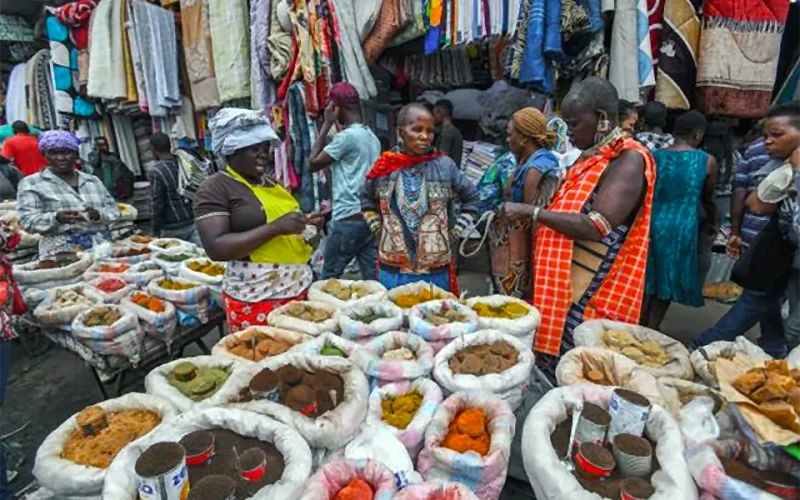
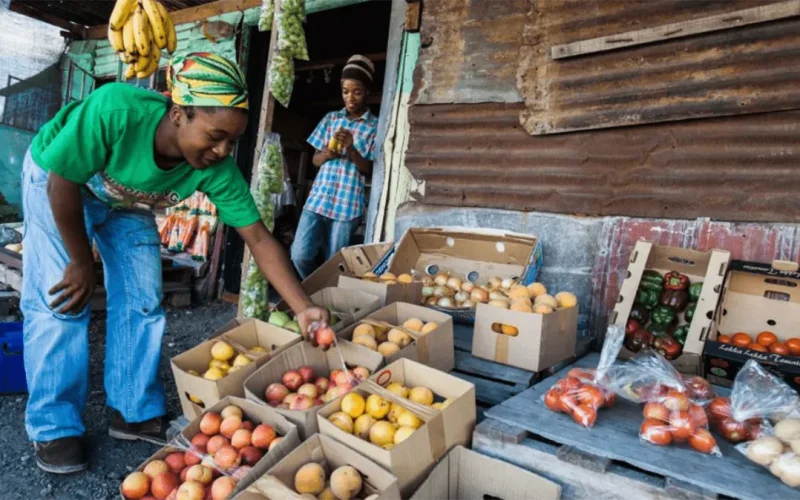
JOHANNESBURG’S inner city is a bustling hub of economic life – a dense, dynamic web of informal traders, adjacent businesses and other users. Informal trading remains an essential survival strategy for many households. It is also a key source of affordable goods and services. Managing this activity, however, is not straightforward. The city authorities face legitimate pressures to maintain order, safety, hygiene and accessibility in highly contested urban spaces. At the same time, they have a mandate to support livelihoods and encourage inclusive economic participation. Balancing these objectives is complex. But, as urban planners and researchers, we believe it’s possible…
Read More
African Development Bank bars Malian firm for fraud in regional power project

African Development Bank bars Malian firm for fraud in regional power project

AFRICA’S premier development institution has handed down a 20-month suspension to a Malian construction company after uncovering fraudulent practices in a major cross-border electricity project, marking the latest enforcement action in the bank's intensified campaign against corruption. The African Development Bank Group announced Tuesday it has debarred IYA S.A.R.L., a Mali-registered construction firm, from participating in any bank-financed activities following an investigation that exposed fraud during bidding for the Guinea-Mali Electricity Interconnection Project. The bank's Office of Integrity and Anti-Corruption conducted the probe, which revealed IYA S.A.R.L. engaged in fraudulent practices while competing for contracts to build electricity infrastructure under…
Read More
Local capital sparks Africa’s startup funding comeback

Local capital sparks Africa’s startup funding comeback

AFRICA’S startup ecosystem is emerging from two difficult years with renewed momentum, buoyed by a funding rebound that is increasingly being driven by local venture capital. Data shared during the AfricArena Grand Summit in December 2025 showed that startup funding on the continent was on track to reach about US$3 billion in 2025, up from US$2.2 billion in 2024, marking a recovery from the slowdown of 2023. While global capital flows remain influential, ecosystem leaders said the structure of funding and who is deploying it is shifting in favour of local fundraising. During a State of Tech in Africa 2025…
Read More
Millennials enjoy creative tourism – new research uncovers a business opportunity for South Africans

Millennials enjoy creative tourism – new research uncovers a business opportunity for South Africans

CREATIVE tourism is a growing form of travel where visitors learn by taking part in hands-on, culturally rooted activities. These can include classes in local cooking, craft workshops or music sessions. Tourism researchers Anneli Douglas, Gijsbert Hoogendoorn and Greg Richards investigated what kinds of tourism in this niche appeal to South African millennials (defined as those born between 1981 and 1996). Here, they share some ideas about expanding creative tourism so that it can help create jobs and opportunities in low-income and rural communities. Why are South African millennials so interested in creative tourism? Millennials who have a good income…
Read More
Africa is rethinking how it funds infrastructure

Africa is rethinking how it funds infrastructure

AFRICAN governments are increasingly exploring alternative ways to finance infrastructure, moving beyond conventional external borrowing toward capital-market instruments, pooled investment vehicles, and domestically anchored funds. Policymakers and market participants say the shift reflects tighter debt constraints, rising currency risks, and a policy push to mobilise long-term local capital for transport, energy, and social infrastructure while reducing reliance on foreign-currency loans. “By pivoting toward domestic capital mobilisation, countries are effectively attempting to match long-term infrastructure liabilities with stable, locally sourced funding, while simultaneously deepening domestic financial markets,” according to Shem Joshua, a Kenyan public finance management expert. Across the continent, the…
Read More