Our website use cookies to improve and personalize your experience and to display advertisements (if any). Our website may also include cookies from third parties like Google Adsense, Google Analytics, and Youtube. By using the website, you consent to the use of cookies.

Private credit rating agencies shape Africa’s access to debt. Better oversight is needed

Private credit rating agencies shape Africa’s access to debt. Better oversight is needed

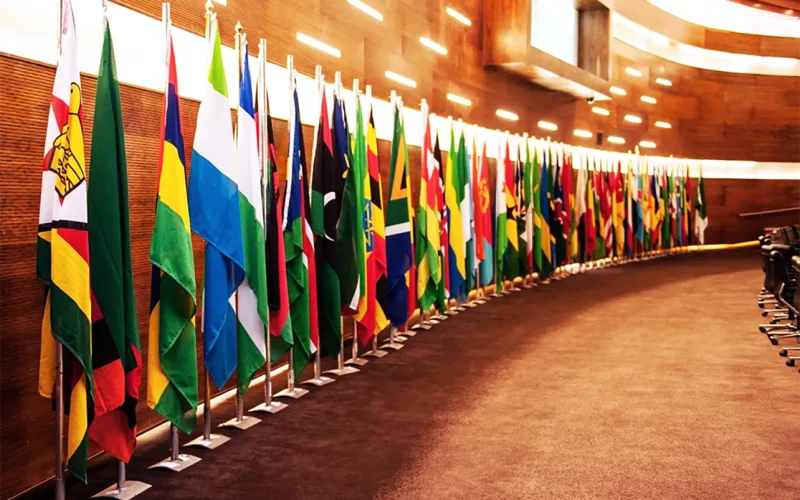
AFRICA’S development finance challenge has reached a critical point. Mounting debt pressure is squeezing fiscal space. And essential needs in infrastructure, health and education remain unmet. The continent’s governments urgently need affordable access to international capital markets. Yet many continue to face borrowing costs that make development finance unviable. Sovereign credit ratings – the assessments that determine how financial markets price a country’s risk – play a central role in this dynamic. These judgements about a government’s ability and willingness to repay debt are made by just three main agencies – S&P Global, Moody’s and Fitch. The grades they assign,…
Read More
Debt-swaps are funding people-centered projects across Africa

Debt-swaps are funding people-centered projects across Africa

KENYA is pursuing one of Africa’s first major debt-for-food security deals, marking a shift in debt-for-development swaps beyond their recent emphasis on nature-based outcomes. The US$1 billion arrangement with the U.S. International Development Finance Corporation, according to Reuters, is expected to refinance costly commercial debt and redirect the interest savings into food security, nutrition and agricultural resilience. For a country grappling with high debt-service obligations, climate-driven food shocks and foreign-exchange pressure from imports, the approach carries both fiscal and political weight. According to the Tony Blair Institute for Global Change, African countries spend an average of 18% of government revenues…
Read More
Angola’s Lobito Corridor is being revived – but who stands to gain?

Angola’s Lobito Corridor is being revived – but who stands to gain?

THE Lobito Corridor is a massive infrastructure axis linking Angola’s shore on the west of Africa to the mineral-rich interior. Built in the first three decades of the 1900s to export cheap commodities to colonial Portugal, it later fell into disrepair. Its main railway was rebuilt during Angola’s post-war reconstruction. More recently, it has attracted renewed and competing international interests. Daniel Tjarks has researched Angola’s political and economic geography, the spatial development of colonial Angola and the current role of international actors in the country. Angola’s post-war spatial development and the government’s plans to promote more balanced and equitable growth…
Read More
Should private sector executives sit on the boards of non-profits? There are risks and benefits

Should private sector executives sit on the boards of non-profits? There are risks and benefits

SERVING on a non-profit board can be deeply fulfilling and beneficial to the cause – but only if you’re fully committed and prepared for the role. It must be flattering to be offered a seat on the board of a non-profit organisation (NPO). After all, the non-profit sector has long valued for-profit executives for their business acumen, result-orientation and decision-making abilities. Along with their expertise in areas such as finance, legal, human resources, marketing and management, the ability of for-profit executives to translate broad strategic goals into actionable decisions can help non-profit boards navigate complexity and ambiguity with greater confidence.…
Read More
Freetown’s property tax is designed to plug funding gap: how Sierra Leone’s capital went about it

Freetown’s property tax is designed to plug funding gap: how Sierra Leone’s capital went about it

PROPERTY taxes remain one of the most underperforming sources of revenue for urban development across Africa. One reason is that they are often opposed by the economic elites and large property owners. Freetown, the economic and administrative hub of Sierra Leone, has successfully implemented a property tax regime aimed at raising the revenue the city needs for its development. Freetown is where 15% of the country’s population lives, out of a total population of nearly 9 million. The city accounts for 30% of Sierra Leone’s economic output as measured by gross domestic product (GDP). GDP in 2024 was nearly US$7…
Read More
Government pushes forward with economic reforms as Operation Vulindlela enters critical phase

Government pushes forward with economic reforms as Operation Vulindlela enters critical phase

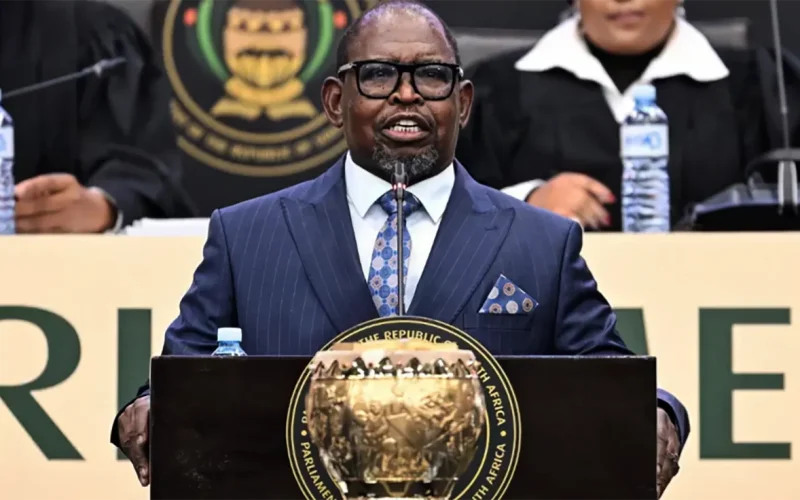
SOUTH Africa's ambitious economic reform programme is gaining momentum, with the government delivering tangible progress across multiple sectors during the third quarter of 2025/26, according to Deputy Finance Minister David Masondo. Speaking at Operation Vulindlela's quarterly briefing, Masondo reported advances in electricity generation, port modernisation, visa processing, and digital government services, while warning that sustained implementation remains critical. "The economy cannot afford pauses or reversals in the reform programme," Masondo told media and business representatives. "Structural reforms require consistency, collaboration, and a commitment to sustained execution." Masondo emphasised that Operation Vulindlela's strength lies in breaking down government silos and elevating…
Read More
Africa, rating agencies and the cost of debt

Africa, rating agencies and the cost of debt

HOW much we pay for the debt that we incur determines a great deal in our lives. This is true of countries, too. In the world of sovereign debt – money raised or borrowed by governments – the cost of debt is dependent on, among other factors, how rating agencies “grade” a country. It’s a sensitive issue. Three agencies dominate the rating business. A criticism often meted out is that they judge African countries more harshly than others, which pushes up borrowing rates. These tensions lie behind the acrimonious fall-out between one of the big three – Fitch – and…
Read More
African Development Bank debars Kenyan consultant for fraud in recruitment process

African Development Bank debars Kenyan consultant for fraud in recruitment process

THE African Development Bank Group has imposed a 24-month debarment on Kenyan national Martin Obiero Achieng following findings of fraudulent practice in connection with a consultancy recruitment, the institution announced Tuesday. The sanction, which includes conditions for conditional release, stems from an investigation by the bank's Office of Integrity and Anti-Corruption. Investigators determined that Achieng engaged in fraudulent conduct during the application process for a consultancy position within the pan-African development finance institution. Under the terms of the debarment, Achieng and any entity under his direct or indirect control are barred from participating in any activities financed by the African…
Read More
Shell commits $20 billion to Nigeria deep offshore development

Shell commits $20 billion to Nigeria deep offshore development

SHELL Plc has announced plans to invest $20 billion in Nigeria's deep offshore oil sector, marking a dramatic reversal from years of capital withdrawal and representing one of the largest energy investments globally. The investment hinges on the Bonga Southwest project, which would deliver $10 billion in direct capital expenditure and another $10 billion in operating costs, Shell CEO Wael Sawan told President Bola Tinubu during a meeting at the Presidential Villa. The commitment follows recent Shell investments totalling $7 billion, including $5 billion in Bonga North, $2 billion in an unspecified project, and gas infrastructure tied to Nigeria LNG.…
Read More
Uganda’s boda-boda drivers: the digital economy hasn’t been the route to formal work and better protection – research

Uganda’s boda-boda drivers: the digital economy hasn’t been the route to formal work and better protection – research

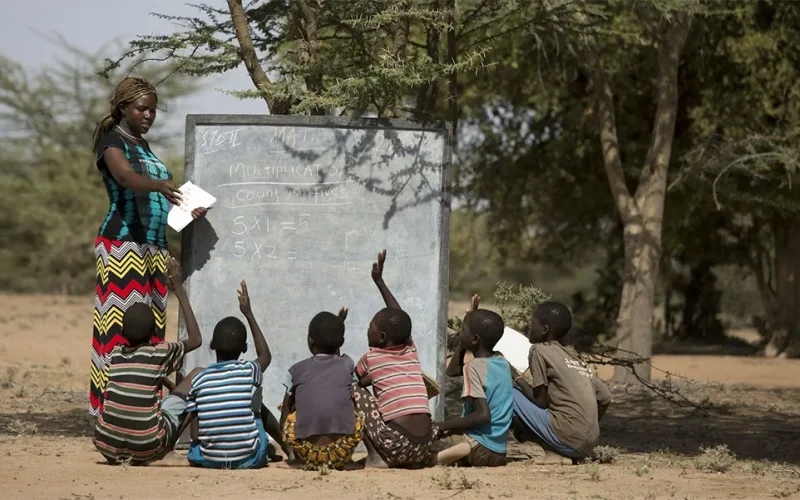
DIGITAL labour platforms – like fast food delivery and cab hailing services – are having a dramatic impact on people’s labour rights and working conditions around the world. In western countries like the UK and the US, their rise has intensified a process of labour casualisation already several decades in the making. Under the guise of “flexibility”, platforms have heralded a return to insecure, temporary forms of employment that offer few rights or benefits to workers. But in “less developed” countries like Uganda, the growth of the digital gig economy is often considered a boon. Across the global south, it…
Read More