Our website use cookies to improve and personalize your experience and to display advertisements (if any). Our website may also include cookies from third parties like Google Adsense, Google Analytics, and Youtube. By using the website, you consent to the use of cookies.

Africa assembles powerhouse leadership for landmark health regulation summit

Africa assembles powerhouse leadership for landmark health regulation summit

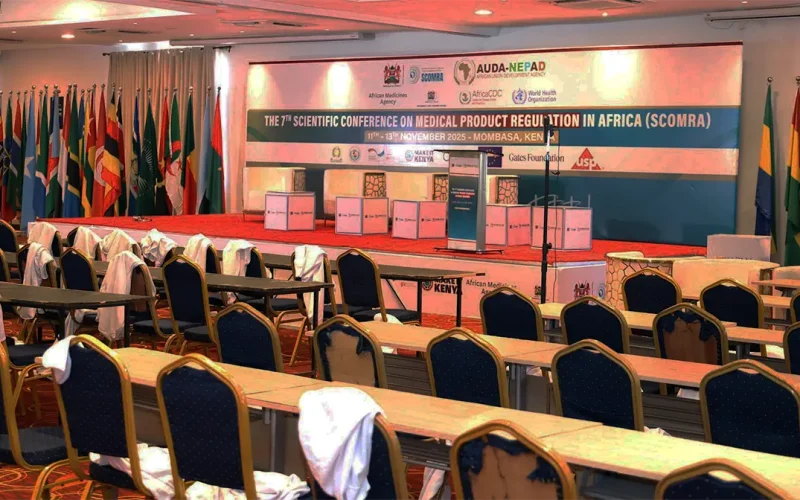
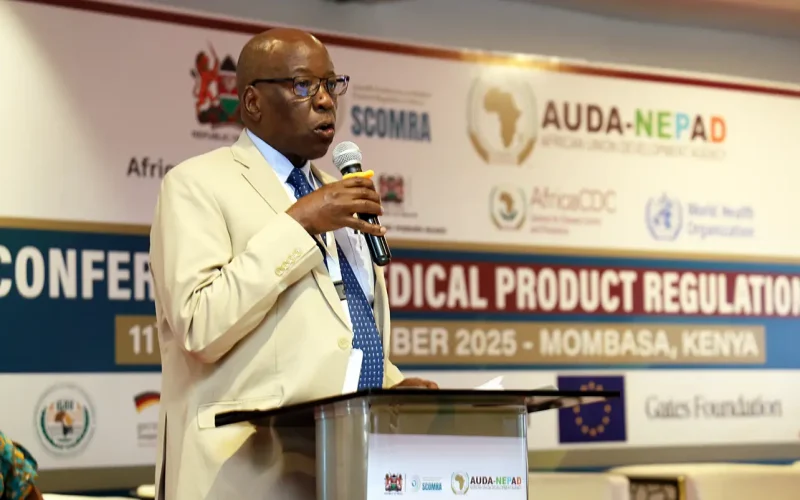
AFRICA'S most influential voices in health regulation and public health have converged in Mombasa, Kenya, for the 7th Scientific Conference on Medical Products Regulation in Africa (SCoMRA VII), signalling the continent's bold ambition to transform its pharmaceutical manufacturing landscape and achieve regulatory independence. The high-stakes summit, themed "Regulatory Harmonisation – Unlocking Africa's Potential in Health Product Manufacturing and Trade," has attracted a stellar lineup of continental and global leaders whose collective influence will shape Africa's trajectory in health product regulation for decades to come. Kenya's Cabinet Secretary for Health, Aden Duale, will officiate the opening ceremony, bringing his distinguished government…
Read More
The visionary leading Africa’s march toward health sovereignty

The visionary leading Africa’s march toward health sovereignty

IN the gleaming conference halls of Addis Ababa and the bustling pharmaceutical factories emerging across Africa, a quiet revolution is taking shape. At its helm stands Dr Nardos Bekele-Thomas, a woman whose vision extends far beyond spreadsheets and policy papers—she sees a continent of 1.4 billion people finally commanding their own health destiny. As Chief Executive Officer of the African Union Development Agency-New Partnership for Africa's Development (AUDA-NEPAD), Dr Bekele-Thomas isn't just managing programs; she's orchestrating a continental awakening. Her mission is audacious yet achingly necessary: to break the chains of pharmaceutical dependency that have left Africa importing 61% of…
Read More
AUDA-NEPAD Chief joins global climate board in strategic win for African health security

AUDA-NEPAD Chief joins global climate board in strategic win for African health security

IN a move that signals growing recognition of the inextricable link between climate adaptation and health security, the Global Centre on Adaptation (GCA) has appointed Nardos Bekele-Thomas, Chief Executive Officer of the African Union Development Agency-NEPAD (AUDA-NEPAD), to its Supervisory Board. The appointment places one of Africa's most influential health and development leaders at the decision-making table of global climate governance - a strategic positioning that could reshape how adaptation financing addresses the continent's escalating health vulnerabilities. Bekele-Thomas joins a distinguished board chaired by H.E. Macky Sall, former President of Senegal, alongside Rodger Voorhies, President of the Global Growth &…
Read More
Africa charts path to pharmaceutical self-sufficiency at landmark Mombasa conference

Africa charts path to pharmaceutical self-sufficiency at landmark Mombasa conference

AFRICA'S ambitious journey toward health sovereignty reaches a critical milestone as the continent's regulatory brain trust convenes in Mombasa for the Seventh Scientific Conference on Medical Products Regulation in Africa (SCoMRA VII), November 11-13. The high-stakes gathering brings together more than 300 policymakers, regulators, researchers, and industry leaders to forge the regulatory framework that will enable Africa to produce the majority of its own medicines, vaccines, and medical devices – a transformation deemed essential for the continent's health security and economic independence. Under the theme "Regulatory Harmonisation – Unlocking Africa's Potential in Health Product Manufacturing and Trade," the conference represents…
Read More
Creativity is good for the brain and might even slow down its ageing – new study

Creativity is good for the brain and might even slow down its ageing – new study

CREATIVE experience might enhance brain health, which could slow down the brain’s ageing. That’s according to a study by a group of international scientists across 13 countries. They found that creative activities, like dance classes – the tango proved particularly effective – or art classes or music lessons or a hobby like gaming, had a positive impact on an artificial intelligence (AI) “brain clock”. And the more the participant practised their art form, the “younger” their brain clocks were. We asked the lead researchers, neuroscientists Carlos Coronel and Agustín Ibáñez, to explain their study. What is brain health? Brain health…
Read More
Kigali facility revs up Africa’s vaccine self-reliance

Kigali facility revs up Africa’s vaccine self-reliance

A new European financial backing of BioNTech’s mRNA vaccine facility in Kigali marks a defining step in Africa’s long-term pursuit of health and industrial self-reliance, moving the continent’s vaccine manufacturing ambitions from concept to implementation. This month, on October 13, the European Investment Bank (EIB) and the European Commission announced a €95 million (approximately US$126 million) blended financing package to accelerate construction of BioNTech’s state-of-the-art mRNA vaccine manufacturing site in Rwanda. The package, comprising a €35 million (US$47 million) grant and up to €60 million (US$80 million) in loans, forms part of the EU’s Global Gateway strategy and builds on…
Read More
Cancer drug quality in Africa is a worry: what we found in a 4-country study

Cancer drug quality in Africa is a worry: what we found in a 4-country study

THE number of people receiving treatment for cancer has risen dramatically in the last decade in many African countries. For example, 10 years ago in Ethiopia and Kenya, cancer care was available to only a few thousand patients per year in a few hospitals. Today, over 75,000 people receive cancer treatment each year in each of these countries. Over 800,000 people on the continent are diagnosed with this disease each year. But medicine regulatory agencies in many countries don’t have the capacity to measure the quality of anticancer drugs. This is particularly problematic for two reasons. Firstly, the high cost…
Read More
Pregnant teens in Kenya’s low-income areas avoid health care because of fear and stigma

Pregnant teens in Kenya’s low-income areas avoid health care because of fear and stigma

“I feared people and feared the doctors because they would probably judge or insult me. So, she (mother) told me no, that should not be the case, and so she offered to take me.” These were the words of Wanjiru (not her real name), a 17-year-old adolescent mother from an informal settlement in Nairobi. Her story reflects the deep fear and stigma that many pregnant adolescents experience when navigating access to antenatal care services. Her case is typical of a broader problem, where judgmental attitudes from health providers and community stigma discourage young girls from accessing essential antenatal care. Globally,…
Read More
Fruit juices in South Africa are getting a free ride: why they should have the same health warning labels as fizzy drinks

Fruit juices in South Africa are getting a free ride: why they should have the same health warning labels as fizzy drinks

SOUTH Africa is facing a sharp rise in obesity-related diseases like type 2 diabetes. Between 2010 and 2019, the prevalence of diabetes nearly tripled from 4.5% to 12.7%. This increase is linked to lifestyle risk factors, including drinking sugary beverages, eating unhealthy foods, and not getting enough physical activity. To help tackle the problem, the government has introduced several public health measures targeting key risk factors, including unhealthy eating. One of the most prominent measures was the introduction of a tax on sugar-sweetened beverages in 2018. The tax targets added sugars, encouraging manufacturers to reformulate products like soft drinks and…
Read More
Africa imports over 70% of its medicines. Making active ingredients locally would change this

Africa imports over 70% of its medicines. Making active ingredients locally would change this

AFRICA carries a heavy health burden. It accounts for 25% of the global disease burden despite having only 18% of the global population. The situation reflects deep-rooted challenges in healthcare access, infrastructure, and socioeconomic conditions. Yet the continent produces only 3% of global medicines. It imports over 70% of its medicines. This makes medicine expensive and supply unreliable, dependent on global supply chains. The COVID-19 pandemic starkly exposed this vulnerability. Major medicines exporting countries such as China and India imposed export restrictions to prioritise domestic needs. This left African manufacturers unable to source critical ingredients and medicines. As a result,…
Read More