Our website use cookies to improve and personalize your experience and to display advertisements (if any). Our website may also include cookies from third parties like Google Adsense, Google Analytics, and Youtube. By using the website, you consent to the use of cookies.

Long-COVID, viruses and ‘zombie’ cells: new research looks for links to chronic fatigue and brain fog

Long-COVID, viruses and ‘zombie’ cells: new research looks for links to chronic fatigue and brain fog

MILLIONS of people who recover from infections like COVID-19, influenza and glandular fever are affected by long-lasting symptoms. These include chronic fatigue, brain fog, exercise intolerance, dizziness, muscle or joint pain and gut problems. And many of these symptoms worsen after exercise, a phenomenon known as post-exertional malaise. Medically, the symptoms are known as myalgic encephalomyelitis or chronic fatigue syndrome (ME/CFS). The World Health Organisation classifies this as a post-viral fatigue syndrome, and it is recognised by both the WHO and the United States Centres for Disease Control and Prevention as a brain disorder. Experiencing illness long after contracting an…
Read More
Men and family planning: studies from 23 African countries reveal gaps in what we know

Men and family planning: studies from 23 African countries reveal gaps in what we know

WHEN people think about family planning in Africa, they often picture women visiting clinics, women making decisions, and women bearing the responsibility. Yet family planning affects both men and women. How is male involvement being studied? Are men being included in both practice and research? And what does that mean for future health policy? To find answers, our team of demographers, reproductive health researchers and population scientists analysed the way male involvement in family planning has been measured and conceptualised in Africa-based research over the past three decades. Our study reviewed 152 scientific publications from 23 African countries. We examined…
Read More
How far is your closest hospital or clinic? Public health researchers explain why Africa needs up-to-date health facility databases

How far is your closest hospital or clinic? Public health researchers explain why Africa needs up-to-date health facility databases

THE lack of reliable information about health facilities across sub-Saharan Africa became very clear during the COVID-19 pandemic. Amid a surge in emergency care needs, information was lacking about the location of facilities, bed capacity and oxygen availability, and even where to find medical specialists. This data could have enabled precise assessments of hospital surge capacity and geographic access to critical care. Peter Macharia and Emelda Okiro, whose research focuses on public health and equity of health service access in low-resource settings, share the findings of their recent study, co-authored with colleagues. What are open health facility databases? A health…
Read More
How does Marburg virus spread between species? Young Ugandan scientist’s photos give important clues

How does Marburg virus spread between species? Young Ugandan scientist’s photos give important clues

IN the shadows of Python Cave, Uganda, a leopard leaps from a guano mound – formed by bat excrement – and sinks its teeth into a bat. But this is no ordinary bat colony. The thousands of Egyptian fruit bats (Rousettus aegyptiacus) found in this cave are known carriers of one of the world’s deadliest viruses: Marburg, a close cousin of Ebola. Over just four months, our cameras recorded 261 predator encounters: crowned eagles, Nile monitors, leopards, pythons, and blue monkeys all caught feeding on, or scavenging from this virus-harbouring colony. https://www.youtube.com/embed/au3lp8QiS-4 And yet, this wasn’t the work of a…
Read More
This Ghanaian nurse is raising the bar in cancer care

This Ghanaian nurse is raising the bar in cancer care

AT the crack of dawn, long before the hospital corridors fill with footsteps and clipped conversations, Naomi Oyoe Ohene Oti has already started her rounds. She begins her day with a devotion, a prayer, a moment of spiritual grounding before immersing herself in the organised ‘chaos’ of Ghana’s largest public oncology centre. “Once the first patient arrives, your day has started, whether it’s official time or not. You’re responsible,” she says. By 7:00 a.m., she’s inspecting wards, checking chemotherapy protocols, coaching junior staff, and coordinating complex multidisciplinary meetings. This is a typical morning for Naomi, the unassuming yet tenacious nerve…
Read More
Eating wild meat carries serious health risks – why it still happens along the Kenya-Tanzania border

Eating wild meat carries serious health risks – why it still happens along the Kenya-Tanzania border

PASTORALIST communities, their livestock and diverse wildlife species coexist within a biodiversity-rich landscape stretching along the Kenya–Tanzania border. However, at this wildlife-livestock interface, local communities face mounting challenges. Shifts in land use, prolonged droughts, erratic rainfall patterns, and increasing land degradation are placing growing pressure on the landscape. In addition, conflict between people and wildlife is on the rise, and many households rely on wild animals for food. Communities in the region eat a wide range of wild animals, from rodents, elephant shrews and birds to small antelopes and larger ungulates like bushbuck. This meat (“bush meat” as it is…
Read More
Breaking the HIV bottleneck: Why sub-Saharan Africa must lead the way

Breaking the HIV bottleneck: Why sub-Saharan Africa must lead the way

THE global fight against HIV-1 has often been framed as a success story of science, funding and international collaboration. But as the virus evolves, so too must our strategy. A recent commentary in Nature Reviews Microbiology, led by Dr Monray Williams of the North-West University (NWU) in South Africa, issues a stark warning: global complacency must end, and sub-Saharan Africa must be placed at the centre of the research agenda, or risk losing control of the HIV-1 epidemic. Despite accounting for more than two-thirds of global HIV-1 infections, sub-Saharan Africa remains a research blind spot. Most studies continue to focus…
Read More
Vaccines: why these young Africans are hesitant about them and what might change their minds

Vaccines: why these young Africans are hesitant about them and what might change their minds

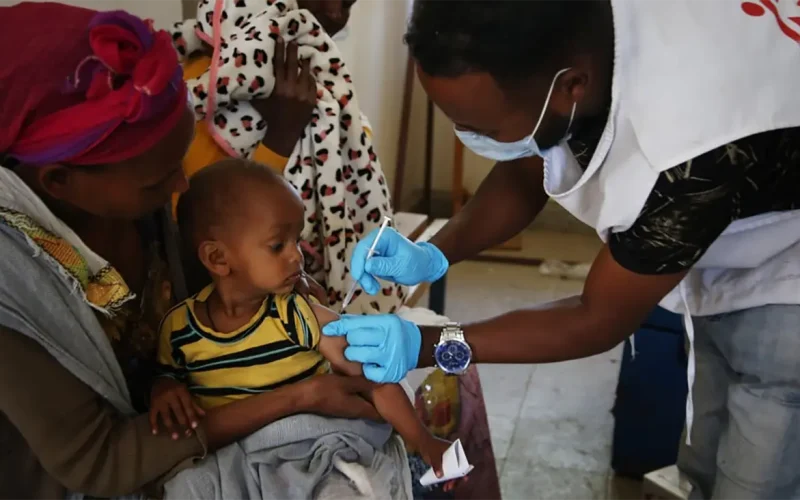
VACCINES have proved to be one of the most effective tools in fighting infectious diseases, but convincing people to get vaccinated can be tough. Especially young people. During the global COVID-19 pandemic, declared by the World Health Organisation on 11 March 2020, many countries reported high levels of vaccine hesitancy among younger population groups. Negative healthcare experiences and general distrust of government have cultivated vaccine hesitancy across Africa. Misleading information about vaccine side effects on social media adds to this challenge. This hesitancy continues today. A 2024 study on adolescents and young adults (aged 10 to 35) in sub-Saharan Africa…
Read More
Is this bad for my health? Kenyan study tests three types of warning labels on food

Is this bad for my health? Kenyan study tests three types of warning labels on food

DIET-RELATED health conditions, such as diabetes, hypertension and obesity, are on the rise in Kenya, putting immense strain on already over-stretched public health systems. These conditions are often driven by high intake of sugars, salts and unhealthy fats. So it’s more critical than ever for consumers to understand what’s in the foods they’re buying. But making sense of nutrition information isn’t always straightforward, especially with the small, complex labels on the back of most packages. Our recent study examined whether front-of-pack food labels could help Kenyan consumers make better choices. We tested three types of label designs to see which…
Read More
How crocheting is supporting livelihoods and mental health among women on the Kenyan Coast

How crocheting is supporting livelihoods and mental health among women on the Kenyan Coast

IN 2022, 23-year-old Western Kenya-native Triza Apasi was struggling with anxiety and drug addiction. A series of shattered friendships had left her emotionally vulnerable. In her despair, she picked up a crochet hook and began weaving. Her return to a craft that she had first discovered from watching YouTube videos during the COVID-19 lockdown in 2020 began as a pastime to cope with her emotional turmoil. It has since grown into something much larger: a route to healing, creativity, and community change. She now manages Dynamite Hooks, a social venture that empowers young women, promotes sustainability and raises mental health…
Read More