Our website use cookies to improve and personalize your experience and to display advertisements (if any). Our website may also include cookies from third parties like Google Adsense, Google Analytics, and Youtube. By using the website, you consent to the use of cookies.

Morocco’s hidden history: archaeology, DNA and carbon dating rewrite the story of the ancient world

Morocco’s hidden history: archaeology, DNA and carbon dating rewrite the story of the ancient world

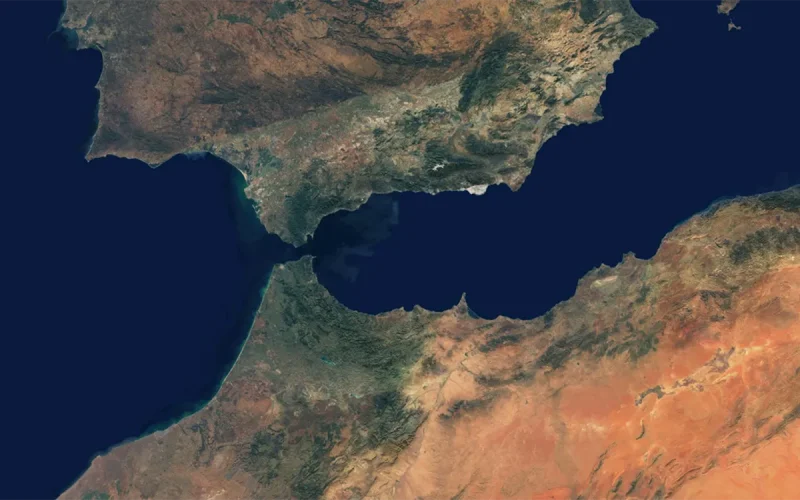
FOR decades, stories about the ancient Mediterranean have centred on the grand cultures of Greece, Rome, Phoenicia and Egypt. Northwest Africa seldom enters the picture before the arrival of Phoenician traders on the Moroccan coast about 3,000 years ago. But archaeology is now revealing a different story. Long before the first Phoenician ships (from today’s Middle East) sailed the western Mediterranean (between today’s North Africa and southern Europe), communities in what is now Morocco were farming and herding animals. They were also crossing the Strait of Gibraltar and participating in long-distance exchanges. Over the past decade, I’ve worked on archaeology…
Read More
BMW unveils five-way power play with all-new X5 – electric, hydrogen and the ‘Heart of Joy’

BMW unveils five-way power play with all-new X5 – electric, hydrogen and the ‘Heart of Joy’

THE car that has long been BMW's calling card in the luxury SUV wars is about to get louder, cleaner and considerably smarter. The fifth-generation BMW X5 is in the final stretch of its development programme, tearing through calibration drives around the carmaker's production heartland at Plant Spartanburg in the United States - and when it lands, it will do something no BMW production model has ever done before: arrive with a choice of five distinct drive systems under one badge. Petrol. Diesel. Plug-in hybrid. Fully electric. And, from 2028, hydrogen. It is less a model launch than a statement…
Read More
Hybrid seed leading revival of cotton farming in Zimbabwe

Hybrid seed leading revival of cotton farming in Zimbabwe

FOR more than two decades, 56-year-old cotton farmer Aleck Bikostone has dedicated his life to cotton farming in Chinhoyi - the north-central capital of Zimbabwe’s Mashonaland West Province - despite market disturbances, climate change, and rising costs of inputs that threaten the crop. Standing among cotton fields at a research farm in Kadoma along the road between Harare and Bulawayo, Bikostone tells the story of a cotton farming journey that has long hours of labour and perseverance despite global price fluctuations, which he describes as both a blessing and a challenge. According to Stewart Mubonderi, the national chairman of the…
Read More
Robust global action is key to curbing Sudan atrocities

Robust global action is key to curbing Sudan atrocities

The United Nations Security Council on June 20 warned of the “imminent risk of mass atrocities” in El Obeid, the capital of North Kordofan region in western Sudan, which for months now has been the epicenter of fierce fighting between the Rapid Support Forces (RSF) and the Sudanese Armed Forces (SAF). The conflict, which broke out in April 2023, has claimed tens of thousands of lives, caused millions to flee their homes, and created one of the world’s worst humanitarian disasters. The UN human rights chief, Volker Türk, also issued a “stark warning” on June 18 over the risk of atrocities as…
Read More
Igniting Tomorrow: BMW Group South Africa puts youth in the driver’s seat

Igniting Tomorrow: BMW Group South Africa puts youth in the driver’s seat

THERE is a particular kind of energy that fills a room when young people glimpse, for the first time, the shape of their own future. It is the same restless energy that hums beneath the bonnet of an idling engine - coiled, expectant, ready to surge forward the moment the key turns. This Youth Month, that energy filled the halls of the Soshanguve Engineering School of Specialisation in Gauteng, as BMW Group South Africa threw open its doors - and its workshops, its universities, and its possibilities - to 1,200 learners hungry to find their own ignition point. Youth Month,…
Read More
Did Kenya’s Gen Z protests achieve anything? An economist weighs up what’s changed and what’s stayed the same

Did Kenya’s Gen Z protests achieve anything? An economist weighs up what’s changed and what’s stayed the same

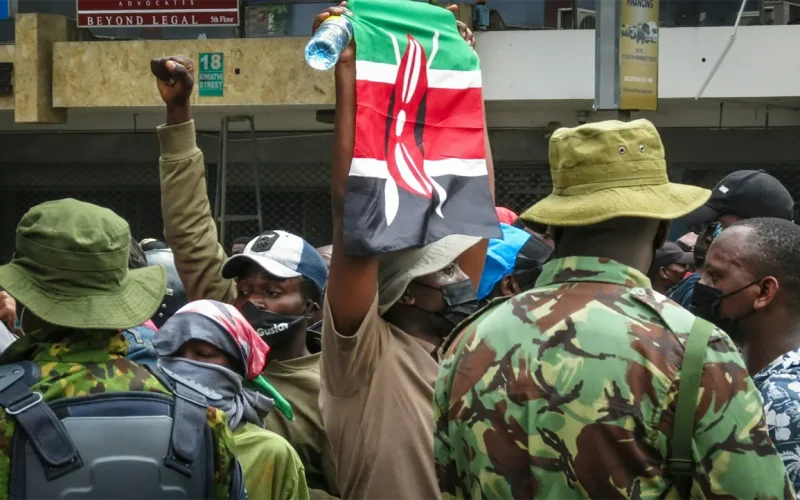
KENYA’S Gen Z-led protests of 2024 drew global headlines. For weeks, young people mobilised against proposed tax increases, the rising cost of living, unemployment, corruption and what they saw as an unresponsive political class. But what began as opposition to the 2024 Finance Bill quickly evolved into a broader challenge to the way the country was being governed. The protests were remarkable for their scale, decentralised nature and ability to mobilise through social media. They were eventually subdued through political concessions and state repression. At least 63 people were killed. The issues that drove the protests haven’t disappeared. Questions about…
Read More
Great Zimbabwe: debunking the myth of tyrants and forced labour

Great Zimbabwe: debunking the myth of tyrants and forced labour

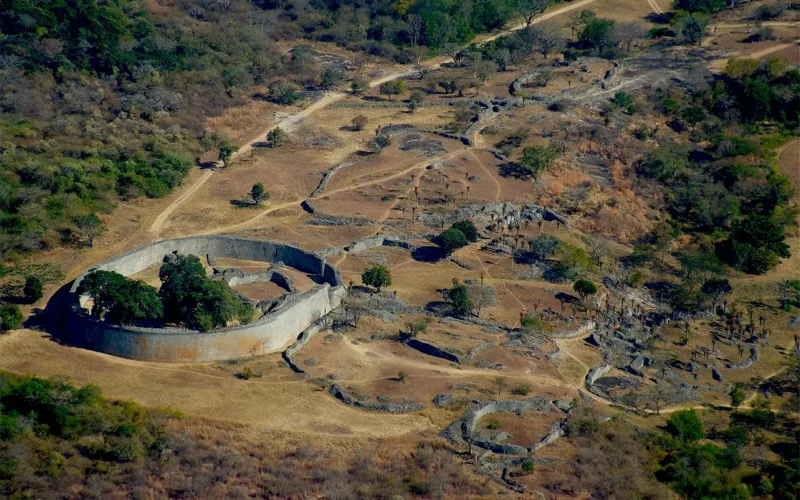
FOR more than a century, Great Zimbabwe has stood at the centre of a powerful story about the Zimbabwe culture. This remarkable African civilization flourished in southern Africa during the Middle Ages, constructing more than 200 dry-stone palaces, locally known as madzimbahwe (houses of stone). These towering monuments, immense gold wealth, and an array of exotica, including glass beads and glazed ceramics from distant lands, have often been interpreted as proof that southern Africa’s early states were ruled by authoritarian kings. Leaders who exercised near-absolute control over their subjects. In archaeology textbooks, museum exhibitions, and even political discourse, the image…
Read More
Money, food and survival: what drives paid sex among young mums in 3 African countries

Money, food and survival: what drives paid sex among young mums in 3 African countries

TRANSACTIONAL sex, defined as the exchange of sex for money, food, or favours, is common among young people in Africa. Studies have reported that about 10% of those aged 15-24 have engaged in this exchange in South Africa, 23% in Nigeria and 25% in Uganda. The behaviour has been linked to negative consequences such as unintended pregnancy, sexual violence and HIV infections. Transactional sex refers to sexual relationships outside marriage that are not classified as commercial sex work, but where there is an expectation that material, financial or other benefits will be exchanged for intimacy or companionship. We are sexual…
Read More
Nigerians tell their stories of banditry. ‘A month will not go by without someone being killed in this village.’

Nigerians tell their stories of banditry. ‘A month will not go by without someone being killed in this village.’

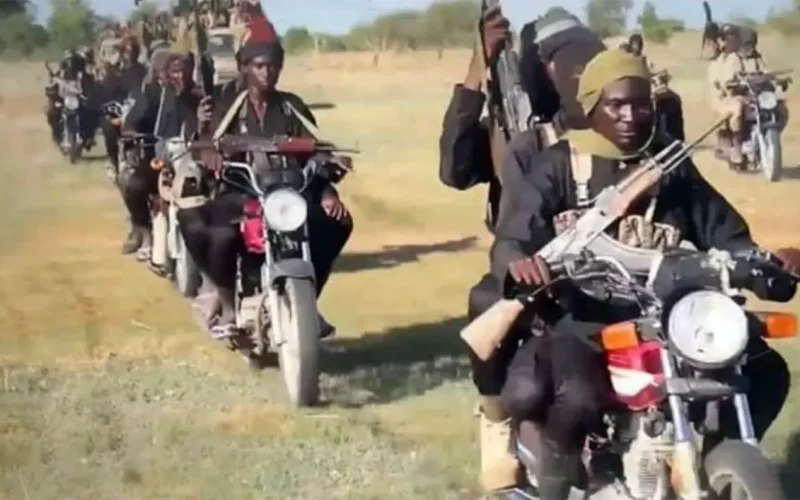
BANDITRY is widespread in Nigeria. It has been defined as “a loose collection of various criminal groups involved in kidnap-for-ransom, armed robbery, cattle rustling, rape and sexual violence, pillage and attacks on traders, farmers and travellers, particularly in Nigeria’s northwest region”. This criminal activity has caused deaths, displacement, destruction of property and widespread fear. In 2025 alone, 599 attacks were reported, with 2,742 casualties. This was a sharp increase from 2024, when 256 attacks and 1,585 deaths were recorded. Banditry has also extended its reach to the northwest and southwest of Nigeria. Studies have examined its costs and implications, and…
Read More
Appolonia: the story of an African kingdom that resisted the Atlantic slave trade

Appolonia: the story of an African kingdom that resisted the Atlantic slave trade

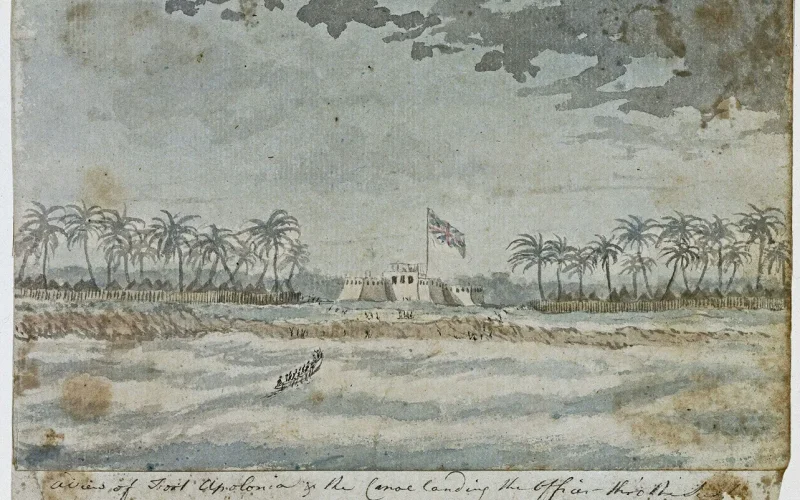
THE transatlantic slave trade was a multilayered, highly commercialised global enterprise that lasted from the early 1500s to the mid-1800s. The events over this period are far too complex to fit into a straightforward perpetrator-victim narrative. While the trade catastrophically dehumanised and commodified over 12.5 million Africans, it was not just an external conquest. Europeans lacked the geographical knowledge, immunity to endemic tropical diseases, and the military power to venture into the African interior. So they became dependent on African states and merchant elites for the supply of captives. By controlling coastal ports, regulating market access, and managing the interior…
Read More