Our website use cookies to improve and personalize your experience and to display advertisements (if any). Our website may also include cookies from third parties like Google Adsense, Google Analytics, and Youtube. By using the website, you consent to the use of cookies.

Love, grace and world peace: how an African saint has shaped Pope Leo’s worldview

Love, grace and world peace: how an African saint has shaped Pope Leo’s worldview

POPE Leo XIV’s first official trip to Africa started with a fascinating stop in Algeria. Here, the pontiff’s visit to the Grand Mosque of Algiers was an attempt to strengthen Christian-Muslim relations. The stop was also to pay homage to Saint Augustine, the founder of the order that he is a member of. Catherine Conybeare, a professor of history, language, and the classics, has written a book revising Augustine’s story to place his African origins and beliefs at the centre. We asked her about it. What is the main takeaway from the book? Above all, one of the foundational figures…
Read More
Pope Leo’s visit to Africa: theology scholar outlines 3 realities the Catholic church must face

Pope Leo’s visit to Africa: theology scholar outlines 3 realities the Catholic church must face

POPE Leo’s decision to make Africa one of the early destinations of his young papacy signals the continent’s importance in global Catholicism. His April 2026 visit reflects both his personal ties to Africa and the rapid rise of Christianity across the continent. His 10-day itinerary to Algeria, Angola, Cameroon and Equatorial Guinea is also historically significant. In Algeria, for instance, Pope Leo will walk in the footsteps of Augustine of Hippo (who lived around the year 400), his spiritual father, highlighting the African roots of Christianity. But when the pope announced his Africa trip in February 2026, few could have…
Read More
South African court orders Eskom to disclose R70 billion coal and diesel contracts – why the ruling matters

South African court orders Eskom to disclose R70 billion coal and diesel contracts – why the ruling matters

SOUTH Africa’s Supreme Court of Appeal recently ruled that the country’s state-owned electricity utility Eskom must disclose its contracts with coal and diesel suppliers. This is a major victory for transparency in a sector that has long been marked by secrecy, financial instability and weak public trust. Eskom generates about 90% of the country’s electricity, mainly through burning coal that it buys from South Africa’s coal mines. Eskom spends R70 billion (US$4.16 billion) a year on coal and its transport alone but until now, its contracts with the mines have been kept hidden. The case began in 2024, when South…
Read More
US and Iran: A brief history of how decades of mistrust and bad blood led to open warfare

US and Iran: A brief history of how decades of mistrust and bad blood led to open warfare

WITH U.S. bombs raining down on Iran and Tehran’s leaders responding by hitting targets across the Persian Gulf and restricting transit through the Strait of Hormuz, it is fair to suggest that the present moment represents a low in relations between the two countries. But the bad blood isn’t new: The U.S. and Iran have been in conflict for decades – at least since the U.S. helped overthrow a democracy-minded prime minister, Mohammed Mossadegh, in August 1953. The U.S. then supported the long, repressive reign of the Shah of Iran, whose security services brutalised Iranian citizens for decades. The two…
Read More
Brutal Mau Mau camps in Kenya were an extension of Britain’s colonial prison system – historian traces their roots

Brutal Mau Mau camps in Kenya were an extension of Britain’s colonial prison system – historian traces their roots

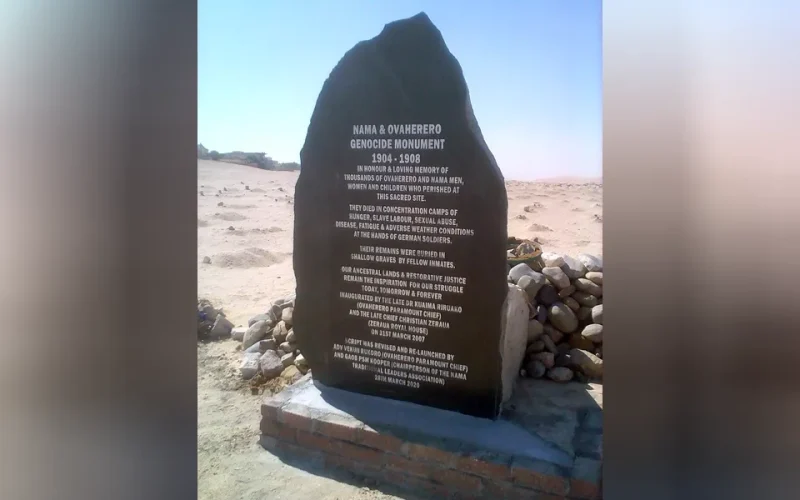
DURING the Mau Mau uprising between 1952 and 1960, the British colonial government confined an estimated 150,000 Kenyans in a sprawling network of “emergency” detention camps. None of those held in the camps had been found guilty in a court of law. Instead, they were detained on suspicion of supporting the uprising. British control over Kenya was effectively declared in 1895. A distinctive feature of colonial rule was the decision to encourage white settlement. These settlers were granted vast tracts of Kenya’s most fertile land and pushed policy in an increasingly harsh and unequal direction. By the early 1950s, many…
Read More
Dadaab voices: What’s behind the rise in refugee suicides?

Dadaab voices: What’s behind the rise in refugee suicides?

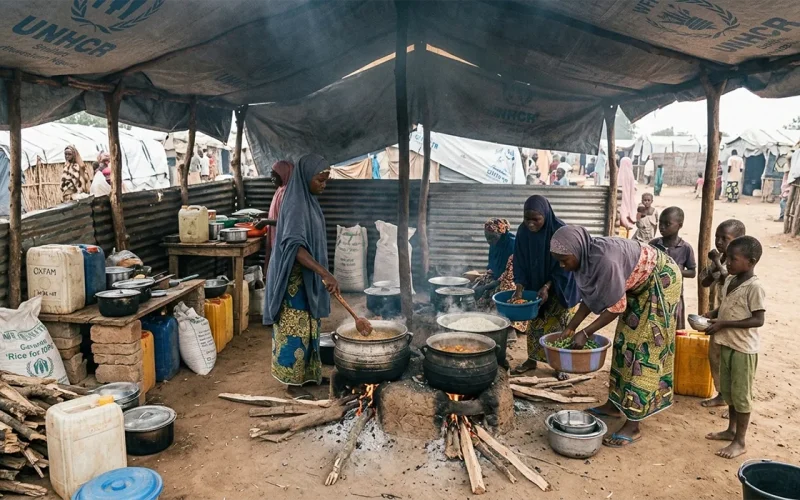
ON a quiet morning in January in Kenya’s Dadaab refugee complex, 38-year-old Aden Mohamed Hafow, a father of four and a respected comprehensive school teacher, hung himself. Born in Somalia, he had arrived in Dadaab as a three-year-old in the early 1990s. He knew little else but the camp’s dusty paths and makeshift classrooms. For more than 15 years, he had waited patiently in the queue for US resettlement, dreaming of a fresh start. But that hope began to crumble last year when US President Donald Trump barred the entry of refugees from Somalia. This story was originally published by…
Read More
Iran war could add to Nigeria’s security troubles. What to watch out for

Iran war could add to Nigeria’s security troubles. What to watch out for

THE war between Iran, Israel and the US may have far-reaching regional and global implications. By mid-March, there were signs that it could last longer than many had expected. The longer it lasts, the greater the effects on the global landscape will be. Barely three weeks into its outbreak, the violence caused disruptions to the flow of oil, resulting in a spike in oil prices. But that’s not the only way Nigeria may feel its impact. I am a security scholar and analyst who has researched and written extensively on aspects of Nigeria’s security challenges. These include insurgency, terrorism and…
Read More
Regional mega-war? How renewed conflict in Ethiopia could pull in Sudan

Regional mega-war? How renewed conflict in Ethiopia could pull in Sudan

THE prospect of renewed war in northern Ethiopia between government forces, Tigray factions, and Eritrea risks pulling in neighbouring Sudan and merging two of the deadliest conflicts in recent history. After fighting a war against Tigrayan forces from 2020 to 2022, the Ethiopian government may be on the verge of resuming hostilities to consolidate control over the country’s northernmost region. This story was originally published by The New Humanitarian.By Mat Nashed It is also increasingly threatening Eritrea. Ethiopia fought alongside Eritrea during the Tigray war but is now signalling it may seek to invade to regain direct access to Red…
Read More
The Lesotho Highlands Water project is 40 years old and going strong: but history weighs on its successes

The Lesotho Highlands Water project is 40 years old and going strong: but history weighs on its successes

BIG projects bring big hopes and big dreams. They also bring big disappointment when they don’t deliver on all the promises. Even when the projects work as they are supposed to. The Lesotho Highlands Water Project fits this description perfectly, as I argue in my new book on its history. Over the past 20 years, I have conducted research on the history of the small, landlocked country of Lesotho and its development. Two massive dams – Katse and Mohale – and storage reservoirs in Lesotho have been completed, and a third dam is under construction. The project transfers, via gravity-fed…
Read More
Is there a case for dialogue to end Mozambique’s insurgent war?

Is there a case for dialogue to end Mozambique’s insurgent war?

ONGOING attacks by Islamic State Mozambique (ISM) in the northern province of Cabo Delgado are forcing hundreds of thousands of families from their homes, deepening a humanitarian crisis that has been ongoing for close to a decade. At least 300,000 people have been displaced by the jihadist violence since July, including more than 100,000 following a spate of attacks late last year. The surge has pushed many families to flee districts previously considered relatively safe, further stretching humanitarian operations at resettlement centres that already operate beyond capacity. Figures from the Armed Conflict Location and Event Data (ACLED) put the death toll from the insurgency…
Read More