Our website use cookies to improve and personalize your experience and to display advertisements (if any). Our website may also include cookies from third parties like Google Adsense, Google Analytics, and Youtube. By using the website, you consent to the use of cookies.

Nigeria’s public spaces neglect the country’s rich cultural traditions – why this matters

Nigeria’s public spaces neglect the country’s rich cultural traditions – why this matters

OPEN spaces such as parks, gardens and public squares play an important role in city life. They offer places where people can relax, meet others, and take part in community activities. They are key to building strong and sustainable communities in growing urban areas. As cities expand and global landscape design styles become more common, however, the bond between people and their everyday environments is weakening. In Nigeria, the design of contemporary public open spaces has often put visual appeal ahead of the socio-cultural values that give meaning to community life. Landscapes tend to follow western garden aesthetics, marked by…
Read More
Young South Africans don’t bother with elections: would lowering the voting age make a difference?

Young South Africans don’t bother with elections: would lowering the voting age make a difference?

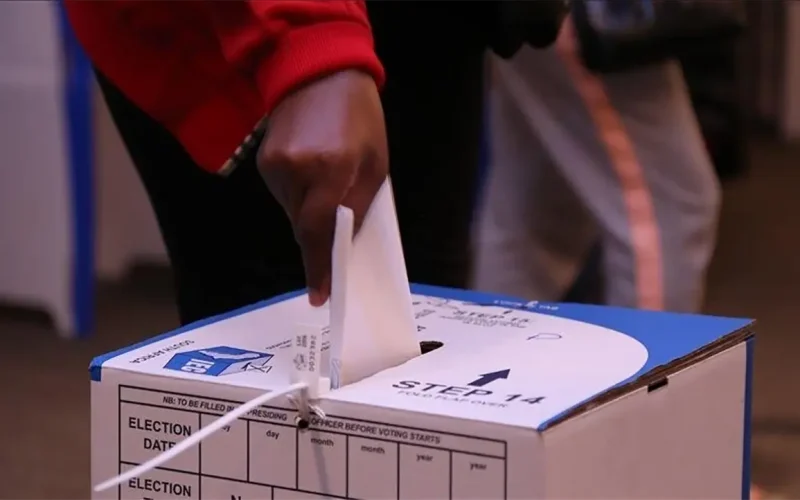
SOUTH Africa is due to hold local government elections in 2026. In the last election in 2021, only 15% of the eligible voters aged 18 to 21 registered for the election. In view of this, it’s worth considering whether the minimum voting age of 18 years should be reduced to increase participation. What are the main driving forces for such a consideration? Based on international comparisons, how advisable would it be? What would be some of the implications of such a change for elections in South Africa? The South African Constitution does not state explicitly that the voting age is…
Read More
South Africa has chosen a risky approach to global politics: 3 steps it must take to succeed

South Africa has chosen a risky approach to global politics: 3 steps it must take to succeed

SOUTH Africa finds itself in a dangerous historical moment. The world order is under threat from its own primary architect. The US wants to remain the premier global political power without taking on any of its responsibilities. This dangerous moment also presents opportunities. South Africa’s response has been one of strategic autonomy. This involves taking independent and non-aligned positions on global affairs to navigate between competing world powers. But South African policymakers lack the political acumen and bureaucratic ability required to navigate this complex global order and to exploit the new possibilities. Strategic autonomy is not the norm in global…
Read More
Stop Talking, Start Enforcing: Why South Africa Needs Law, Not Another Dialogue

Stop Talking, Start Enforcing: Why South Africa Needs Law, Not Another Dialogue

THIRTY years into our democracy, South Africa stands at a crossroads. Not the kind that requires more committees, consultations, or clever conversations. The kind that demands a choice between order and chaos, between the rule of law and the law of the jungle. And right now, we're choosing badly. President Cyril Ramaphosa's national dialogue represents everything that's wrong with our current approach to governance: when faced with a crisis, talk about it. When confronted with lawlessness, commission a study. When communities are burning with rage over service delivery failures, organise a workshop, call it a national dialogue. Enough. South Africa…
Read More
Tanzania’s independence leader Julius Nyerere built a new army fit for African liberation: how he did it

Tanzania’s independence leader Julius Nyerere built a new army fit for African liberation: how he did it

TANZANIA has long enjoyed a reputation as a peaceful country. In contrast to most of its neighbours, this East African nation of 67 million people has largely avoided large-scale violence within its borders. That didn’t seem likely in the early years after independence from Britain in December 1961. A little over two years into independence – in January 1964 – the founding president, Julius Nyerere, faced two political crises. The first started on 12 January 1964 in the form of the Zanzibar Revolution. Weeks of violence and destruction by Afro-Shirazi Party members followed. As many as 16,000 Zanzibaris were killed…
Read More
From Scarcity to Opportunity: Botswana’s vision for water security and economic transformation

From Scarcity to Opportunity: Botswana’s vision for water security and economic transformation

IN Botswana, we know the sting of scarcity intimately. As a semi-arid country, we have learned that every drop counts. We are a water-scarce nation due to arid and semi-arid climatic conditions across most of our territory, coupled with inadequate water supply sources and services. In recent years, water shortages have persisted as demand grows, exacerbated by the relentless effects of climate change. Climate variability and uncertainty bring extreme events such as droughts and unpredictable rainfall patterns, challenging our people's conventional food production methods and our potable water supply, which relies heavily on annual rainfall. Our groundwater resources have also…
Read More
Kenya’s 1950 Kolloa massacre: Britain won’t own up to its colonial violence but communities need closure

Kenya’s 1950 Kolloa massacre: Britain won’t own up to its colonial violence but communities need closure

IN 1950, British forces killed at least 29 civilians in one of the deadliest, but least chronicled, episodes of colonial violence in Kenya. Armed soldiers killed at least 29 civilian members of Dini ya Msambwa, a spiritual and anti-colonial movement in Kenya active around what is now West Pokot county in the north-western region. Survivors describe the group’s gathering on 24 April 1950 as a peaceful one. However, British colonial forces, fearing a potential uprising, violently confronted the group at the Kolloa trading centre. It led to one of the highest numbers of deaths in a single day in a…
Read More
The international order is shifting: African countries have an opportunity to reshape global power relations

The international order is shifting: African countries have an opportunity to reshape global power relations

FOR too long, Africa’s agency has been exercised defensively: managing expectations, preserving stability, reacting to external scripts. The continent has copied political systems from other countries and prioritised economic choices that would meet external obligations, such as repaying debt. This posture was understandable immediately following independence in African states. At that time, the world was shaped by cold war constraints and conditions imposed by those who provided aid and set up structural adjustment programmes. But we are now in a different moment. The international order is shifting fast. Multilateralism is fraying. Former rule-makers are bypassing the rules. For instance, World…
Read More
Are African countries aware of their own mineral wealth? Ghana and Rwanda offer two very different answers

Are African countries aware of their own mineral wealth? Ghana and Rwanda offer two very different answers

IMAGINE running a business for over a century without knowing what’s in your warehouse. That’s essentially what many African countries are doing with their mineral wealth. Governments across the continent still have very little knowledge of what lies beneath their soil. Between the 18th and 20th centuries, European colonial powers exploited African mineral wealth for their industrialisation. Post-independence, many African nations nationalised their mining sectors. International pressure led to privatisation in the 1980s. This weakened the motivation and capacity of governments to develop long-term strategies. They have more incentive to export minerals for foreign exchange in the short term. As…
Read More
Côte d’Ivoire’s sacred talking drum is coming home: lessons from Kenya on how it could transform lives

Côte d’Ivoire’s sacred talking drum is coming home: lessons from Kenya on how it could transform lives

THE French parliament has unanimously passed a law to return the Djidji Ayôkwé, a sacred talking drum stolen by colonial forces from Côte d’Ivoire in 1916. Once used by the Ebrié people in the coastal south of the country to summon gatherings, announce royal messages and anchor community identity, the large wooden carved drum will soon be back home. There, it will not just be a relic, but a vessel of collective memory and dignity. I’m a teacher of peace and conflict studies whose research often focuses on the role of museums and art exhibitions in helping bring unity. As…
Read More