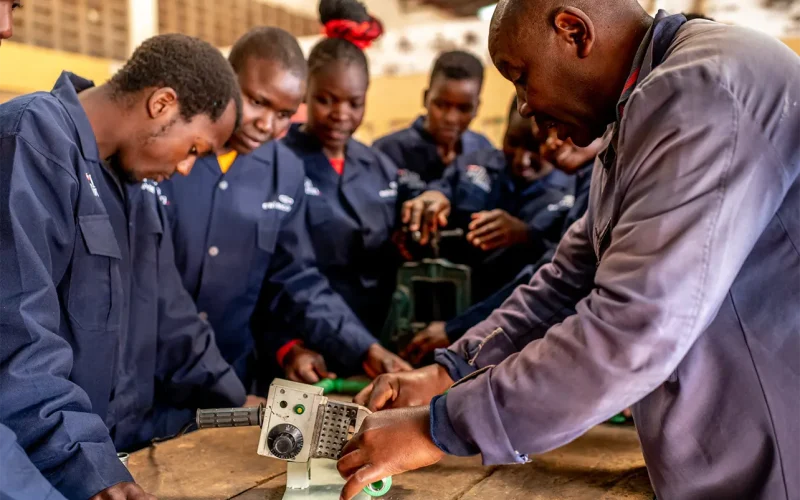
AS we stand at a pivotal moment in Africa’s economic development, it is impossible to ignore the growing skills crisis that threatens to undermine our progress. This is what occupied the minds of delegates at this week’s inaugural Industrial Skills Week held in Lusaka, Zambia.
The gathering was presented with the alarming statistics that surveys indicate that over 75% of African employers express concerns about the inadequacy of job applicants’ skills, while the continent’s universities continue to churn out graduates whose skills are misaligned with market demands. This disparity—referred to as the skills mismatch—represents one of the most significant barriers to harnessing Africa’s full economic potential. The need for a concerted effort to bridge this gap has never been more urgent.
The Nature of the Skills Crisis
Africa is often touted as the next frontier for global growth, yet its workforce remains plagued by a disconnect between academic institutions and the evolving needs of the job market. Universities are predominantly focused on traditional disciplines such as humanities and basic sciences, with insufficient emphasis on skills that align with emerging industries such as technology, renewable energy, and advanced manufacturing. This mismatch has resulted in a generation of graduates who find themselves ill-equipped to meet the demands of modern workplaces.
Key factors contributing to this crisis include:
Outdated Curriculum
Many universities still employ curricula that have not evolved over the years, leaving graduates lacking in skills pertinent to current job markets.
Lack of Industry Collaboration
Delegates agreed that in most cases, there is minimal interaction between academia and industry. Employers often have no input in shaping the curriculum, which leads to a product (the graduate) who is out of touch with industry expectations.
Resource Constraints
Many universities operate with limited resources, preventing them from investing in modern facilities, technology, or training for academic staff, who may not possess the relevant industry experience.
Geographical Disparities. The availability of higher education is uneven across the continent. Students in rural areas may have limited access to institutions offering relevant courses aligned with current industry needs.
Skill Shortages in High-Demand Areas
Even where aligned curricula exist, there is often a shortage of qualified educators in emerging fields such as data science, artificial intelligence, and cybersecurity.
Analysing the Challenges
The challenges presented by the skills mismatch are manifold. Most pressing is the social cost of unemployment. A significant number of young Africans are entering the workforce but are unable to find job opportunities that match their qualifications. This not only leads to economic stagnation but also exacerbates social issues, such as increased crime rates and mental health challenges among disconnected youth.
Employers in Africa express a desire for highly skilled professionals, yet the current system largely fails to deliver. This has led to an increase in firms investing in additional training programs—an essential resource, but also an inefficient and cost-heavy solution. Thus, companies are forced to spend their valuable resources retraining employees, diverting attention from innovation and core business operations.
Furthermore, as industries evolve, so too must educational institutions. Industries are increasingly looking towards technology-driven solutions, and the rapid pace of innovation requires a workforce adept at embedding and internalising these advancements. However, with many universities lagging, we face a scenario where the gap only continues to widen.
Solutions: A Collaborative Approach
Addressing the skills mismatch crisis requires a multi-faceted approach that fosters collaboration among universities, industries, and government bodies. Here are several concrete proposals that could be considered during the ongoing Industrial Skills Week conference:
Curriculum Co-Creation
A robust engagement platform should be established where industry stakeholders and academic institutions can collaborate to design curricula that reflect real-world needs. Industry boards comprised of business leaders could guide curriculum development, ensuring that it aligns with current market demands.
Internship and Apprenticeship Programs
Universities should forge partnerships with local businesses to create structured internship and apprenticeship programs. These initiatives would provide students with hands-on experience, exposing them to live workplace environments and enhancing their employability upon graduation.
Continued Learning and Upskilling Encourage continuous education programs, making it easy for graduates and existing employees to upgrade existing skills or acquire new ones. Partnerships with tech companies for certification programs can broaden skill sets in high-demand areas such as information technology.
Investment in Learning Technology
Universities should harness digital innovations, such as virtual reality and online learning platforms. Smart utilisation of these tools can make learning more engaging and accessible for students across geographical divides.
Public-Private Partnerships (PPPs)
Engage in strategic PPPs that focus on developing infrastructure for vocational training centres that can address specific skill gaps in various sectors, especially in underserved regions.
Policy Framework Enhancement
Governments should consider implementing policy measures that incentivise industry partnerships in education. Favourable tax structures for businesses participating in education-development initiatives could encourage active involvement from the private sector.
Career Guidance Services
Establish career services that provide high school and university students with information on market trends, skill requirements, and emerging industries, ensuring that students understand job realities before they enter the professional world.
Research and Development Focus
Encourage R&D initiatives that focus not only on high-level academic research but also on applied research that addresses immediate industry challenges, fostering innovation that aligns with local and global demands.
Conclusion
Addressing the skills crisis in Africa is not just the responsibility of academic institutions or the government, but requires an integrated approach that involves all stakeholders, including the private sector, civil society, and the students themselves. By fostering collaboration between universities and industry, we can mitigate the skills mismatch and ensure that graduates possess the competencies needed for successful careers.
As delegates deliberated during the Industrial Skills Week conference,
It’s clear that the focus needs to.be on actionable solutions that will pave the way for a future where Africa’s young talent is equipped to meet the evolving demands of the global marketplace. By taking intentional steps towards bridging the skills gap, we can empower a generation, bolster economic growth,
Tabane was a facilitator at the conference and writes here in his personal capacity.