Our website use cookies to improve and personalize your experience and to display advertisements (if any). Our website may also include cookies from third parties like Google Adsense, Google Analytics, and Youtube. By using the website, you consent to the use of cookies.

BRICS at the crossroads of global governance

BRICS at the crossroads of global governance

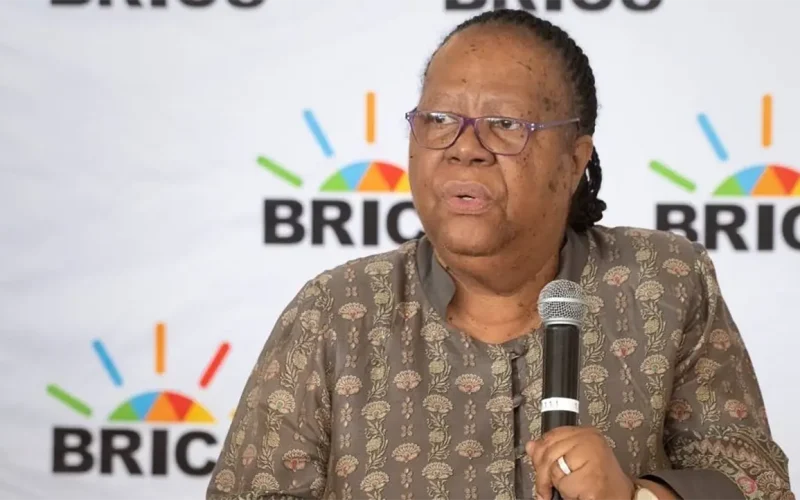
THE world today is at an inflexion point, faced by a rabidly hostile and vengeful unipolarity, a deepening crisis in multilateralism and respect for international law, rampant greed and odious wealth, grinding poverty and the visible effects of disasters and climate change. In her valuable book, Shock Therapy (2008), Naomi Klein illustrates cogently that none of these developments are accidental. They are, she suggests, manifestations of the practice of “shock and awe”, a strategy of the powerful designed to use war threats and civil conflict to generate sufficient chaos for rampant looting of the resources of developing nations and thus…
Read More
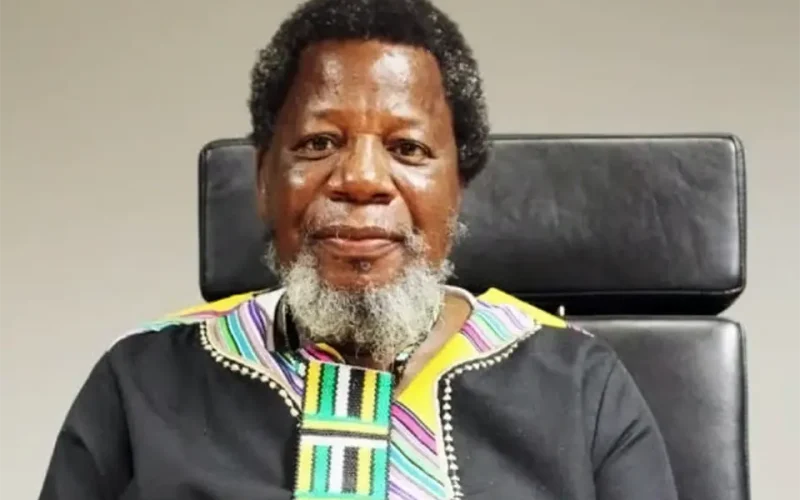
FROM TORTURE CHAMBER TO PARLIAMENT: The unbroken spirit of Dean Tshenuwani Farisani

FROM TORTURE CHAMBER TO PARLIAMENT: The unbroken spirit of Dean Tshenuwani Farisani

THE sarcasm of the security police captain was quite biting as Dean Tshenuwani Farisani sat handcuffed and manacled to an iron bar at the back of an open van. It was night, it was winter, and it was biting cold. The year was 1977, and he was being taken from Pietermaritzburg to Howick Police Station, which was the torture chamber. The white captain looked at him and said, "Dean, be comfortable. We apologise that the state cannot afford a canopy for this bakkie, as the money goes to combating terrorism. Keep the wind out of the bakkie with your prayers.…
Read More
From here to there: Remembering my friend, Ngũgĩ wa Thiong’o

From here to there: Remembering my friend, Ngũgĩ wa Thiong’o

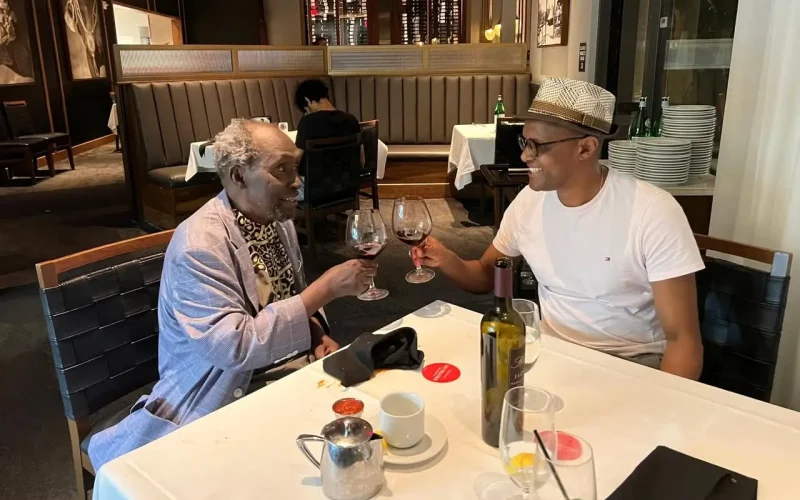
NGŨGĨ WA THIONG’O was my friend. Two weeks ago, we recorded a video—his reflections on co-authoring The Trial of Dedan Kimathi with Micere Githae Mugo nearly fifty years ago, in 1976. He was radiant. Full of laughter. Still in awe of the fire and fellowship that forged that revolutionary text. Nearly forty years ago, my mother handed me my first Ngũgĩ. It was Weep Not, Child. The year was 1986. That same year, Ngugi’s effigies were being burned across Kenya. Moi’s regime had branded him an enemy of the state. I was a child in primary school, bewildered: I was…
Read More
Five things you should know about Ngũgĩ wa Thiong’o, one of Africa’s greatest writers of all time

Five things you should know about Ngũgĩ wa Thiong’o, one of Africa’s greatest writers of all time

ONE of Africa’s most celebrated authors, Ngugi wa Thiong'o, has passed away. The Kenyan writer and academic was 87 years old. Having published his first novel – Weep Not Child – in 1964, Ngugi pursued a rich and acclaimed career as a writer, teacher and decolonial thinker. His last creative effort was Kenda Muiyuru (The Perfect Nine), a Gikuyu epic that was longlisted for the 2021 International Man Booker Prize. Kenyan academic and writer Peter Kimani sets out five things you should know about a legendary African writer. He understood the politics of his time Ngugi wa Thiong'o is regarded…
Read More
A Decade of Transformation: How the African Development Bank rewrote Africa’s future under visionary leadership

A Decade of Transformation: How the African Development Bank rewrote Africa’s future under visionary leadership

I AM immensely proud that over the past decade, the African Development Bank (AfDB) has served as an accelerator of Africa's development. The Bank's High 5s - to light up and power Africa, feed Africa, industrialise Africa, integrate Africa, and improve the quality of life for Africa's people - have been truly transformational for our continent. In the past ten years, the AfDB's work has directly impacted the lives of 565 million people. This extraordinary reach includes 28 million people gaining access to electricity, 104 million achieving food security, 121 million accessing improved transport, 128 million receiving enhanced health services,…
Read More
Dadaab Voices: What aid cuts mean for Kenya’s refugees

Dadaab Voices: What aid cuts mean for Kenya’s refugees

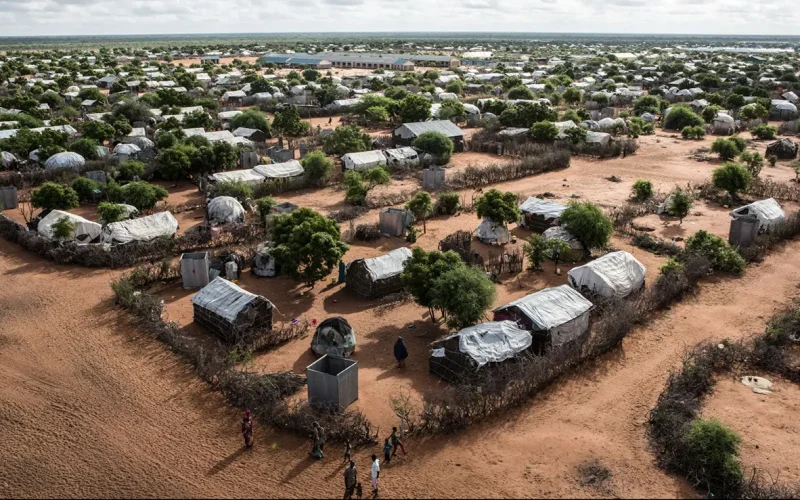
This story was originally published by The New Humanitarian. REFUGEE rights groups in Kenya’s sprawling Dadaab camp complex say they’re facing “one of the worst humanitarian crises in recent history” – the result of a sudden halt to food distribution as well as the longer-term impact of aid cuts by the United States. “Without immediate intervention, the risk of malnutrition, illness, and death increases daily,” warned a statement this week by Dadaab’s Refugee-Led Organisations Network (DARLON). “Refugees are losing hope.” Food distribution to the roughly 500,000 refugees in Dadaab’s three-camp complex lasted only a few days this month before being…
Read More
South Africa and the US have much to gain from working together

South Africa and the US have much to gain from working together

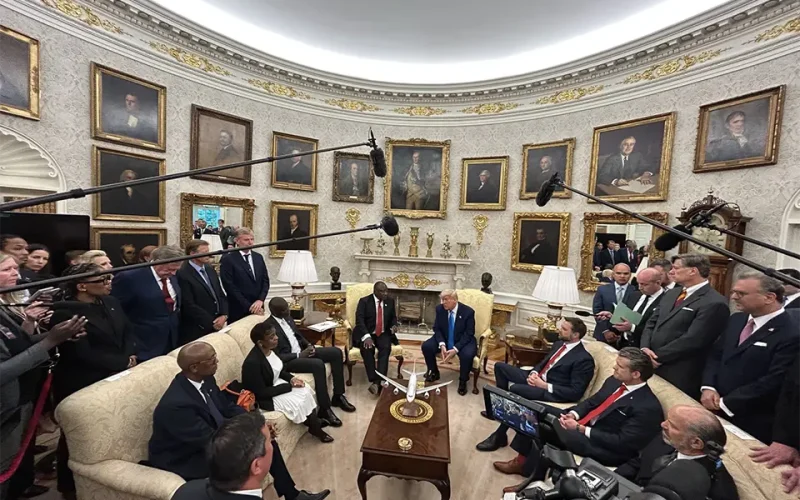
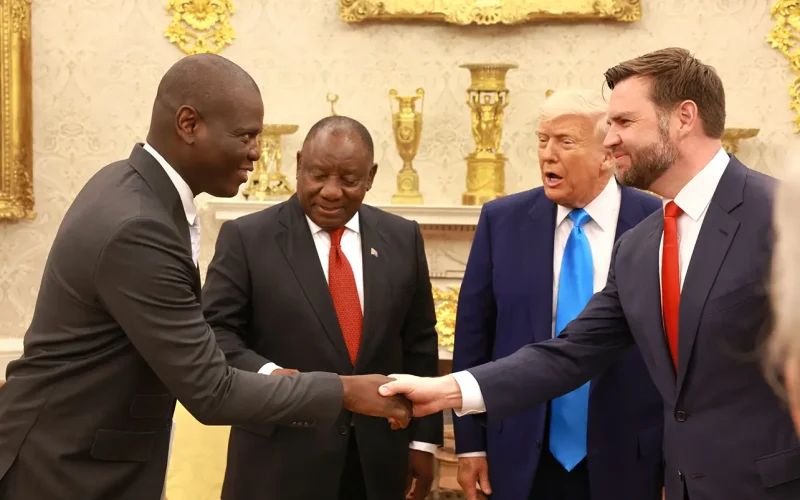
LAST week, I undertook a successful working visit to the United States at the invitation of President Donald Trump to strengthen relations between our two countries.  The delegation that accompanied me included a diverse range of South Africans, with representatives from Government, business, labour and the sporting fraternity, all united in advancing our country’s interests. South Africa has always regarded the United States as a strong investment and trading partner. Our countries and our economies are bound together in many ways. We went to Washington to establish a basis for greater economic cooperation and to address some of the challenges…
Read More
The forgotten heroes: A nation’s debt to its liberation veterans

The forgotten heroes: A nation’s debt to its liberation veterans

The autumn sun cast long shadows across the rural village of Dinokana as hundreds gathered under a white marquee, their voices rising in songs of struggle and liberation. But this was not a celebration - it was a funeral that would expose the cruel irony of post-apartheid South Africa. Inside the coffin lay Tax Rantao, who had left his homeland at eighteen to join the armed struggle against apartheid. Around him stood the living ghosts of that same struggle—men and women who had sacrificed their youth, their families, and their futures for a freedom they would barely taste. Tex Rantao…
Read More
A Diplomatic Assessment: Ramaphosa’s Washington gambit

A Diplomatic Assessment: Ramaphosa’s Washington gambit

HAVING witnessed decades of high-stakes diplomatic theatre from Pretoria to New York, I can state unequivocally that President Cyril Ramaphosa's recent encounter with Donald Trump in the hallowed halls of Washington DC was nothing short of a masterclass in crisis diplomacy. On a scale of 1 to 10, this mission earns a resounding 8 – Excellent. This was no ordinary bilateral meeting. This was South Africa threading the needle in one of the most treacherous diplomatic environments imaginable – facing down a notoriously unpredictable American president amid a storm of manufactured controversy and orchestrated hostility. The Art of Diplomatic Optics:…
Read More
Trump’s Afrikaners are South African opportunists, not refugees: what’s behind the US move

Trump’s Afrikaners are South African opportunists, not refugees: what’s behind the US move

SOUTH Africans are wearily attuned to governments’ Orwellian misuse of language. After all, South Africa is a country where a one-time government passed a law (the Natives Abolition of Passes and Coordination of Documents Act of 1952) which extended rather than abolishing the notorious pass system. This made it compulsory for black South Africans over the age of 16 to carry a passbook. And the same government passed the Extension of University Education Act of 1959, which made it more, not less, difficult for black students to register at “open” (or white) universities. So, perhaps they should not be unduly…
Read More